Archiv der Kategorie: Allgemein

Am Straßenrand

Deutsch – EspañolEnglish

Wie viele andere kleine Städte liegt auch Huarmey gewissermaßen am Straßenrand.

Ungefähr 300 km nördlich von Lima, durchtost von Kolonnen von Schwerlastern und doppelstöckigen Fernbussen auf dem Weg durch Peru, umgeben von Stein- und Staubwüste, versucht auch Huarmey einfach nur zu sein und nicht unterzugehen:
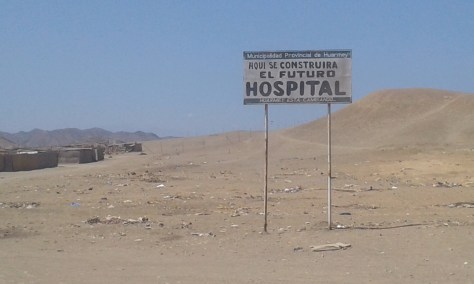
Hospital futuro

Ursprünglich war Huarmey wie fast alle Städte und Städtchen hier an der Pazifikküste ein Fischerdorf. Im Stadtzentrum unterhalten wir uns mit einem jungen Paar. Mit Stolz blicken sie auf das Denkmal des Fischers in der Mitte der Plaza. „Ja, Huarmey ist ein Fischerdorf“, sagen sie. Und es ist eine Freude zu sehen, dass die Denkmäler von Generälen auf Pferden, die früher jedes Stadtzentrum beherrschten, allmählich den Denkmälern von Fischer, Sonnenhüten, Werkzeugen und einheimischen Persönlichkeiten weichen müssen.
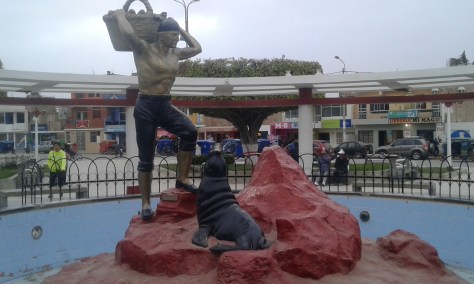
Huarmey_Fischer

Wovon die Menschen in Huarmey heute wirklich leben, wissen wir nicht genau. Wahrscheinlich leben einige tatsächlich noch vom Fischfang, aber der Fischfang, der das große Geld bringt liegt heute in den Händen großer Konzern, die mit Fischfangflotten vor der Küste unterwegs sind. Flotten aus aller Welt.

Andere sind wohl in der Minenindustrie beschäftigt oder führen billige Restaurants am Straßenrand und leben von den Reisenden und den Lastwagenfahrern, die hier einen Halt einlegen. Da es ein sehenswertes Castillo gibt, werden hin und wieder auch ein paar Touristen vorbeischauen. Und ein bisschen weiter im Norden liegt die Playa Tuquillo, die als Eco-Playa und Modell für andere Strände in Peru gilt.

Was gibt es sonst noch in Huarmey? Ja, es gibt auch ein paar Hotels und ein langsam aufblühendes Leben. Dazu gehört auch der Spielsalon, der in allen Farben erstrahlt oder das Spa am Straßenrand, das Luxus für den Körper verspricht:
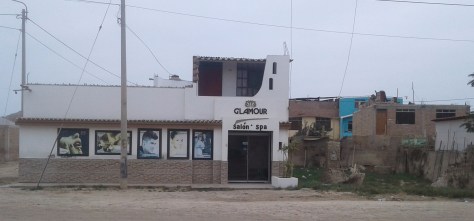
Huarmey_Spa

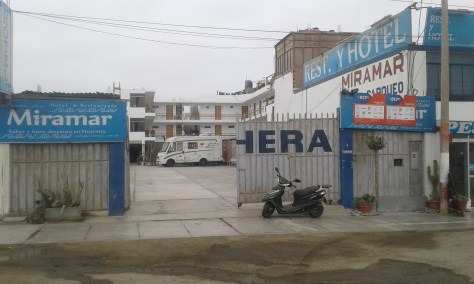
Auch wir machen zweimal Station in Huarmey. Vor gut einem Jahr, auf dem Weg in den Süden und jetzt wieder, auf dem Weg nach Cajamarca und Chachapoyas. Es gibt hier ein Hotel Miramar mit einem großen Parkplatz, wo wir sicher und relativ ruhig in unserer Esperanza übernachten können:
Hotel-Miramar

Der Besitzer des Hotels erzählt seine Erfolgsgeschichte: hier geboren begann er als Fahrer eines Moto-taxis für das Hotel und mit Hilfe der ganzen Familie konnte er das Hotel später kaufen und ist heute der Eigentümer. Es ist ein sauberes und ansprechendes Hotel mit guter Küche.

Zwei längere Spaziergänge durch das angrenzende Viertel und ins Zentrum des kleinen Örtchens zeigen uns, wie die Menschen versuchen, aus dem wenigen, was es hier gibt, das Beste zu machen:

Die Zukunft wird zeigen, ob die Bilder an der Wand der örtlichen Schule im “schönen Huarmey” (Lindo Huarmey) eines Tages der Wirklichkeit und Lebensqualität seiner Einwohner entsprechen wird. – Das hoffen wir.

JW/Clea


Español

Al borde de la carretera

Como muchas otras ciudades se ubica Huarmey al borde de la carretera.

Aproximadamente 300 Km al norte de Lima acosada por colonias de camiones y buses de dos pisos en camino por Perú profundo, rodeada de tierra y polvo desértico trata Huarmey de ser y sobrevivir.

Hospital futuro

Inicialmente fue Huarmey como la mayoría de las ciudades de la costa del Pacífico un pueblo de pescadores. Cuando conversamos con una pareja joven en la plaza admirando el monumento al pescador dice con orgullo: Huarmey es un pueblo de pescadores! Y es grato ver que los motivos en las plazas del Perú van cambiando poco a poco: pescadores, sombreros de la zona, instrumentos, personajes nativos en vez de militares sobre sus caballos que fue la característica del siglo pasado.

Huarmey_Fischer

De que vive hoy en día Huarmey no lo sabemos exactamente. Si, algunos habitantes probablemente viven de la pesca, pero la pesca, que rinde dinero de verdad está en las manos de las grandes compañías, que pescan con flotas de buques de pesca frente de las costas. Buques de todas naciones.

Otros probablemente trabajan en la minería o tienen restaurantes baratos al lado de la carretera y viven de los viajeros y los camioneros que paran. Porque hay un castillo interesante acá, probablemente también vienen algunos turistas de vez en cuando. Un poco más hacia el Norte está la playa Tuquillo quien impulsa el movimiento Eco-Playas en el Perú.

Que más hay en Huarmey? Si, hay también hoteles y una incipiente vida . Interesante resulta el lugar de entretenimiento y juego para los niños creando tardes de recreo diferente al polvo y el bullicio, o el spa a lado de la calle, que promete esquiciteces para el cuerpo.

Huarmey_Spa

Nosotros, como otros viajeros y muchos camioneros hacemos estación en Huarmey. Estamos en camino a Cajamarca y Chachapoyas. El Hotel Miramar con un estacionamiento grande es tranquilo y permite a Esperanza y sus tripulantes en su barriga dormir bien y tranquilos:

Hotel-Miramar

El dueño del hotel Miramar cuenta su historia: originario de Huarmey empezó su trabajo en el hotel con una moto-taxi y con la ayuda de toda su familia es hoy el propietario de este hotel limpio y acogedor con una cocina muy buena.

Dos paseos largos por Huarmey y alrededores nos permite ver cómo las personas tratan de hacer lo mejor de este lugar:

El futuro dirá si las imágenes en la pared del colegio local en el ¨Lindo Huarmey¨ van a reflejar un día la realidad y calidad de la vida de sus pobladores. Tenemos esperanza.

JW/Clea


English

At the roadside

Like many other small towns in Peru Huarmey seems to be lost somewhere at the roadside.

About 160 miles north of Lima, with convoys oft rucks and double decker coaches roaring through on their way to the North or South of Peru, surrounded by stone and sand deserts, Huarmey tries to just survive and not drown.

Hospital futuro

Originally Huarmey was a fisherman town like almost all small and bigger settlements along the Pacific coast. In the center of the town we speak with a young couple, who live here, and with pride they look at the monument of a fisherman on the central plaza and say: „Yes, Huarmey is a fishermen´s place.“ And it really feels good to see, that all over Peru the former monuments of generals and warriors, which dominated the hearts of these towns, are slowly but gradually replaced by statues of fishermen, sun hats, special tools of the area and local or indigenous authorities.

Huarmey_Fischer

We do not know exactly how the people of Huarmey make their living. Some of them probably still really live on fishing, but the kind of fishing which really brings the money is nowadays in the hands of a huge fishing industry, which exploit the fishing grounds off the coast with huge fleets from all over he world.

Others probably work in the mining industry or they run small restaurants at the roadside and live on the travellers and truck drivers, who stop over for lunch. Since there is a small fortress, which is worth seeing, there might be some tourists too, who spend a day or two in town. And a little further north, there is the Tuquillo beach, which is marketed as an eco-beach and considered to be a model for other beaches in Peru.

What else is available in Huarmey? Well, there are some hotels and a slowly blossoming life. Part of this maybe the casino at the central plaza, which offers its services in flashy colors or this spa at the roadside, which promises bodily and spiritual well-being.

Huarmey_Spa

We also stayed overnight in Huarmey two times, about a year ago on our way to the south of the continent, and this time, on our way to Cajamarca and Chachapoyas (link). There is the Hotel Miramar in Huarmey, which has a big parking lot, where we can stay and spend the night safely and relatively quietly.

Hotel-Miramar

The owner oft he hotel tells us his personal success story: born in Huarmey he started as a motorcycle driver for the hotel and was later able to buy the hotel with the help of all his family and is now the proud owner of a clean and pleasant hotel with a good kitchen.

We take two long walks through the neighborhood and o the center oft he small town. And we can see how the people struggle to make the best out of what they have.

Diashow HuarmeyThe future will show, whether the paintings on the wall of the local school in the “beautiful Huarmey” (Lindo Huarmey) will one day reflect the actual quality of life of its inhabitants. – We very much hope it will.

JW/Clea


Lima bei Nacht

Deutsch – EspañolEnglish

Da gäbe es vermutlich viel zu erzählen. – Wir haben uns aber auf das touristische Lima beschränkt und das kann sich sehen lassen.

Schon die Fahrt bei Nacht durch Lima ist eine spannende Show für sich. Vor allem, wenn man in einem Doppeldecker-Bus in der ersten Reihe oben sitzt und die kühnen Fahrmanöver hautnah aus der (beinahe) Vogelperspektive miterlebt:

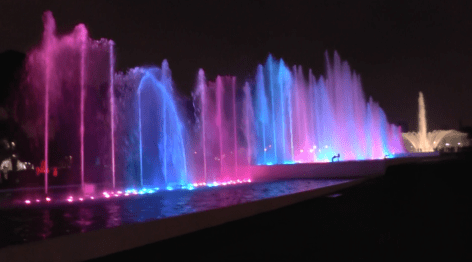
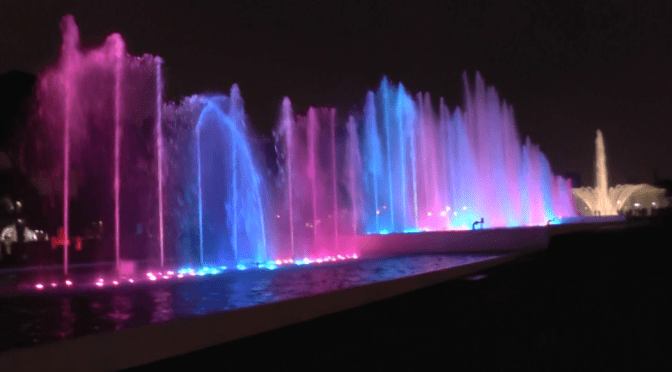
Beeindruckend sind auch die verschiedenen Wasserspiele im Parque de la Reserva im historischen Teil von Lima:

Spektakulärer Höhepunkt ist die 3D-Wasser- und Lasershow. Die haben schon viele gefilmt und fotografiert; wir auch und wir hoffen, dass sie Euch so gut gefällt wie uns:

Auf der selben Tour geht es auch durch das historische Zentrum der Stadt mit seinen prächtigen beleuchteten Gebäude. Bis heute sieht und spürt man, dass Lima einst das Zentrum der spanischen Kolonisation war:

Wenn ich manchmal – wie auf dieser Bustour – alleine unterwegs bin, trifft sich Clemen mit ihren ehemaligen Schulkameradinnen aus Santa Ursula, aus der Universitätszeit oder aus ihrem früheren Theaterleben in der Rasgos-Truppe in Miraflores.

Ein „Muss“ für jeden Touristen ist auch ein Besuch in der Candelaria in Barranco, dem alternativen und Boheme-Viertel von Lima. Hier treten in wechselnden Programmen Künstler aus den verschiedenen Regionen des Landes auf. Folklore auf einem hohen und authentischen Niveau.

July, die Geschäftsführerin der Candelaria, eine enge Freundin von Clemencia aus gemeinsamen Theater-Tagen, hat uns und Clemencias Freundin Belita eingeladen und ist mit ihrer über achtzigjährigen Mutter selbst dabei. Die Familie von July stammt selbst aus Puno, der Hauptstadt der peruanischen Folklore. Sie verbreiten seit vielen Jahren die Folklore des Landes auf einem hohen und ursprünglichen Niveau. July und ihre Mutter sind selbst direkte Nachkommen des Incas Huayna Capac. Ein wunderbarer Abend, den wir hier verbringen:

Früher hat Clemen in Lima selbst Theater gemacht und so schaffen wir es, zwei (eigentlich ausverkaufte) Aufführungen der Yuyashkani Truppe zu sehen, in der noch einige alte Freunde und Freundinnen von Clemencia aktiv sind.

Am Anfang gibt es heftige Persiflagen auf einige Besonderheiten der peruanischen Gesellschaft, z.B. die vereinnahmende Verklärung der Inka-Zeit, das großartige Vaterland und die peruanischen Rasse (raza peruana), den zu Herzen gehenden Patriotismus, die Bedeutung des Landes u.Ä.; danach einen ca. anderthalbstündigen Parforce-Ritt durch aktuelle Themen, die das Land bewegen. Den zweiten Teil durften wir leider nicht filmen. Aber auch die Parodien am Anfang sind sehens- und hörenswert:

JW/Clea


Español

Lima de noche

Habría seguramente mucho para contar. Me concentro a la Lima turística y ésa ya ofrece mucho.

El paseo por Lima de noche en un bus es un show emocionante en si mismo. Sobre todo en un bus de dos pisos desde donde puedo apreciar las maniobras atrevidas del conductor en este tráfico limeño en la perspectiva de los pájaros.

Me impresionaron mucho los diferentes juegos de agua en al Parque de la Reserva en la parte histórica de Lima

El punto más alto y espectacular es un show en 3 D con laser. Muchos loh an filmado y fotografiado, espero les guste tanto como a mí.

En el mismo paseo pasé por el centro histórico de la ciudad y disfruté la vista de los monumentos coloniales iluminados. Debiera destacar acá una vez más que Lima fue el centro de la colonia española y hasta el día de hoy eso se siente.

Este tour yo hago solo. Para Clemen Lima es un lugar de reencuentro con su vida de escolar en el Santa Ursula, su vida universitaria en San Marcos y La Católica y finalmente su vida de teatrera en el grupo Rasgos en Miraflores.

Algo obligado para toda persona nueva en la ciudad es la visita en La Candelaria en Barraco, un barrio algo alternativo y bohemio en Lima. En la Candelaria apreciamos artistas de las diferentes regiones del país.

July, administradora del local y amiga de teatro de Clemen nos ha invitado. Junto con ella llega Belita, otra amiga de Clemen de la universidad y a este alegre montón se suma Pepita la mamá ochentañera de Yuli. La familia de Juli es puneña, de la capital folclórica del país y fomentan la difusión del folclore desde hace muchos años con un alto y genuino nivel

Juli y su madre son descendientes directas del inca Huayna Capac. Una noche inolvidable que recordaremos con cariño

La vinculación de Clemen con el teatro nos permitió asistir a dos funciones del grupo Yuyachkani – a pesar que las entradas estaban agotadas! – así compartió momentos con antiguos amigos de teatro aún activos moviendo la vida cultural en el país

Al comienzo hay escenas actuales de la sociedad peruana, la idealización del tiempo del incario, el patriotismo desmesurado, mención a la raza peruana y la recreación de situaciones que mueven al Perú en estos tiempos. La segunda parte no pudimos filmarla lamentablemente. La parodia al final nos transmite algo de la ambición teatral del grupo.

JW/Clea


English

Lima by Night

There would probably be very much to tell, but we have focused only on the touristic aspects of Lima, and they are really worth seeing.

The night tour on a city bus is already a thrilling show by itself. Especially if you are seated in the front row of a double-decker bus and can watch the audacious maneuvers of the driver very closely from the (almost) bird perspective.

Very impressive are the different water fountains in the Parque de la Reserva in the historical part of Lima:

The spectacular highlight every evening is the 3D-Water and Laser Show. This show has already been filmed many times and certainly not only by me. But I hope you will like it as much as I did.

On the same tour I also travel through the historic center of Lima with its gorgeous illuminated buildings. Until today you see and feel, that Lima used to be the center of the Spanish colonization for centuries.

While I sometimes do sightseeing by myself – like on this tour – Clemen is spending time with her former classmates, her fellow students of San Marcos University and the Católica or with her colleagues and friends of the former Rasgos-Theater in Miraflores.

A must for every tourist is a visit to the Candelaria in Barranco, which is the alternative and bohemian quarter of Lima. Artists from the different regions of Peru perform on this stage.

July, the managing director of the Candelaria, is a close friend of Clemen from common days in the Rasgos Theater, and she has invited us and Clemencia´s fellow student Belita to spend an evening in the Candelaria. July accompanies us herself, together with her mother, who is over 80 years old. July´s family come from Puno, the capital of the Peruvian folklore. For many years they have been fostering the folklore of the country in a high and authentic level. July and her mother are direct descendants of the Inca Huayna Capac. It is a wonderful evening:

In former times Clemen was a theater actrice herself in Lima and so she manages to get tickets for two presentations of the Yuyashkani troupe, in which some of Clemen´s old friends are still actively performing – even though the shows are officially sold out.

At the beginning there are some tough persiflages on some special traits oft he Peruvian society, i.e. the collective romanticization of the Inca era, the grandeur of the fatherland and the Spanish race (raza peruana), the heart wrenching patriotism, the importance of Peru etc.; after that there is a dizzying journey through all the current subjects, which presently move the country. Unfortunately we were not allowed to film this second part. But also the parodies and persiflages at the beginning are worth watching and listening to:

Wasserspiele

 JW/Clea

El Piloto

Deutsch – EspañolEnglish

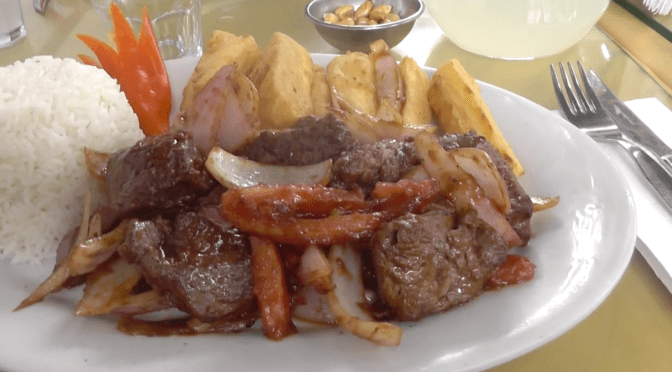
… ist eine Institution an der alten Panamericana in der Nähe von Cañete bei km 138. Ein Restaurant, das Clemen schon als kleines Mädchen mit ihren Eltern oft besucht hat.

Auf der Fahrt nach Parácas, wo wir Clemencias Bruder Fernando und seine Familie besuchen wollen, machen wir im „El Piloto“ halt und essen zu Mittag:

Jeder, der in diese Gegend kommt, sollte sich einen Besuch im „El Piloto“ gönnen.

JW/Clea


Español

El Piloto es una institución en la Panamericana antigua cerca de Cañete en el km 138. Un restaurante, que Clemen ya ha visitado muchas veces con sus padres, cuando todavía era niña.

En el viaje a Parácas, donde queremos visitar a Fernando, uno de los hermanos de Clemen y a su familia, paramos donde „El Piloto“ y disfrutamos un almuerzo muy rico.

Cualquiera, que pasa por esta región, tendría que pararse en „El Piloto“ y dejarse mimar con una comida rica.

JW/Clea


English

El Piloto is an institution on the old Panamericana road near Cañete at km 138. A restaurant which Clemen already visited with her parents, when she was still a child.

On our trip to Parácas, where we want to meet with Fernando, one of Clemencia´s brothers and his family, we take a stop at the „El Piloto“ and have an excellent lunch.

Everybody who travels this area should do the same and enjoy a great dinner at „El Piloto“.

JW/Clea


Wir brauchen Eure Hilfe

Deutsch – EspañolEnglish

Gestern abend haben wir erfahren, was in der Albergue in Huancayo passiert ist: Teile des Altbaus mussten vor Kurzem vorsorglich abgerissen werden, nachdem sich Risse und Spalten in der Hauswand gebildet hatten und nicht auszuschließen war, dass das Gebäude einstürzen würde:

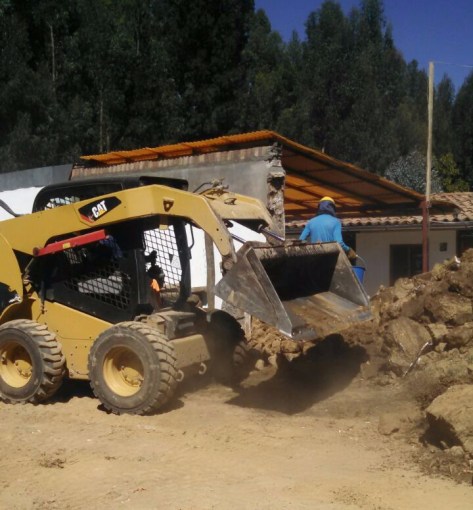
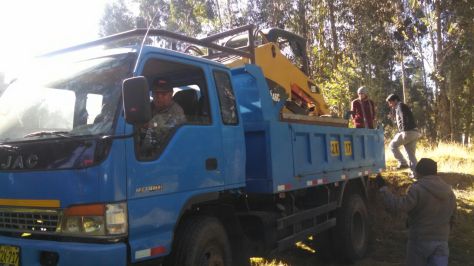
Die Aufräumarbeiten haben inzwischen begonnen:

img-20170717-wa0025.jpg

IMG-20170717-WA0011

Wer sich über das Projekt, das wir seit Jahren unterstützen, noch einmal genauer informieren will, möge sich folgende Beiträge hier im Blog anschauen:

Peru 2013

Angekommen

Die Mädchen in der Albergue

Alltag in der Albergue

Schwer zu beschreiben

Auf der Suche nach Kommunikation

Erste (und weiterreichende) Maßnahmen

Unser Leben in Saño

Falls Ihr etwas spenden wollt, um die Umbauarbeiten zu unterstützen, könnt Ihr den Betrag auf folgendes Konto überweisen:

ANJ Kinderhilfe Peru

Commerzbank

IBAN: DE83 7008 0000 0647 0002 01

BIC: DRESDEFF700 (für Überweisungen aus dem außereuropäischen Raum)

Vermerk (für Spenden zum Wiederaufbau der Albergue): Nothilfe 2017

Für alle Spenden auf dieses Konto können Spendenquittungen für das Finanzamt ausgestellt werden.

Wir bedanken uns bei Euch im Vorhinein!

JW/Clea


Español

Malas Noticias

Anoche nos informaron  lo que ha pasado en el Albergue en Huancayo hace unos días. Partes del edificio antiguo tuvieron que ser derrumbados, porque se habían abierto grietas en los muros de adobe amenazando la construcción.

Mientras tanto los trabajos de reconstrucción han empezado necesariamente.

img-20170717-wa0025.jpg

IMG-20170717-WA0011

Quien quiera informarse (otra vez) sobre el pryecto en Huancayo, puede echar un vistazo en los siguientes posts de blog de viaje:

Peru 2013

Llegamos el 28 de Agosto

Las niñas del albergue

Vida cotidiana en el albergue

Difícil de describir

Buscando comunicación

Primeras (y siguientes) medidas

Nuestra vida en Saño

Si es su voluntad donar algo para apoyar las medidas de reparación, pueden mandar la donación directamente a la siguiente cuenta en Peru:

Banco de Crédito BCP 

Nombre del Titular: ONG Apoyame Perú

Numero de cuenta: 355 2316138090

Referencia: Apoyo emergencia albergue 2017

Cada sol está bienvenido. Se les agradecemos mucho en adelante.


English

Bad news

Yesterday evening we were informed about what has happened a short time ago in the albergue in Huancayo. Parts of the old building had to be demolished, because  wide cracks and fissures had opened in the mud walls and threatened the stability of the construction:

Meanwhile the clean up efforts and the restructuring work are under way:

img-20170717-wa0025.jpg

IMG-20170717-WA0011

Those who want to get more information about the project in Huancayo, which we have been supporting for several years now, should have a look at the following posts in this blog:

Peru 2013

Today we finally arrived

The Girls of the Albergue

Everyday Life in the Albergue

Difficult to decribe

On the Search for Communication

First Measures (and more)

Our Life in Saño

In case you want to support the repair work with a donation, you can transfer your donation to the following bank account in Germany:

ANJ Kinderhilfe Peru

Commerzbank

IBAN: DE83 7008 0000 0647 0002 01

BIC: DRESDEFF700 (for transfers from outside Europe)

Reference (for donations referring to the reconstruction of the shelter): Nothilfe 2017

We thank you very much for your support in advance.

JW/Clea

Zurück nach Chile

Deutsch – EspañolEnglish

Die Grenze zwischen Argentinien und Chile haben wir inzwischen neunmal in beiden Richtungen überquert. Heute müssen wir es wieder einmal hinter uns bringen. Seit zwei Tagen ist die Straße über den Pass schneefrei, und wir wollen Santiago de Chile möglichst noch bei Tageslicht erreichen.

Da die Einreise nach Chile meistens zeitaufwändiger ist als die nach Argentinien, stellen wir uns auf eine längere Wartezeit ein. Aber diesmal geht es zügig und wir können bald Richtung Santiago weiterfahren:

Mit so vielen Kurven hatten wir nicht gerechnet. Wir zählen alleine 28 Spitzkehren. Die Fahrt Richtung Santiago dauert stundenlang, und wir werden allmählich müde. Da es inzwischen auch schon dunkel geworden ist, beschließen wir bereits in Los Andes einen Standplatz zu suchen. Morgen wollen wir dann nach Santiago weiterfahren.

JW/Clea

Español

Atrás a Chile

Ya hemos cruzado la frontera entre Argentina y Chile nueve veces en ambas direcciones. Hoy tenemos que repetirlo una vez más. Desde hace dos días la carretera sobre el paso está libre de nieve y queremos llegar a Santiago cuando todavía hay luz de día y lo más rápido posible.

Desafortunadamente la entrada a Chile requiere más tiempo que a Argentina. Esperamos un largo tiempo. Pero esta vez todo va relativamente rápido y pronto podemos continuar nuestro viaje rumbo Santiago.

No habíamos contado con tantas curvas. El viaje hacia abajo se demora horas y poco a poco nos cansamos. Contamos 28 curvas cerradas solamente. Porque ya está oscureciendo decidimos de quedarnos en Los Andes esta noche. Mañana continuamos a Santiago.

JW/Clea

English

Back to Chile

We have already crossed the border between Argentina and Chile nine times. Today we have to do it again. For two days the road has been cleared of snow and we want o reach Santiago de Chile by daylight

Unfortunately the immigration procedure into Chile usually requires more time than the entrance into Argentina. We are prepared for a long waiting time. But this time everything goes relatively smoothly and we can soon continue our trip o Santiago.

We have not expected so many curves. We count 28 switchbacks only. The trip down the pass takes hours and slowly but gradually we are getting tired. Since the sun is already setting we decide to stay in Los Andes overnight. Tomorrow we want to continue our trip to Santiago.

JW/Clea

Cacheuta

Deutsch – EspañolEnglish

Die Wartezeit bis zur Öffnung des Passes nach Chile nutzen wir für einen erholsamen Aufenthalt in den Thermen von Cacheuta, etwa 40 km westlich von Mendoza:

Wie an vielen anderen Orten auf unserer Reise, lernen wir auch hier interessante Menschen kennen und Shanti natürlich die Hunde aus dem Dorf:

Der Besitzer der Hospedaje, in der wir mit unserer Esperanza untergekommen sind, hat vor ein paar Monaten seine Frau verloren. Jetzt lebt er alleine mit seiner Haushälterin und lädt uns zum Abendessen ein, um mit ihm seine Einsamkeit und seine Trauer zu teilen:

Natürlich erzählt unser Gastgeber viel aus seinem Leben mit seiner verstorbenen Frau und nach ein paar Gläschen Wein singt er ein wehmütiges Lied zu ihren Ehren; Clemencia dankt ihm mit einer ebenso wehmütigen Samba:

JW/Clea

Español

El tiempo de espera para la apertura del paso a Chile lo usamos para una estadía en las Termas de Cacheuta, que están ubicadas a unos 40 km de Mendoza.

Como en muchos otros sitios en nuestro viaje, conocemos gente interesante aquí y Shanti no se queda atrapas con los perros del pueblo.

El propietario del hospedaje, donde hemos encontrado un sitio para estacionarnos, ha perdido a su mujer hace pocos meses solamente. Ahora vive solo con su empleada y nos invita a cenar con el, compartiendo su duelo y soledad:

Naturalmente nos cuenta mucho de su vida y de su señora fallecida. Después de unas copas de vino canta una canción muy melancólica en honor de su esposa. Clemencia se lo agradece con una samba igualmente melancólica.

 JW/Clea

English

We use the waiting time for the re-opening of the pass to Chile for a relaxing stopover in the hot springs of Cacheuta, which are located about 25 miles from Mendoza.

Like in many other places during our trip, we get to know some interesting people and Shanti meets the dogs of the village.

The owner oft he hospedaje, where we have found a place to stay a couple of nights, has lost his wife a couple of months ago. Now he lives alone with his live-in housekeeper. He invites us to dine with him and share his loneliness and grief:

Of course he tells us a lot about his life and his late wife. And after a couple of glasses of wine he sings a melancholic Argentinian song in honor of his wife. Clemencia thanks him by singing a similarly melancholic samba.

JW/Clea

Durch die Pampa

Deutsch – EspañolEnglish

Argentinien ist ein riesiges Land. Ohne die Antarktis erstreckt es sich über rund 4.500 km von Nord nach Süd und circa 1.500 km von West nach Ost.

Die Pampa liegt im Zentrum von Argentinien. Anders als erwartet, sehen wir kaum Rinder in dieser Gegend, erst recht keine Gauchos. Dafür endlos lange Ebenen mit wenig Vegetation und viel Landschaft …

Wo die vielen Rinder gezüchtet werden, die das weltberühmte argentinische Fleisch liefern, konnten wir (persönlich) nicht herausfinden. Aber hinter der folgenden argentinischen Flagge verbirgt sich ein ernüchternder Artikel:

Bildschirmfoto 2017-03-01 um 18.04.46

Unsere Fahrt geht über die Ostküste bis zur Halbinsel Valdez. Auf dem Weg machen wir auch Station in Caleta Olivia. An der Strandpromenade liegt das Replikat eines der fünf Schiffe, auf denen Fernando Magellanes und Juan Sebastián Elcano nach Südamerika aufbrachen. Ihre Reise dauerte drei Jahre (1519 – 1522). Von den fünf Schiffen schaffte es nur die Victoria zurück bis nach Spanien. Von den 234 Matrosen verloren 216 ihr Leben. Auch Magallanes – der Entdecker der Insel „Tierra del Fuego“ – dessen Namen heute die Meerenge trägt, die zwischen Patagonien und der Insel „Tierra del Fuego“ liegt, kam unterwegs ums Leben. Er starb im Kampf mit den Einheimischen auf den Philippinen.

Die Holzfiguren an Bord der Nao Victoria vermitteln einen guten Eindruck von der Beengtheit auf den Segelschiffen dieser Zeit:

Weiter nördlich, in Puerto Madryn, machen wir einen ersten etwas längeren Halt, aber leider kommen wir zu spät, um die Orkas zu sehen, die hier im März an der Küste der Halbinsel auf- und abschwimmen und junge Seelöwen jagen. Besonders beeindruckend muss es sein, wenn sich die Orkas dazu sogar auf den Sandstrand stürzen und die Jungtiere ins Wasser reißen.

Da es derzeit keine Orkas vor der Halbinsel Valdez gibt, beobachten wir Shanti am Strand. Macht auch Spaß und ist weniger brutal:

In Puerto Madryn entschließen wir uns, die Heimreise nach Deutschland in den nächsten Monaten anzutreten, entweder von Cartagena in Kolumbien oder von Montevideo in Uruquay. Die endgültige Entscheidung schieben wir noch auf und fahren erst einmal weiter in Richtung Mendoza.

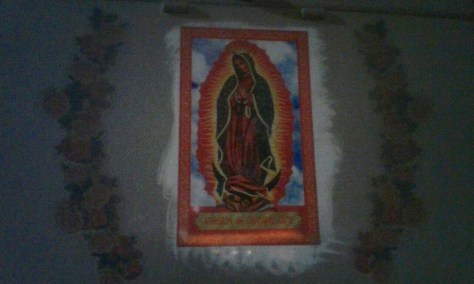
Nach den schönen Erlebnissen in Salta sind wir gespannt und freuen uns auf Mendoza, diese Stadt im Westen des Landes, dicht an der Grenze zu Chile. Unterwegs übernachten wir an einer YPF-Tankstelle. Als wir in der Dunkelheit vom Restaurant der Tankstelle zu unserer Esperanza zurückkommen, erleben wir eine Überraschung:

Jungfrau

Die Jungfrau von Guadalupe strahlt wie … na, sagen wir wie ein Engel oder so ähnlich. Wir wissen nicht, wer das Bild so sauber gemacht hat und wie. Ich selbst kann nur mit Mühe den oberen Rand der Darstellung erreichen und die Dreckschicht, die unsere Jungfrau in letzter Zeit zugedeckt hat, ist dick, ölig und schwer zu entfernen. Wer das in kurzer Zeit geschafft hat, ohne sichtbare Spuren von Händen oder Fingern zu hinterlassen, ist uns ein Rätsel.

An derselben Tankstelle lernen wir Teresa kennen. Sie liebt Tiere, insbesondere Hunde und obwohl wir uns kaum kennen, lädt sie uns ein, auf der Weiterfahrt nach Mendoza eine Station in ihrem Haus in Santa Isabel einzulegen. Dort hat sie eine Art Tierheim für verlassene Hunde. Wir sind gespannt und nehmen an. Zwei Tage später sind wir in Santa Isabel; Shanti ist überglücklich und rast mit den anderen Hunden wie verrückt durch den Innenhof:

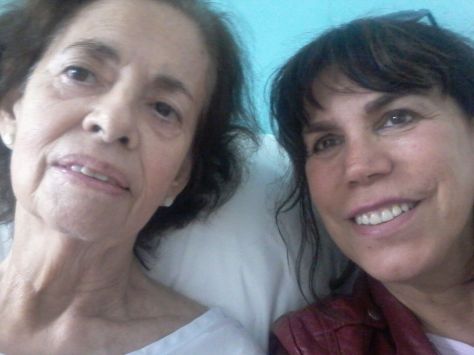
Am nächsten Morgen erreicht uns die Nachricht, dass Cecilia, eine Schwägerin von Clemencia, zu der sie ein sehr enges Verhältnis hatte, verstorben sei. Eine Frau, mit der Clemen seit ihrer Kindheit ein ganz besonderes Verhältnis hatte so wie zu ihrem Bruder Pablo:

Clea_Cecilia

Clemen würde gerne zur Beerdigung nach Lima reisen, aber das ist einfach nicht zu machen, nicht einmal per Flugzeug. Deswegen entschließen wir uns, unsere Reisepläne – wieder einmal – zu ändern. Clemen möchte so schnell wie möglich zu ihrer Familie und insbesondere zu ihrem ältesten Bruder Pablo in Lima, der jetzt alleine ist.

Erste Station auf der langen Fahrt ist Mendoza. Die Stadt ist weniger attraktiv als wir erwartet hatten…

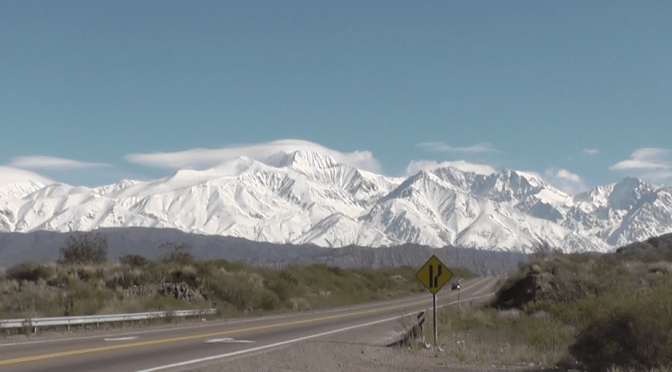
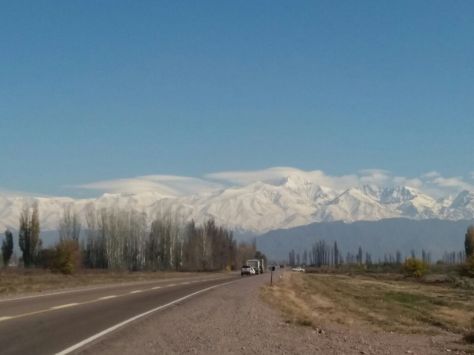
schöner ist die Umgebung und vor allem der Blick auf die Anden im Westen der Stadt:

Anden westl. von Mendoza

Zwischen Mendoza und Santiago, die etwa auf der gleichen geographischen Höhe liegen, befindet sich ein Pass, der auf argentinischer Seite Paso de Redentor und auf chilenische Seite Paso de los Libertadores heißt. Er ist nicht ganz so hoch wie die anderen Andenpässe weiter im Norden, aber immerhin hat er ca. 3.800 m und inzwischen ist hier fast schon Winter und der Pass wegen Schneefall gesperrt. Wir müssen also abwarten.

JW/Clea

Español

Por la Pampa

Argentina es un país inmenso. Sin la Antártida se extiende más de 4,500 km de Norte a Sur y de Este a Oeste aprox. 1.500 km.

La Pampa está en el centro de Argentina. Contrariamente a lo esperado apenas hemos visto ganado, menos aún gauchos. A cambio estepas interminables con poca vegetación y un paisaje especial.

Hasta ahora no hemos encontrado personalmente de dónde viene la tan internacionalmente famosa carne argentina. Pero después de la bandera Argentina se esconde un artículo desilusionando:

Bildschirmfoto 2017-03-01 um 18.04.46

Nuestro viaje va por la Costa este hasta la Bahía de Valdez. En el camino hacemos una parada en Caleta Olivia. En el malecón de la playa hay una réplica de uno de los 5 barcos donde se embarcaron Fernando Magallanes y Juan Sebastián Elcano hacia América del Sur. Su viaje duró tres años (1519 – 1522). De los cinco barcos que salieron sólo llegó Victoria de regreso. De los 234 marineros, 216 perdieron la vida. Magallanes – quien ha marcado con su presencia la Isla del Fuego, La Patagonia, el nombre del Estrecho que une ambos mares. Magallanes mismo murió en el camino en guerra con las Filipinas.

Las figuras de madera a bordo transmiten una buena impresión de las condiciones en los barcos a vela de esos tiempos.

Más hacia el norte en Puerto Madryn hacemos una parada un tanto más larga. Llegamos sin embargo tarde para ver las orcas de la zona. Debe ser muy impresionante ver las orcas en la playa y como cazan a los leones marinos jovenes:

Ya que no hay orcas por aquí observamos a nuestro Shanty en la playa. Nos alegra y es seguramente menos brutal.

En Puerto Madryn decidimos volver en viaje de regreso a Alemania en los siguientes meses sea desde Cartagena en Colombia o desde Montevideo en Uruguay. La decisión final y los detalles lo postergamos un poco y nos dirigimos hacia Mendoza.

Después de nuestra experiencia en Salta estamos ansiosos y felices de diriginos a Mendoza, esta ciudad al Oeste del país, cercana a la frontera con Chile. Esa noche paramos con nuestra Esperanza en una estación de gasolina YPF argentina. Cuando volvemos del restaurant de la estación nos damos con una sorpresa:

Jungfrau

La Virgen de Guadalupe brilla … digamos como un ángel o algo parecido. No sabemos hasta hoy quién limpió la imagen tan bien n i como. Juergen mismo llega con dificultad hasta la parte alta de la Virgen y la capa de polvo, mugre y aceite que la cubría era grande. Quien logró hacerla brillar en ese corto tiempo sin dejar huella ni de dedos ni manos resulta hasta hoy un enigma para nosotros.

En esta misma estación de gasolina conocimos a Teresa más. Ella ama a los animales y a pesar que es nuestro segundo encuentro, nos invita a pasar por donde sus animalitos y casa en San Rafael; Shanty está más que feliz y corre dentro del patio con otros perros como loco.

Al día siguiente nos llega la noticia del fallecimiento de Cecilia, cuñada de Clemencia casada con su hermano Pablo, el mayor. Una mujer con quien Clemencia tiene desde sus primeros años de edad un contacto especial, así como con su hermano Pablo.

Clea_Cecilia

Clemen quisiera ir al funeral de Cecilia. Mendoza está aún a 800 Km. Desde allí podría tomar ella un avión a Lima. Imposible. Las carreteras son tan pobres como la zona. Clemen quiere ir cuanto antes donde su familia especial donde su hermano Pablo, el mayor, que ahora está solo.

La primera estación es Mendoza. La ciudad misma no es muy atractiva:

Más bien son sus alrededores, especialmente la vista de los Andes en el oeste de la ciudad:

Anden westl. von Mendoza

Entre Mendoza y Santiago que están geográficamente a la misma altura que Santiago está el paso llamado en Argentina Paso de Cristo Redentor y por el lado chileno elpaso Los Libertadores. No es tan alto como los otros pasos que hemos pasado, está sin embargo a 3.800 km de altura y ya que estamos en las puertas del invierno el paso está cerrado por la nieve. Tenemos que esperar.

JW/Clea

English

Through the Pampa

Argentina is a huge country. Without the Antarctica it stretches over 2,800 miles from North to South and about 1,000 miles from West to East.

The Pampa is located in the central part of Argentina. Different from what we have expected we hardly see any cattle in this area, much less any gauchos (link). Instead there are endless plains with little vegetation and much landscape. …

Where the many cows, which deliver the famous Argentinian meat, are actually raised, we could not personally find out (so far), but behind the following Aregentinian flag you will find a desillusioning article:

Bildschirmfoto 2017-03-01 um 18.04.46

Our trip leads us along the east coast up tot he peninsula of Valdez. On the way there we take a stop over in Caleta Olivia. At the beach promenade there is areplica of one of the five ships, on which Fernando Magellanes and Juan Sebastián Elcano sailed to South America. Teir voyage took three years (1519 – 1522). Only one of the five ships, the Victoria, actually returend to Spain. And 216 of the 234 sailors, who left Spain, lost their lives on the way. Magellanes himself – who discovered the island of „Tierra del Fuego“ y the canal, which today bears his name and divides the South American mainland from that island – later died in a fight with the indigenous people on the Philippines.

The wooden sculptures on board of the „Nao Victoria“ give a vivid impression of the very limited space on the sailing ships of that time:

Further North in Puerto Madryn, we stay a little longer, but unfortunately we are too late to observe the orcas, which swim along the coastline of the peninsula of Valdez in March hunting for young sea lions. It must be especially impressive to see them jumping out of the water and on to the beach in order to catch the sea lions and pull their prey into the water.

Since there are presently no orcas here, we observe Shanti on the beach. It is also fun, but less spectacular and bloody.

In Puerto Madryn we decide to return to Germany during the months to come, either from Montevideo in Uruguay or Cartagena in Colombia. But the final decision is postponed fort he moment and continue our trip to Mendoza.

After the great experiences, which we had in Salta we are looking forward o Mendoza, the big city in the West of Argentina, close tot he border with Chile. On the way there we stay overnight at a YPF gas station. After returning from the restaurant of the gas station we have a big surprise.

The Virgin of Guadeloupe is beaming … well, let´s say like an angel or something like that. We do not know, who cleaned her image and how. I myself can hardly reach the upper end of her image and the oily layer of dirt, which has covered our virgin for months, now, is very difficult to remove. Who was able to do that in the relatively short time, while we were away, without leaving any traces of hands or fingers, is a miracle to us.

At the same gas station we meet Teresa. She loves animals, especially dogs and even though we hardly know her, she invites us to stay at her place in San Rafael, our next stop. She has a kind of shelter for stray dogs and cats there. We are very curios and accept her invitation. Two days later we reach San Rafael. Shanti is absolutely happy and races around like mad with the other dogs in the patio:

On the next morning we receive the message that Cecilia, the wife of Clemencia’s oldest brother Pablo has deceased in Lima. Clemencia has always had a very special relationship with her and Pablo since her childhood.

Clemen would love to go the funeral, but it is impossible, not even by plane. Therefore we decide to change our travel plans one more time. Clemen wants to go to Lima as soon as possible in order to be with her family and especially with Pablo, who is now all alone.

First stop on the long trip is Mendoza. The city is less attractice than weh ad expected …

… but the surrounding areas are beautiful, especially the view oft he Andes in the West of the city.

Anden westl. von Mendoza

Between Mendoza and Santiago, which are located approximatley at the same geographical height, there is a pass, which is called Paso de Redentor on the Aregentinian side and Paso de los Libertadores on the Chilean side.

With „only“ 12,000 feet it is not as high as some of the other Andean passes, which we have already crossed. But since the wintertime is approaching, it has snowed and the pass is closed, when we arrive in Mendoza. So we have to wait a couple of days, until it has been cleared.

JW/Clea


Ushuaia

Deutsch – EspañolEnglish

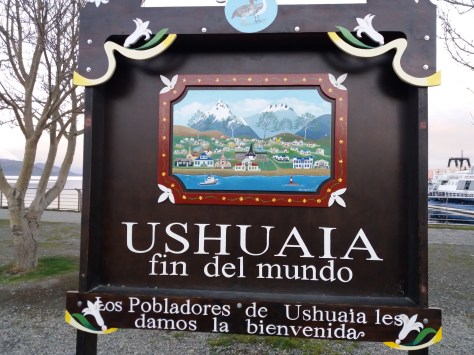
Ushuaia ist die am südlichsten gelegenen Stadt der Welt, dort wo die Welt – angeblich – zu Ende ist:

Ushuaia

Etwas weiter südlich liegt noch Puerto Willams. Das gehört zu Chile, ist aber keine Stadt, sondern „nur“ ein Hafen. Da es keine Fährverbindung nach Puerto Williams gibt, bleiben wir in Ushuaia und schauen uns dort um:

Anfang Mai ist es in Ushuaia schon ziemlich frisch und der Schnee auf den umliegenden Bergen vermittelt einen Eindruck vom unmittelbar bevorstehenden Winter. – Trotzdem, die Stadt gefällt uns gut, und sie hat eine Menge zu bieten.

Da ist einmal die unvergleichliche Lage am Beagle Kanal und dann der Beagle-Kanal selbst mit seiner artenreichen Tierwelt. Eine Fahrt auf diesem Gewässer ist ein absolutes Muss. Wir machen das natürlich auch und sind begeistert. – Nach der Fahrt wärmen wir uns in einem der vielen gemütlichen Lokale wieder auf:

Die bewegte Geschichte der Stadt spiegelt sich in dem Museo Marítimo y Presidio und dem Denkmal für die Gefallenen im Krieg um die Malvinas, aber auch in Wandmalereien zur Besiedlung der Region durch die Spanier:

sowie in Foto- und Kunstausstellungen am Wegesrand, die sich mit Gewalt, Diktatur und Krieg auseinandersetzen:

Das „Museum am Ende der Welt“, das früher einmal der Sitz des Gouverneurs war, beherbergt verschiedene Ausstellungen und zeigt den ehemaligen Plenarsaal des lokalen Parlaments:

Wir fühlen uns sehr wohl in dieser Stadt. Unser kühler Standplatz an der Hafenpromenade bietet uns wunderschöne Ausblicke auf den Hafen, den Beagle-Kanal und die umliegenden Berge:

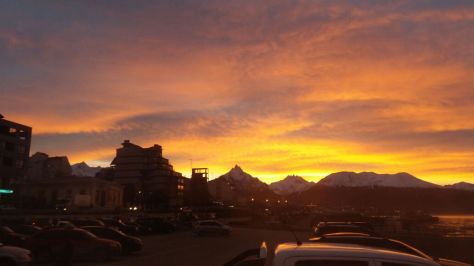
Die stundenlangen Sonnenuntergänge sind beeindruckend:

IMG-20170509-WA0000

JW/Clea


Español

Ushuaia es la ciudad más al Sur del mundo, donde al parecer, termina el mundo:

Ushuaia


Más al sur está aún Puerto William. Esta ciudad que pertenece a Chile es solamente un puerto. Ya que no hay ferris hasta Puerto Williams nos quedamos en Ushuaia y nos movemos por ahí.

Al comienzo de mayo está fresquito en Ushuaia y la nieve en las montañas alrededor parecieran señalar un invierno que se avecina. A pesar de esto la ciudad nos gusta y tiene mucho que ofrecer.

Primero que nada es su ubicación inigualable en el Canal Beaglen y luego el canal Beagle mismo con su mundo animal riquísimo. Un paseo en estas aguas es un asunto obligado por estos sitios. Lo hicimos y estuvimos fascinados. Luego del viaje nos calentamos un poquito en uno de los muchos lugares acogedores del lugar

La movida historia de la ciudad se refleja tanto en el Museo Marítimo y Presidio, el monumento a los caídos en la Guerra de las Malvinas así como los murales de la colonización de la región por los españoles…

Y la exposición de fotos artísticas que tratan el tema de violencia, dictadura y guerra al borde de las calles de la ciudad.

El ¨Museo del Fin del Mundo¨ que fuera en su momento sede del gobernador, alberga diferentes exposiciones y muestra la sala plenaria del parlamento local

Nos sentimos bien en esta parte del fin del mundo, en esta ciudad. Nuestro estacionamiento fresquito en el malecón del puerto nos permite hermosas vistas al puerto, el malecón Beagle y la cadena de montañas alrededor.

Las interminables puestas de sol son muy impresionantes.

IMG-20170509-WA0000

JW/Clea


English

Ushuaia is the southernmost city oft he world, it is located at “The End of The World”, -allegedly:

Ushuaia


A little further south there is Puerto Williams. It belongs to Chile, but it is not a city. It is „only“ a harbor. Since there is no ferry connection to Puerto Williams, we stay in Ushuaia and look around there.

In early May it is already pretty chilly in Ushuaia and the snow on the surrounding mountains conveys an impression of the impending wintertime. – In spite of the low temperatures we like the city and it hast o offer a lot:

First of all there is the incomparable location at the Beagle Channel and the Beagle Channel itself with its species-rich cold waters. A boat-trip on these waters is an absolute „must“ for tourists and we are enthusiastic too. – After the trip we warm up again in one of the cozy restaurants near the pier:

The eventful history oft he city is mirrored in the Museo Maritimo y Presidio and the monument for the dead soldiers of the „Falkland War/Guerra de las Malvinas“ , but also in the wall paintings picturing the settlement of the region by the Spaniards:

There are also photo- and art-exhibitions along the water-edge boulevard, which deal with violence, dictatorship and war.

The „Museum at the End of the World“, which once was the Seat oft he Governor, houses different exhibitions and the former plenary hall of the local parliament.

We feel very well in this city. The cool parking lot at the seaside promenade offers marvelous views of the harbor, the Beagle Channel and the surrounding mountains.

The hour-long sunsets are very impressive:

IMG-20170509-WA0000

JW/Clea


Flammender Abschied

Deutsch – EspañolEnglish

Unseren letzten Abend auf Feuerland verbringen wir auf der Fahrt nach Cerro Sombrero. Noch haben wir ca. 70 km auf einer teilweise schlammigen Erdstraße vor uns. Eine anstrengende Fahrt in die beginnende Dunkelheit.

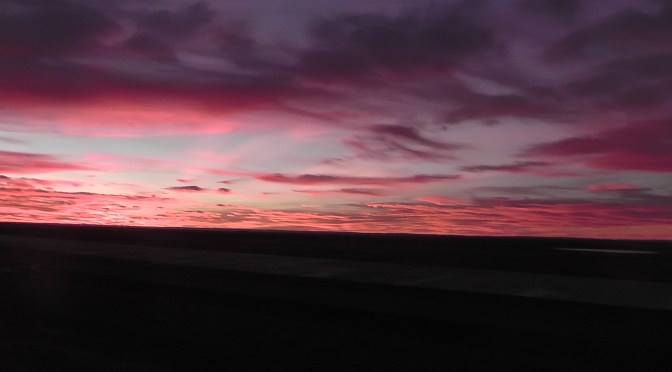
Aber wir werden mit einem flammenden Himmel verabschiedet, der uns fast zwei Stunden begleitet:

Morgen werden wir Feueraland endgültig verlassen (Link). Die Eindrücke von dieser einmaligen Landschaft am Ende der Welt werden wir wohl nie vergessen.

JW/Clea

Español

Ardiente despedida

Nuestra última noche en Tierra del Fuego la pasamos camino a Cerro Sombrero. Son como 70 km en una carretera de trocha. Un tramo difícil empezando a oscurecer.

Pero Tierra del Fuego nos despide con un cielo ardiente, que nos acompañó casi dos horas:

Mañana dejaremos Tierra del Fuego (link). Las impresiones de este paisaje tan especial en elf in del mundo será difícil de olvidar.

JW/Clea

English

Farewell under flames

We spend the last evening on Tierra de Fuego on a trip to Cerro Sombrero. We still have to drive about 45 miles on a muddy earth road. It is a stressful and tiring drive into the dark oft he beginning night.

But we are taking leave under a heaven in flames, which accompanies us almost two hours.

Tomorrow we will ultimately leave Tierra de Fuego. The impressions of the unique region at the end of the world will be unforgettable to us.

JW/Clea


Putin, Dostojewski und die russische Seele

Deutsch – EspañolEnglish

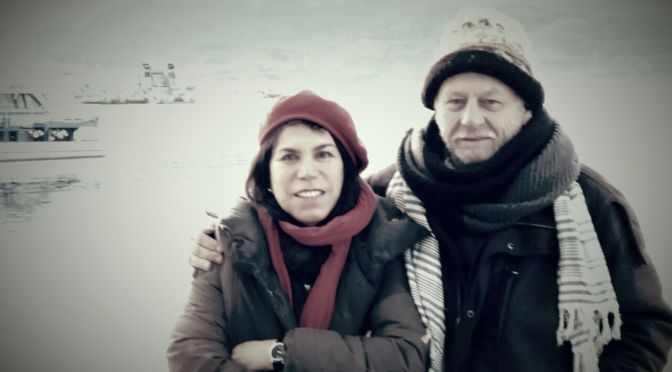
Trotz der frischen Temperatur treffen wir am Strand von Ushuaia auf Klementy und seine Frau Mariana vor dem Hotel Tonelken, was in der Sprache der Yánama so viel heißt wie “mit dem Herzen” geben. Klementy ist Russe und glühender Verehrer des “patriotischen” Putin. Mariana ist Argentinierin und stammt aus Salta.

Klar dass bei jeder Menge Wodka “auf russisch” – also mit suaren Gurken und Zitronensaft – nicht nur über Politik gesprochen, sondern auch die russische Seele besungen und Tolstoi, Dostojewski und Techow beschworen werden.

Nach einer Weile gesellt sich ein argentinischer Freund der beiden zu uns. Marcelo hat den Krieg um die Malvinas selbst miterlebt und war auf der untergegangenen Belgrano, auf der über 300 junge Männer ihr Leben verloren haben. Die Erinnerungen verfolgen ihn bis heute.

Aber trotzdem, – es ist ein wunderschöner Abend und dazu gehören in Argentinien natürlich auch eine melancholische Samba und ausführliche Hinweise, wie man Fleisch richtig grillt.

Español

Putin, Dostojewski y el alma rusa

A pesar de las temperaturas frescas encontramos en la playa de Ushuaia a Klymenty y su esposa mendozina Mariana cerca del Hotel Tonelken, que en lengua de los Yánama significa “dar con el corazón”. Klementy es ruso y admirador apasionado del “patriota” Putin. Mariana es argentina y viene de Salta.

Naturalmente que luego de muchos Vodkas a la rusa – con encurtidos y limón – no se habla de política sino del alma rusa evocando a Tolstoi, Dostojewsky, Chejov.

Despuès de un rato se incorpora al grupo un amigo argentino, peleador de la Guerra de las Malvinas. Marcelo se encontraba en la embarcación Belgrano hundida y donde perdieron la vida más de 300 jóvenes argentinos. Hasta el día de hoy lo persiguen estos recuerdos.

A pesar de estos recuerdos fue una noche hermosa en Ushuaia y por supuesto no podía faltar en Argentina luego una melancólica samba y una explicación detallada de como hacer una buena parillada.

English

Putin, Dostojewski and the Russian Soul

In spite of the low temperatures we meet Klementy and his wife Mariana on the beach in front of the hotel Tonelken, which means as much as “to give with an open heart” in the language of the Yánama. Klementy ist Russian and a fervent supporter of the “patriot” Putin. Mariana is Argentina and comes from Salta.

It goes without saying, that while drinking a lot of vodka Russian style – which comes with pickles an lemon juice – we do not only speak about politics but also romance about the Russian soul and literates like Tolstoi, Dostojewski and Techow.

After a while an Argentinian friend joins us. Marcelo fought in the The Falklands War and was on the Blegrano, on which more than 300 young men lost their lives. His memories haunt him until today.

But nevertheless we have a wonderful evening and part of it is a melancholic Argentinian samba and detailled explanations for a great BBQ:


Wir kommen zurück!

Deutsch – EspañolEnglish

Im Falkland-Krieg, der auf spanisch La Guerra de las Malvinas heißt, starben 649 Argentinier, 255 Engländer und drei Bewohner der (britischen) Inseln im Südatlantik.In Ushuaia gedenken die Argentinier ihrer toten Soldaten mit einem ewigen Feuer und einer langen, schwarzen Tafel, in die die Namen ihrer Toten eingraviert sind:

Ich weiß nicht, wie die Engländer ihrer Toten gedenken. Vermutlich mit einem ähnlich eindrucksvollen Denkmal irgendwo in England.

Ich bin alt genug, um mich daran zu erinnern, wie wenige Tage nach der Okkupation der fernen Inseln im April des Jahres 1982 mehrere britische Kriegsschiffe den Hafen von Portsmouth unter dem Jubel der zurückbleibenden Angehörigen verließen. Und ich vermute, dass auch die siegreiche Rückkehr der britischen Armada im Juni des selben Jahres, ähnlich bejubelt wurde, – zumindest von den Eltern, die keinen Sohn verloren hatten.

Was für ein Wahnsinn! Getrieben von nationalem Eifer schicken die Politiker beider Länder fast 1000 junge Männer in den Tod. Menschen, die in zwei Ländern leben, die ca. 10.000 km voneinander entfernt sind und – im Prinzip – in friedlichem Handel und Wandel miteinander verbunden sind.

Anstatt darüber zu verhandeln und zu respektieren, was die einheimische Bevölkerung der Inseln möchte, wird geschossen und ein Kreuzer der argentinischen Marine, die Belgrano, versenkt, die mit über dreihundert jungen Soldaten untergeht. Das Wasser in dieser Gegend hat ca. 4 Grad. Das hält ein Mensch höchsten 30 Minuten aus, wenn er nicht zuvor von einer Explosion der einschlagenden Raketen zerrissen wurde.

Und britische Soldaten, die in brennenden Harrier-Jets über den Inseln oder dem Meer abstürzen, ergeht es nichts anders. Sie sterben grausam für ein paar tausend Quadratkilometer Land, das – im Laufe der Geschichte – von England als Crown Colony okkupiert wurde, aber – bis heute – von der Bevölkerung trotz ethnischer Verwandtschaft mit den Festlandargentiniern, als ihre britische Heimat betrachtet wird. Ein Referendum im Jahre 2013 unter den Einwohnern der Inseln endete mit 99,8 % Stimmen für einen Verbleib im UK.

Trotz der enormen Verluste an Menschenleben in diesem Krieg heißt es unter der Landkarte der „Malvinas“ in Ushuaia – „Volveremos!“ „Wir kommen zurück!“ – Und ich denke, dass auch Frau May einen erneuten (unsinnigen) Versuch der Argentinier, die Inseln mit Gewalt zurückzuerobern, wie die „Eiserne Lady“ im Jahre 1982 wieder mit der (nicht weniger unsinnigen) Entsendung von Kriegsschiffen bis an das Ende der Welt beantwortet würde.

Was für ein Wahnsinn!

JW

Español

Volveremos!

En la guerra del Falkland, Guerra de las Malvinas en español murieron 649 argentinos, 266 ingleses y tres ciudadanos de las islas (breitánicas) en el Atlántico Sur. Aproximadamente veinte mil hombres fueron heridos.

En Usuhaia recuerdan los argentinos sus soldados muertos con la llama del fuego eterno delante de una pizarra en negro donde aparecen los nombres de sus muertos.

No sé cómo recuerdan los ingleses a sus muertos. Seguramente con un monumento similar en alguna parte de Inglaterra.

Soy lo suficientemente adulto para acordarme cómo pocos días luego de la ocupación de las islas lejanas en 1982 muchos barcos abandonaban el puerto de Portsmouth con el júbilo de los familiares que quedaban en tierra. Y asumo, que la armada que volvió en junio del mismo año fue igualmente obasionada – por lo menos por los padres, que no habían perdido un hijo.

Qué locura! Motivados por un fuerte ego nacionalista los políticos de ambos países enviaron a casi 1000 jóvenes muchachos a la muerte. Personas que vivían en ambos países, separados por aprox. 10 0000 km de distancia y que en principio estaban unidos por el quehacer cotidiano

En vez de negociar y de respetar lo que la población de las islas quieren se dispara contra un barco de la armada argentina, la Belgrano, hundiéndola y que llevaba a más de 300 soldados argentinos. El agua en esta zona tiene 4 grados de temperatura. Esto lo puede aguantar uns er humano máximo 30 minutos, si es que no fue antes despedazado por un cohete.

Y a los soldados británicos que se estrellaron en Jets Harriers en llamas al mar tuvieron igual suerte. Murieron en una forma brutal por unos kilómetros cuadrados de tierra – que en el transcurso de la historia – fue ocupada por Inglaterra pero – que hasta hoy – a pesar de familiaridad étnica con los argentinos del continente la sienten como su nación británica. En el referendum de 2013 votó el 99,8 de la población por ser parte de Inglaterra.

A pesar de la cantidad de pérdidas de seres humanos por esta guerra leemos en el mapa de Las Malvinas en Ushuaia:   Volveremos!¨ Y yo creo que la Sra. May contestará ante un nuevo (enajenado) intento de los argentinos de recuperar las islas. de igual forma, como la ¨dama de hierro¨en 1982 … enviando barcos de guerra hasta el fin del mundo

Qué locura!

JW

English

What a frenzy

During The Falklands War, which is called La Guerra de Las Malvinas in Spanish, 649 Argentinias, 255 Englishmen and three inhabitants of the Islands in the South Atlantic died. About twenty thousand men on both sides were wounded.

In Ushuai the Argentinians remember their fallen soldiers with an eternal flame and a very long black marble roll of honor in which they have engraved the names of their dead men.

I d not know how he British commemorate their dead soldiers. Presumably they have erected a similarly impressive monument somewhere in England.

I am old enough to remember how a few days after the occupation of the distant islands in April 1982 by Argentinian forces several British warships pulled out of Portsmouth harbor under the shouts of joy of the relatives who waved farewell to their marines. And I assume that the victorious return of the British armada in June of the same year was hailed in a similar way – at least by those who had not lost a son.

What a frenzy! Driven by national zeal the politicians of both countries send almost 1,000 young men into war and death. Men, who live in two countries, which are about 6000 miles away from each other and – at least in theory – connected in peaceful doings and dealings

In spite of negotiating a change and respecting, what the local people of the islands really want, they shoot at each other and a light cruiser of the Argentinian navy, the ARA General Belgrano, with more than three hundred young marines on board, is sunk by a British submarine. The waters in that area don´t have more than 40 Fahrenheit. A human being cannot survive such a low temperature in water more than 30 minutes, if he had not been torn apart before plunging into the icy waters.

And British soldiers, who crash in burning Harrier-Jets over the islands or the open sea, suffer the same fate. They die a cruel death for a couple of thousand square miles, which – in the course of history – were occupied by England as a Crown Colony. And in spite of ethnic relationship with Argentinians on the mainland it is still considered part of the UK by its inhabitants. A referendum in the year 2013 resulted in 99,8 % in favor of staying in the UK.

In spite of the enormous loss of human lives in that war it says under the huge map of the „Malvinas“ in Ushuaia – „Volveremos!“ „We will come back!“ – And I think, that Mrs. May would respond to a new (equally insane) attempt of the Argentinians to win back the islands by force, by an (equally insane) dispatch of war ships to the end of the world.

What a frenzy!

JW


Zwei Tage im Knast

Deutsch – EspañolEnglish

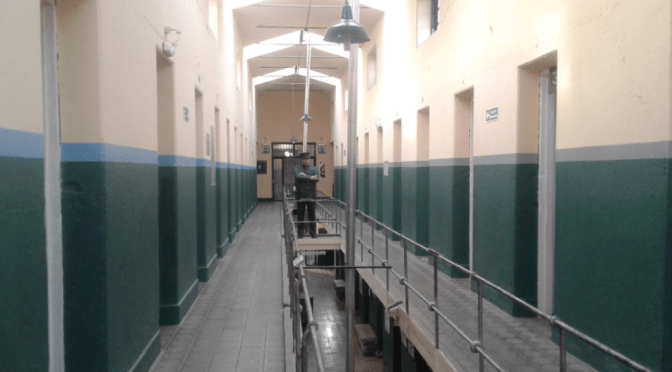
In Ushuaia befindet sich das ehemalige „Carcel de Reincidentes“, ein ehemaliges Gefängnis für rückfällige und schwer kriminelle Täter.

Gebaut wurde es im Auftrag der argentinischen Regierung zwischen 1884 und 1889 von den Häftlingen selbst. 1902 wurde die Anlage offiziell eröffnet, 1947 wurde sie geschlossen. 45 Jahre erfüllte sie ihren Dienst.

Angesichts der isolierten Lage und der klimatischen Verhältnisse hatte das Gefängnis keine Umgebungsmauer. Einige Gefangene erlangten eine gewisse „Berühmtheit“, z.B. Cayetano Santos Godino, ein junger Psychopath, der als erster Serienmörder in Argentinien verurteilt wurde. Wegen seiner übergroßen Ohren erhielt er den Spitznamen Petiso Orejudo (etwa: „kleines Riesenohr“).

Natürlich gab es hier auch politische Gefangene. Die sozialen Kräfte in diesem Land sind – bis heute – stark ausgeprägt. Vermutlich hat das auch mit den ersten Siedlern zu tun, von denen manche für ihre revolutionären Tendenzen bekannt waren. So wurde im Gefängnis von Ushuaia auch der ukrainisch-argentische Anarchist Simon Radowitzky eingesperrt und verbrachte dort 21 Jahre, bis er begnadigt wurde.

Heute ist das Gefängnis ein Museum. In einer Fotoausstellung wird dargestellt, dass dieses Gefängnis einem relativ human Strafvollzug mit resozialisierendem Charakter gedient habe. Dazu gehörte, dass die Häftlinge die ersten Häuser, Straßen und eine kurze Eisenbahnlinie in Ushuaia und Umgebung bauen mussten. Für die Zwangsarbeit erhielten sie sogar einen Lohn, der allerdings minimal war. Außerdem gab es eine Krankenstation und die politischen Häftlinge hatten Zellen, die von denen der Kriminellen getrennt waren. Ob das dem Schutz der politischen Intellektuellen galt oder verhindern sollte, dass die Kriminellen politisiert wurden, sei dahingestellt. In erster Linie war das Gefängnis wohl ein Versuch der argentinischen Regierung, die unwirtliche Region zu besiedeln – wozu Freiwillige kaum bereit waren – und gleichzeitig die Häftlinge in der abgelegenen Region ohne Fluchtgefahr verwahren zu können.

Und – natürlich – wurde auch in diesem Gefängnis gefoltert. Besonders gefürchtet war z.B. der Kommandant Adolfo Cardenas, der in den 30er Jahren des vergangene Jahrhunderts ein besonders brutales Regiment führte.

Wir haben das Gefängnis an zwei Tagen besichtigt. Bis heute vermittelt die Einrichtung eine bedrückende Atmosphäre. Wir sind froh, danach wieder die frische und kalte Luft auf Feuerland einatmen zu können.

JW

Español

Dos días en la cárcel

En Ushuaia se encuentra la antigua „Carcel de Reincidentes“, esto es una prisión para reincidentes y criminales de alto nivel.

Fue construída la prisión por encargo del gobierno argentino entre 1884 y 1889 y por los propios prisioneros. 1902 se inaugura oficialmente y en 1947 se sierra oficialmente igual. 45 años de existencia.

Considerando la ubicación tan aislada y las condiciones agrestes del clima la prisión no tenía muro en su entorno. Algunos prisioneros adquirieron cierto renombre como el caso de Cayetano Santos Godino. Un joven psicópata que lleva el nombre de Petiso Orejudo (etwa: Kleiner Ohrengroß).

También habían en esta cárcel un espacio para los prisioneros políticos. Las fuerzas sociales en este país están hasta hoy muy presentes. A lo mejor tiene que ver con los primeros migrantes que tuvieron tendencias revolucionarias y anarquistas. Así estuvo prisionero aquí el argentino-ucraniano anarquista Simon Radowitzky quien cumplió una pena de 21 años hasta que fue condonada su pena.

1947 se cierra la prisión. Hoy es un museo. En una exposición fotográfica se sustenta que esta prisión tuvo un carácter humano y respondía a motivaciones de resocialización para los prisioneros. Es dentro de ese concepto que los prisioneros construyeron las primeras casas en Ushuaia y alrededores, calles y una línea ferroviaria. Para este trabajo obligatorio recibían inclusive un salario, mínimo pero un pago al fin y al cabo. Además había una estación sanitaria y los prisioneros políticos tenían celdas separadas del resto de los prisioneros. Si se trataba de proteger a los políticos de los criminales o a los criminales de las ideas políticas resulta hasta hoy un enigma. En resumidas cuentas fue un intento del gobierno argentino de poblar esta región agreste, adonde llegaban pocos espontáneamente y por otro lado evitar fugas en un lugar tan apartado como Ushuaia.

Y naturalmente este lugar no estuvo excento de torturas. Muy temido fue un tal comandante Adolfo Cárdenas quien en los años 30 llevó a cabo un régimen muy brutal bajo su responsabilidad.

Visitamos la prisión en dos días. Hasta hoy transmiten las paredes una sensación de opresión. Felices salimos a respirar el aire puro y fresco de Tierra del Fuego.

JW

English

Two days in prison

There is a penitentiary in Ushuaia, which is called the „Carcel de Reincidentes“. It was used as a prison for serious and recidivistic offenders.

The Argentinian government had it built by the inmates themselves between 1884 and 1889. It was officially opened in 1902 and closed in 1947. It was used 45 years.

Considering the adverse weather conditions in that area and its isolated location, the prison did not have any enclosing wall. Some of the inmates gained some kind of “reputation”, for example Cayetano Santos Godino, a young psychopath, who had been condemned as the first serial killer in Argentina. Becuase of his abnormally big ears he was called Petiso Orjudo (something like „little giant-ear”).

Of course, there were political prisoners, too. The social powers in this country are – until today – very strong. Presumably this has also got to do with the first settlers in Argentina, some of who were known for their revolutionary convictions. Thus the Ukrainian-Argentinian anarchist Simon Radowitzky was imprisoned here and spent 21 years of his life in this place, before he was pardoned.

Today the former penitentiary is a museum. A photo exhibition shows, that the prison was supposed to follow a relatively humane form of imprisonment with some characteristics of rehabilitation. Part of it was, that the inmates had to build the houses, streets and a short railroad line in Ushuaia and the surrounding area. They even received a payment for this, but it was very little. In addition they had a small hospital and the political prisoners had their own cells, which were separated from those of the regular guys. Whether this was intended to protect the intellectuals from the criminals or whether it should prevent the criminals from the influence of the political prisoners, is not clear. It is obvious that the prison was mainly an attempt of the Argentinian government to populate this inhospitable area – which hardly any volunteers were willing to do – and to keep the criminals locked in without much danger of running away.

And – of course – in this prison the inmates were tortured, too. El commander Adolfo Cardenas, who established a brutal regimen in the 30ies of the last century, was especially dreaded.

We visited the prison on two days. Until today the atmosphere is oppressing. We are happy to be able to breathe in the fresh and cold air of Tierra del Fuego after leaving the building again.

JW

Auf dem Beagle Kanal

Deutsch – EspañolEnglish

Die Magellanstraße trennt den südamerikanischen Kontinent von der Grande Isla de Tierra de Fuego, mit der Hauptstadt Ushuaia (Link). Ushuaia selbst liegt am Beagle Kanal, der die Insel im Süden begrenzt.

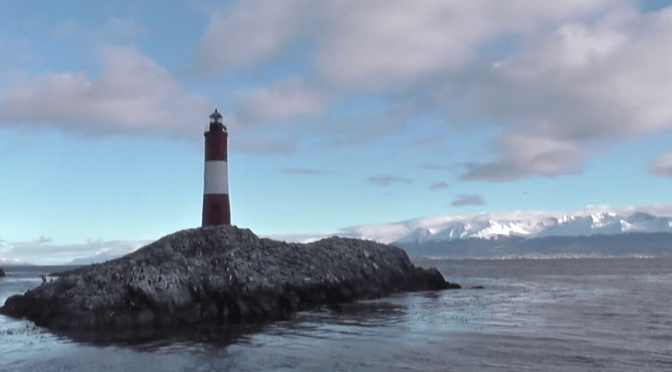
Wir machen eine Schiffstour Richtung Osten. Unterwegs können wir nicht nur die unglaubliche Landschaft bewundern, sondern bekommen auch einen kleinern Eindruck von der Vielfalt der Tierwelt in dieser subantarktischen Zone:

JW/Clea


Español

El Estrecho de Magellanes separa el continente sud americano de la Isla Grande de Tierra del Fuego con la capital Ushuaia. Ushuaia misma está situada en la costa del Canal de Beagle, donde termina la isla en el sur.

Hicimos un tour en un catamarán en el canal hacia el este. En el camino no solamente podemos admirar el paraje increíble, pero también obtuvimos una impresión pequeña de la variedad del la fauna en esta zona subantártida.

JW/Clea


English

The Beagle Canal

The Strait of Magellan separates the south American continent from the Isla Grande del Tierra de Fuego with the capital Ushuaia. Ushuaia itself is sitting on the coast oft he Beagle canal, which limits the island in the south.

We take a tour on a catamaran through the Beagle Canal eastwards. On the way we cannot only admire the breathtaking landscapes, but also get a small impression of the rich wildlife in this sub Antarctic zone at the end oft he world.


Die letzten hundert Kilometer

Deutsch – EspañolEnglish

Die letzten hundert Kilometer bis Ushuaia führen über den Paso Garibaldi. Besonders hoch ist er nicht. Verglichen mit dem knapp 5000 m hohen Paso Jama im Norden von Chile oder dem ähnlich hohen Paso de Agua Negra, den wir vor Monaten überquert haben, sind die vierhundert Meter des Paso Garibaldi geradezu lächerlich. Aber – so dicht am Polarkreis können auch 400 Meter zu einer Herausforderung werden, wenn der Winter kurz bevorsteht, wie bei uns.

Und so gehen wir am 4. Mai 2017 mit gemischten Gefühlen auf die letzten hundert Kilometer bis Ushuaia. Roberto vom Camping Hain zeigt – als Kenner der Zone – noch mit leicht besorgter Miene in Richtung Berge und meint, „Aufpassen, da oben hat´s bestimmt geschneit!“, aber dann geht es endgültig los. Wir können nicht mehr weitere Zeit verlieren, wenn wir vor dem Winter nach Ushuaia kommen wollen. Wer weiß, wie das Wetter nächste Woche ist.

Also fahren wir los. Wieder einmal durch eine traumhafte Landschaft:

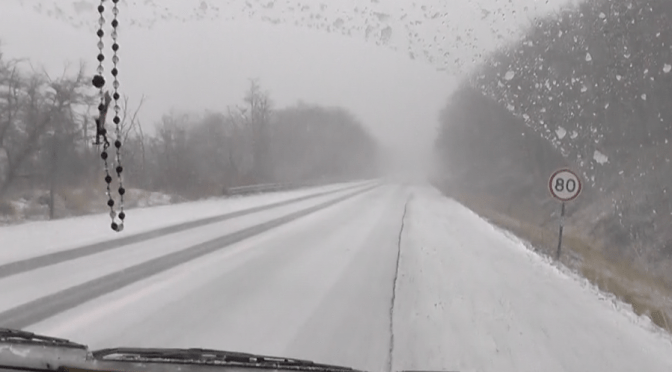
Aber diesmal sind wir noch mehr als sonst bei Passfahrten auf die Straßenverhältnisse konzentriert. Und die werden immer schlechter. Schließlich beginnt es sogar zu schneien. Wir haben keine Schneeketten dabei. Ab Juni sind die hier zwingend vorgeschrieben. Uns wird bewusst, dass wir seit mehreren tausend Kilometern keinem Wohnwagen mehr begegnet sind. Aber noch sind wir ja im Mai, also schlimmer wird´s hoffentlich nicht werden.

Und tatsächlich, wir schaffen es auch ohne Schneeketten ohne ernste Probleme, wenn auch angespannt und hoch konzentriert. Esperanza ist schließlich unser Haus auf Rädern. Ein anderes Heim haben wir derzeit nicht. Da darf Esperanza einfach nichts Schlimmes passieren.

Als wir schließlich die Einfahrt nach Ushuaia erreichen, atmen wir erleichtert auf. Dass wir hier auch wieder zurückfahren müssen, verdrängen wir für den Moment. Erleichterung und das Gefühl, es endlich geschafft zu haben, bewegen uns. Endlich haben wir die am südlichsten gelegen Stadt der Welt erreicht. Wir freuen uns sehr.

JW/Clea

Español

Los últimos 100 kilómetros

Los últimos 100 kilómetros hasta Ushuaia se hacen a través del Paso Garibaldi. No está muy alto, comparados con los pasos a 5000 m de Jama en el norte de Chile o uno similar como el de Agua Negra que cruzamos hace unos meses parece entonces los 400 metros del Paso Garibaldi una bicoca. Pero tan cerca del Círculo Polar pueden esos 400 metros ser un real reto sobre todo en invierno que fue cuando llegamos.

Y así nos dirigimos el 4 de Mayo con sentimientos encontrados dirección Ushuaia. Roberto del camping y conocedor de la zona nos despide con mirada preocupada diciendo: Cuidado arriba parece que ha nevado! Apuramos el paso y no queremos perder tiempo ya que el invierno está en las puertas de Ushuaia. Cómo será el tiempo la semana que viene? …

Partimos, nuevamente por un paisaje de ensueño.

Pero esta vez estamos más concentrados en el camino y las condiciones de la carretera que del paisaje. Y las condiciones del clima son cada vez más difíciles. Empezó a nevar. No tenemos cadenas.. Cadenas se exigen a partir de Junio, pero estamos en Mayo!!!… Somos la única casa rodante desde hace más de miles de kilometros en estas carreteras. Esperemos que no se ponga peor todo.

Y efectivamente lo pudimos hacer sin cadenas para la nieve un poco tensos y super concentrados. Esperanza es pues nuestra casa sobre ruedas! Nada le puede suceder! pas

Cuando finalmente nos saluda el letrero de Ushuaia respiramos aliviados. El hecho que tenemos que hacer este paso de regreso … lo reprimimos por el momento. Hemos llegado. Uf! Alivio y sensación de meta lograda. Hemos llegado a la ciudad más austral del continente sudamericano. Nuestra alegría es grande.

 JW/Clea

English

The last 60 miles

The last sixty miles to Ushuaia take us across the heights oft he Paso Garibaldi. It is not especially high. Compared with the almost 16,000 feet of the Paso Jama in the North of Peru or the similarly high Paso de Agua Negra, which we crossed some months ago, the 1233 feet oft he Paso Garibaldi seem tob e ridiculous. But so close to the southern polar circle even 1233 feet can become a challenge, when the winter is close like in our case.

And so we set off for the last 60 miles to Ushuaia with mixed feelings on May 4, 2017. Robert, the owner of the Camping Hain (Link), who knows the area very well, points to the mountains with some concern on his face and says „Be careful, up there it has probably snowed.“ But we cannot afford to lose more time, if we want to reach Ushuaia before the winter really kicks in. Who knows, how the weather will be like next week.

Therefore we decide to hit the road and off we go. One more time through a dreamlike landscape

This time we are even more concentrated on the road conditions than on previous pass crossings in the Andes. And the conditions get worse with every mile. Finally it starts snowing. And we have no chains with us. They are obligatory as of June. But still we are in May, and so we hope it won´t become worse. And we suddenly get aware of the fact, that we have not seen any motorhomes for some thousand of miles.

Well, we make it and we make it without problems even though we have no chains. But, of course, we have been very tense and highly concentrated most of the time during the drive. Esperenza is really our home on wheels. We do not have any other home right now, and we cannot allow anything bad happening to her.

When we finally reach the entrance to Ushuaia we really feel alleviated. For the moment we block out, that we will have to go back on the same route in the near future. The feeling of relief and having finally reached the southernmost city oft he world move us ore than we have expected ourselves.

JW/Clea