… wird natürlich auch in Peru gefeiert: mit viel Musik, gutem Essen und Trinken vor und auf dem Friedhof. Wir machen uns auf den Weg zum Friedhof La Apacheta in Arequipa:
Auf dem Friedhof selbst, drängen sich die „Trauergäste“ (fast) wie in München auf dem Oktoberfest. Und überall werden die Gräber bunt geschmückt, wird fröhlich gelacht und Musik gemacht:
Manchmal spielt sogar die Blasmusik auf:
Wir verlassen den Friedhof gut gelaunt und voller innerer Freude.
JW/Clea
Español
Todos los Santos
… se festeja en el Perú también naturalmente: con mucha música, buena comida y bebida en el cementerio. Vamos al cementerio La Apacheta en Arequipa.
En el cementerio los visitantes son muchos… casi como en la Oktoberfest en Múnich. Y por todos lados se decoran las tumbas y la gente está feliz, recuerda a sus muertos y los festeja con y música.
Hay un ambiente festivo…
Nos despedimos del cementerio llenos de buen humor y paz eterna.
JW/Clea
English
All Saints’ Day
… is – of course – celebrated in Peru, too: with lots o music, good food and something to drink. Today we set out for the La Apaceta cemetery in Arequipa.
On the cemetery itself, the „mourners“ crowd almost like at the Oktoberfest in Munich. And everywhere the tombs are decorated, the people are happy and make music.
Sometimes there are even brass bands:
We leave the cemetery good-humored and filled with inner joy.
sind – neben Macchu Pichu und Cusco – wahrscheinlich die am häufigsten besuchte Sehenswürdigkeit in Peru.
Nach einem ziemlich beängstigend Flug über das Gebiet in einem Kleinflugzeug, in dem der ca. 25jährige Pilot nach dem Start den Gashebel erst wieder einschrauben musste, um die Nase seines Fliegers allmählich nach unten zu drücken und seine Maschine in eine stabile Lage zu bringen – das war vor etwa 20 Jahren – habe ich meine Begegnung mit den Nasca-Linien diesmal ruhiger angehen lassen und bin – wie ein Condor – lautlos über die beeindruckenden Darstellungen im Wüstenboden geschwebt:
Dazu musste ich weder ein Flugzeug, noch einen Ballon, noch einen Drachen oder Ähnliches besteigen. Stattdessen konnte ich die wunderschönen Aufnahmen im MALI (Museo de Arte de Lima) in einer Ausstellung über die Nasca-Kultur bewundern.
Nicht minder interessant als der Drohnenflug über die Nasca-Linien war auch diese Animation der Gottheiten der Inka:
Wir selbst haben unseren Aufenthalt in Nasca dazu genutzt uns in der schönen Hacienda San Rafael von den „Strapazen“ in Lima auszuruhen und insbesondere Shanti hat den Swimmingpool genutzt:
Clemencia hat auch das Haus von Maria Reiche besucht, jener Deutschen, die vom peruanischen Staat als Ehrenbürgerin für ihre jahrzehntelange wissenschaftliche Erforschung der Nasca-Linien ausgezeichnet wurde:
JW
Español
Las Líneas de Nazca
… son – junto con Macchu Picchu y Cuzco – probablemente una de las atracciones turísticas más visitadas en Perú.
Luego de un vuelo arriesgados sobre la zona en una avioneta con un piloto de unos 25 años el que luego de despegar tenía la palanca de cambio en la mano y al aire, palanca que debía llevar la nariz de su avioneta hacia abajo para llevarla a una posición estable – eso fue hace aproximadamente 20 años – esta vez lo he tomado con más calma mi encuentro con las líenas de Nazca y he volado como un cóndor sobre las impresionantes expresiones en el terreno desértico.
Para realizar este encuentro no tuve que tomar un avión ni un globo, tampoco un parapente o algo similar. En vez de eso fui ver las impresionantes tomas presentadas en el MALI (Museo de Arte de Lima) en una exposición sobre la Cultura Nazca.
No solamente el vuelo es interesante sino esta animación de las deidades de la cultura Nazca:
Nosotros mismos utilizamos nuestra estadía en Nazca para descansar en la Hacienda San Rafael de los ¨trajines¨ de Lima y Clemen y Shanti disfruto mucho la piscina:
Clemen también visito la casa de María Reiche, esta alemana que el Perú la adoptó como ciudadana ilustre por su investigación científica de décadas de estas líneas misteriosas!
JW
English
The Nasca Lines
… are probably – together with Macchu Pichu and Cusco – the most visted sights in Peru.
After a rather frightening flight over the area in a small plane, in which the approximately 25- year old pilot had to screw in the gas lever after the start in order to push down the nose of the plane and stabilize its position – which happened to me about 20 years ago- I took my encounter wit the Nasca-lines more easy this time and hovered over the impressive pictures in the desert sand like a condor.
I did not have to take a plane, nor a balloon, nor a kite or anything like that. Instead I could watch the wonderful takes of the lines in the MALI (Museo de Arte de Lima) in an exhibition of the Nasca-culture.
Not less interesting than the flight with the drone over the Nasca lines was the animated representation of some Inka deities:
We ourselves used our stay in Nasca to recover from the „stress“ we had in Lima and enjoyed our stay in the very nice Hacienda San Rafael. Shanti liked the swimming pool very much:
Clemen also visited the Museo de Maria Reiche, that German lady, who was made honorary citizen of the Peruvian state after decades of scientific research of the Nasca-Lines:
Gleich am ersten Samstag nach unserer Ankunft in San Pedro de Saño im August 2016 gehen wir zum Einkaufen auf den Markt in Huancayo. Gemeinsam mit der Verwaltungsleiterin, der Köchin und Angela, einem der älteren Mädchen aus der Albergue, gehen wir auf den städtischen Markt.
Von den vielen Märkten, die wir auf unserer Reise bereits gesehen haben, ist der von Huancayo bis heute sicher einer der authentischsten; kein Wunder, denn Huancayo ist ein „Durchgangsstadt“ mitten in den Bergen und für unumgänglich auf den Andenstrecken in dieser Region.
Direkt neben dem traditionellen Markt liegt das moderne Einkaufszentrum Real Plaza. Eine Welt für sich. Und man kann es als gesellschaftlichen Fortschritt betrachten, dass sich gelegentlich auch Familien aus der indigenen Bevölkerung in diesen Konsumtempel trauen. Leider ist es gerade diese gedankenlose Art von Konsum ohne Werte, die zu vielen bedauerlichen sozialen Fehlentwicklungen im Lande beiträgt.
Die sozialen Gegensätze verfolgen uns, auch bei den Begegnungen mit der Familie und Freunden von Clemencia. Gemeinsam mit Cesar und Carla besuchen wir Señora Carmen, eine heute etwa 60 Jahre alte Frau, die jahrzehntelang mit Mann, Sohn, Tochter und Großmutter in ihrem kleinen Apartment mit einem Schlafzimmer, einem Wohnzimmer mit Arbeitsplatz für sie selbst und eine winzige Küche gibt.
Jetzt wohnt sie alleine. Ihr Sohn – erzählt sie zu recht voller Stolz – hat gerade sein Diplom als Rechtsanwalt für soziale Fragen erhalten. Sie ist glücklich Clemen und Cesar wieder zu sehen und Cesars Frau Carla kennenzulernen und empfängt uns mit großer Herzlichkeit und Großzügigkeit. Als Kind hat Cesar mit ihrem Sohn hier und auf der Straße oder im Parque Mora nebenan gespielt:
Nur ein paar Straßenzüge entfernt lebt Clemencias Bruder Jorge mit Frau Iris, seiner Tochter Jimena und seinem Sohn Jorge Manuel, der etwa das Alter von Cesar hat. Jorge ist glücklich, uns alle hier begrüßen zu können in seiner wunderschönen und exklusiven Wohnung in San Isidro, wo er vor ein paar Jahren Bürgermeister war.
Auch wir freuen uns sehr über das Wiedersehen mit ihm und mit Carla und Cesar, die extra aus Spanien nach Lima gekommen sind, um sich mit uns und der ganzen Familie in hier zu treffen. Wir alle genießen den Komfort der großzügigen Wohnung und die Gesellschaft von Jorge und seiner Frau Iris.
Die sozialen Gegensätze Perus könnten kaum größer sein, und hier in Lima sind sie besonders auffällig. So hat Lima hochmoderne, elegante Wohnviertel mit Geschäften aller Nobelmarken dieser Welt, gepflegte Parkanlagen, exzellente Restaurants und eine beeindruckende Strandpromenade, hoch über dem Pazifik, vergleichbar mit jeder anderen Großstadt der sogenannten „Ersten Welt“ …
… während gleichzeitig große Randbezirke in einem chaotischen Zustand sind. Der Verkehr wirkt wie ein endloser Kampf aller gegen alle um jeden Zentimeter Raumgewinn. Das Geschehen auf der berüchtigten Carretera Central oder in Ortschaften wie Lurín am Rande der Hauptstadt erinnert an einen Phantasy-Film über verwahrloste Städte in einer verlorenen Welt. Und die bedauernswerten PolizistInnen mitten im Chaos der Blechkarawanen scheinen in erster Linie zu pfeifen, um sich vor den eiligen und aggressiven Autofahrern zu schützen.
Relativ schnell gewöhnen wir uns an diese krassen Unterschiede im sozialen Gefüge des Landes. Clemencia ist seit ihrer Kindheit damit vertraut. Mir fällt es schwerer, aber es scheint der einzige Weg zu sein, mit diesem tagtäglichen Chaos außerhalb der gepflegten und geschützten Stadtteile von Lima irgendwie klarzukommen. Wir sind Teil des Systems, auch wenn wir das vielleicht nicht sein wollen. Und man muss wohl davon ausgehen, dass auch unser Wohlstand in Europa zu dem Ungleichgewicht in anderen Kontinenten beiträgt.
Trotz solcher Überlegungen fühlen wir uns im wunderschönen Strandhaus von Fernando in Paracas (im Süden von Lima) sehr wohl. Fernando ist ein weiterer Bruder von Clemencia. Wir verbringen ein entspannendes Wochenende mit ihm und seiner Frau Lucille und lassen uns mit kulinarischen Köstlichkeiten aus dem Meer verwöhnen. Parácas bedeutet in Quechua so viel wie “Sandregen” und erinnert Clemen an ihre Kindheit in dieser Region. Wir genießen den herrlichen Ausblick aufs Meer, den Swimmingpool und die gesamte Anlage, die von den beiden im Laufe der Jahre in der historischen Bucht von Parácas geschaffen wurde. Hier hat sich San Martín, einer der Befreier Perus von Spanien der Legende nach zu den Nationalfarben der peruanischen Flagge inspirieren lassen, als er die roten Flamingos beobachtete, die die Bucht oft aufsuchen:
Nur rund 70 km entfernt lebt Teresa, eine Halbschwester von Clemencia. Sie kam außerhalb der Ehe der Eltern auf die Welt. Gemeinsam mit Pablete (link), dem ältesten Bruder von Clemencia, besuchen wir sie und ihre Kinder in ihrem kleinen Strandhäuschen. Teresa und ihre Familie empfangen uns mit offenen Armen und Herzen:
JW/Clea
Español
Dos mundos
En el primer sábado después de nuestra llegada a San Pedro de Saño en Agosto del 2016 vamos de compras a Huancayo. Con la administradora del albergue Gladys, la cocinera Flor y Angela, una de las albergadas mayores vamos al mercado municipal.
De los muchos mercados que hemos visto en nuestro largo viaje hasta hoy, el de Huancayo, ha sido probablemente el más auténtico. No por nada es Huancayo una ciudad de tránsito en plena Sierra Central y paso obligado para muchas rutas.
Justo al lado del mercado tradicional está el moderno centro comercial Real Plaza. Y sí, es posible considerarlo como un progreso social, el hecho que de vez en cuando pobladores andinos se atreven a entrar en este impresionante templo de consumo, entonces se podría escribirlo. Lastimosamente sustentamos que es justamente el consumo sin educación ni valores es causa de muchas desgracias sociales.
Los contrastes sociales nos persiguen también en nuestros encuentros con la familia y los amigos de Clemencia. Juntos con Cesar y Carla (link) visitamos a la señora Carmen, una mujer de más o menos 60 años, que ha vivido con su marido por décadas, su hijo, su hija y la abuela en un apartamento pequeño donde se diferencian apenas el dormitorio, la sala de estar y lugar de trabajo de la señora Carmen más una cocina minúscula.
Hoy vive sola. Su hijo acaba de recibirse de abogado en asuntos sociales como nos cuenta su mamá con muchísimo orgullo. Con justa razón. Está feliz de ver de nuevo a Clemencia, a César y de conocer a su esposa, Carla. Somos recibidos con cariño y generosidad. Como niño César Manuel jugaba Dany, su hijo en el barrio, en el Parque Mora al frente de su casa :
A pocas cuadras de acá vive el hermano Jorge de Clemencia con su esposa Iris, su hija Ximena y su hijo Jorge Manuel, más o menos de la edad de César Manuel. Jorge está feliz, que nos puede dar la bienvenida en su departamento amplio y exclusivo en San Isidro, donde fue alcalde hace unos años atrás.
Nosotros también nos alegramos mucho de este encuentro con Jorge y familia, con César Manuel y su esposa Carla (link), que han venido a Lima para encontrase con nosotros y toda la familia peruana. Disfrutamos igualmente de la hospitalidad de Jorge y su esposa Iris.
Los contrastes sociales de Perú casí no podrían ser más grades y acá en Lima son especialmente notorios. Por un lado, Lima tiene unos barrios muy elegantes con tiendas de todas las marcas lujosas del mundo, parques muy bien conceptuados y cuidados, restaurantes excelentes y un malecón impresionante alto sobre la costa del Pacífico comparables a cualquier ciudad del primer mundo …
… y por otro lado zonas enormes en un estado caótico. El tráfico en la conocida y temida Carretera Central o en sitios como Lurín en las afueras de Lima nos acuerda a escenas de películas de Phantasy sobre ciudades deshechas en mundos perdidos en el cosmos. Y los pobres policías de tráfico parecen silbar más para protegerse frente de la agresión de las avalanchas de automovilistas apurados agresivos que para intentar organizar el caos.
Relativamente rápido nos acostumbramos a estas diferencias increíbles en le estructura social del país. Clemencia la conoce desde su infancia. A mi me cuesta más, pero es el único camino que vemos para sobrevivir en este caos cotidiano fuera de los barrios cuidados y seguros de Lima. Somos parte del sistema, nos guste o no. Pienso en relación con estas observaciones que nuestro bienestar económico en Europa también contribuye al desequilibrio social en otros continentes.
A pesar de todo eso disfrutamos también de la hospitalidad de Fernando y su mujer Lucille en su casa en Paracas (en el sur de Lima) Paracas, en quechua, lluvia de arena es para Clemen una referencia a recuerdos. Nos engríen con especialidades del mar – pejerreyes – y nosotros disfrutamos pasar el tiempo con ellos y disfrutar de una vista linda al mar, la piscina y todo el espacio que con los años han logrado en esta histórica bahía de Paracas, donde cuenta la saga que San Martín, uno de los libertadores, se inspiró en los colores de la bandera peruana viendo a los flamencos que visitan esta bahía.
Solamente a unos 70 kilómetros de allá vive Teresa, una media hermana de Clemencia. Nació fuera del matrimonio de los padres de Clemencia. Juntos con Pablete (link), el hermano mayor de Clemencia, la visitamos en la playa de Chincha. Teresa y su familia nos dan una bienvenida con brazos y corazones abiertos:
JW/Clea
English
Two worlds
Right on the first Saturday after our arrival in San Pedro de Saño in August 2016 we go shopping to the market in Huancayo. Together with the administrator of the shelter, the cook and Angela, one of the senior girls of the Albergue, we go to the traditional municipal market of Huancayo.
Out of all the markets, which we have seen on our long trip, the one in Huancayo is probably the most authentic so far. No wonder, because Huancayo is a typical gateway in the center of the Andes and there is no way around it for travellers in that area.
Next to the traditional market, there is the modern commercial center of Huancayo, the Real Plaza. It is a world of its own. And it is, of course, possible to understand it as a kind of social progress, that sometimes some indigenous people from the Andes dare entering this western consumer world. Unfortunately it is exactly this kind of consumerism without real values, which contributes to some of the social problems of Peru.
The social contrasts of Peru pursue us everywhere, also in our encounters with Clemencia’s family and her friends. Together with Cesar and Carla we visit Sra. Carmen, a lady of about 60 years, who has been living together with her husband, her son, her daughter and the grandmother in this small apartment with just one bedroom, a living with a workplace for her and tiny kitchen for decades. She receives us with great affection and generosity.
Now she lives alone. Her son has just received his certification as a lawyer for social issues. With good reason she is very proud of him. And she is happy to meet Clemen and Cesar again and get to know his wife Carla. As a child Cesar often played with her son here and in the street or in the Parque Mora, which is right around the corner.
Only a couple of blocks away there lives Clemencia’s brother Jorge (link) with his wife Iris, his daughter Jimena and his son Jorge Manuel, who is about the age of Cesar. Jorge is happy to be able to welcome all of us in his beautiful and exclusive apartment in San Isidro, where he served as mayor a couple of years ago.
We are also happy about the encounter with Jorge and his family and with Carla and Cesar, his wife, who have come from Spain to meet us and all their Latin American family here in Lima. We all enjoy the comfort of the exceptional apartment and the hospitality of Jorge and his wife Iris.
The social contrasts of the country could hardly be bigger, but here in Lima they are especially obvious. Lima has some highly modern neighborhoods, where you will find all branches of fashionable and exclusive shops, well-kept municipal parks, excellent restaurants and an impressive beach boulevard, high above the Pacific Ocean, which is not different from any other big city in the so called “first world”:
At the same time, there are neighborhoods around the modern city, which are simply chaotic. The traffic is like a never-ending aggressive fight for a few feet of space. What happens on the infamous Carretera Central or in places like Lurín at the outskirts of Lima reminds us of scenes from phantasy movies about rundown cities in lost worlds somewhere in space. And the miserable policemen and women in the middle of endless car avalanches seem to blow their whistles without stopping mainly because they have o defend their own lives from the aggressive attacks of impatient car drivers.
Relatively fast do we get accustomed to the incredible differences in the social structure of the country. Clemencia has been familiar with them since her childhood. For me it is more difficult, but it seems to be the only way to survive the daily chaos outside the pedicured and safe areas of Lima. We are part of the system ourselves, whether we like it or not and we have to admit that our wealth in Europe contributes to the social imbalance in other parts of the world.
In spite of such considerations we enjoy our stay in Fernando’s beautiful beach house in Parácas (in the south of Lima). Fernando is another brother of Clemencia’s. We spend a relaxed weekend with him and his wife Lucille and let them pamper us with culinary delicacies of the sea. Parácas means in Quechua “sand rain” and reminds Clemen of her childhood in this area. The wonderful view of the sea, the swimming pool and the whole site, which Fernando and his wife have created in many years will always be on our mind. According to legend San Martín, one of the liberators from Spain, was inspired to the colors of the Peruvian flag by the red flamingos, which sometimes visit the Bay of Parácas.
Only about 45 miles away from Paracas lives Teresa, Clemencia’s half-sister. She was born outside the marriage of Clemencia’s parents. Together with Pablete (link), the oldest of Clemencia’s brothers, we meet her and her family in their beach cabin near Chincha. We are welcomed with open arms and hearts.
Ihr werdet Euch erinnern. Vor ein paar Monaten haben wir um Spenden für das Projekt in San Pedro de Saño gebeten. Dort musste das alte Haus der Albergue komplett abgerissen werden, nachdem sich immer mehr Risse gebildet hatten und die Gefahr bestand, das Haus würde plötzlich zusammenstürzen.
Unser Spendenaufruf hat ein tolles Echo gefunden:
Insgesamt sind auf dem deutschen Spendenkonto der Kinderhilfe EV € 2270,- eingegangen. Außerdem haben wir aus der Petra-Zimmermann-Stiftung, die von unserem Freund und Anwalt Andreas Jasper verwaltet wird, noch einmal € 10.000,- erhalten. Davon haben wir € 8.000,- auf das Konto der ONG Apoyamé Peru in Huancayo überwiesen. Der Restbetrag von € 2000,- geht über Margarita Jaramillo, die Gründerin des Jardín de la Alegría in Bogotá als Stipendien für zwei behinderte Jungen an die Albergue Benposta in Kolumbien.
Wer genauer wissen möchte, wie viel in den letzten Jahren auf Grund Eures Engagements in beide Projekte geflossen ist, mögen unter Unsere Sponsoren nachschauen.
Inzwischen sind die Umbauarbeiten im vollen Gange. Auch Dank Eurer Spenden!
Vielen herzlichen Dank
JW/Clea
Español
Resultado de nuestro llamado de apoyo en donaciones
Queridos amigos en todas partes del mundo,
Se acordarán bien que hace unos meses hicimos un llamado para una donación especial para el proyecto en San Pedro de Saño (link) En San Pedro se tuvo que reestructurar la casa totalmente luego que se formaron unas rajaduras amenazantes y enfatizaba el peligro que en cualquier momento la casa pudiera derrumbarse toda.
Nuestro llamado a donación encontró un eco maravilloso:
En total han ingresado a la cuenta de Kinderhilfe € 2.270. Además hemos obtenido de la fundación Petra – Zimmermann que administra nuestro amigo y abogado Andreas Jasper otros € 10.000. De ahí hemos enviado € 8.000,- a la cuenta de la ONG Apoyamé Perú en Huancayo. La cantidad restante irá a Colombia, a Margarita Jaramillo, la fundadora del Jardín de la Alegría, para promover a muchachos sin recursos, pero muy capacitados que están albergados en Benposta.
Quien desee ver exactamente cuánto ha ingresado a los proyectos en los últimos años puede ver bajo Unsere Sponsoren el detalle exacto.
Mientras tanto los trabajos de reconstrucción en el Albergue están progresando cada día más. También gracias a sus donaciones.
Altogether you transferred € 2,270 to the account of the Kinderhilfe EV in Germany. In addition we received another € 10,000 from the Petra-Zimmermann foundation, which is administered by our friend and lawyer Andreas Jasper. Out of this donation we transferred € 8,000 to the ONG Apoyamé Perú in Huancayo. The remaining € 2,000 will be transferred to Margarita Jaramillo, the founder of the Jardín de la Alegría in Bogotá, and used for two stipends granted to two disabled boys in the Albergue Benposta in Colombia.
Those who want to know more about the amount of donations we received during the last years, may have a look at „Unsere Sponsoren“.
Meanwhile the rebuilding work is in full progress. Also thanks to your donations!
Wir sind wieder auf dem Weg zur Albergue in San Pedro de Saño. Und wieder geht es über den Ticlio-Pass, wieder sind tausende von Lastwagen auf der Carretera Central mit uns unterwegs.
Es ist offensichtlich: In Perú bewegt sich etwas. Mit einem Wirtschaftswachstum von 4 % im laufenden Jahr und einer Prognose von 4,3 % für das kommende Jahr führt Perú das Wirtschaftswachstum in Lateinamerika mit starken Zahlen an. Und das bemerkt man natürlich auch am Lastwagenverkehr.
Aber trotz dieses Wachstums ist Perú nach wie vor ein Land, in dem die Gegensätze zwischen arm und reich überwältigend sind. Die einen leben auf Inseln des Wohlstands, die anderen unter menschenunwürdigen Bedingungen. Auch wenn das starke Wirtschaftswachstum in den letzten Jahren (im Durchschnitt bei 6 %) dazu beigetragen hat, die Armut im Lande zu verringern, leben in einigen Provinzen noch immer um die 50% der Menschen unter der Armutsgrenze.
Dies alles geht uns durch den Kopf, während wir wieder einmal die Höhen des Ticlio-Passes erklimmen. Oben angekommen, machen mir diesmal die 4818 Meter ziemlich zu schaffen: Ich komme kaum aus dem Fahrersitz, so schwer fühlt sich mein Körper an. Mir ist schwindlig und ich bekomme starke Kopfschmerzen.
Clemen spürt anfangs nichts. Später klagt sie aber auch über Kopfschmerzen. Um uns zu stärken bereitet Clemen etwas Leichtes zum Essen vor. Dazu gibt es noch Locro und Mais von Straßenverkäufern, die das ganze Jahr über hier oben leben.
Unsere Esperanza ist an diesem Ort natürlich etwas Besonderes und die Straßenverkäufer erkundigen sich neugierig nach unserem Auto und der Reise:
Auf der Fahrt ins Tal des Mantaro kommen wir wieder an den verschiedenen Minenstädten vorbei, die hier im Laufe der Jahre entstanden sind und sehen – diesmal noch genauer als im vergangenen Jahr – welche Wunden dem Land zugefügt wurden. Die kaputte Landschaft insbesondere in der Umgebung von La Oroya kann wahrscheinlich niemand mehr „renaturieren“. Das ist verlorener Lebensraum – und sei es nur für ein paar Kondore, die sich in andere Regionen zurückgezogen haben:
Wir wissen natürlich, dass die Minenindustrie erheblich zum Wirtschaftswachstum Perús beiträgt und damit auch zum allmählichen Abbau der Armut im Lande. Das ist in Bolivien nicht anders und auch in Chile nach wie vor von großer Bedeutung. Und wir hoffen, dass durch die zunehmenden Proteste der Bevölkerung gegen die Umweltverschmutzung allmählich ein vernünftiges Gleichgewicht zwischen ökonomischen und ökologischen Interessen gefunden wird.
Am Abend kommen wir erschöpft in Concepción an. Das liegt ca. 12 km vor San Pedro de Saño, wo die Albergue ist. Diesmal wollen wir mit Esperanza nicht direkt vor der Albergue stehen. Wir gönnen uns einen relativ komfortablen und ruhigen Standplatz im Centro Vacacional Huaychulu am Rande von Concepción. Als Clemen ein kleines Mädchen war, lag das Hotel weit außerhalb der Stadt, Heute ist die Stadt schon sehr dicht herangerückt.
JW/Clea
Español
Algo se está moviendo
Otra vez estamos en camino al Albergue en San Pedro de Saño. Y otra vez tenemos que ir por el Paso de Ticlio, otra vez miles de camiones están en camino con nosotros.
Es obvio: Algo está en movimiento en el Perú. Con un crecimiento económico anual de 4 % en este año y un pronostico de 4,3 % para el año que viene, Perú está a la cabeza de los otros países latinoamericanos. Y eso se nota también en el tráfico intenso de camiones en las carreteras.
Pero a pesar de este crecimiento económico impresionante Perú sigue siendo un país, en el que la diferencia entre ricos y pobres es abrumadora. Unos viven en islas de prosperidad, los otros bajo condiciones inhumanas. Aunque este crecimiento económico en los últimos años (en promedio 6 %) ha contribuido en parte reducir la pobreza, todavía un 50 % de la población vive debajo del limite de pobreza en algunas provincias.
Todo eso nos pasa por el mente mientras estamos subiendo horas y horas por el Paso deTiclio. Una vez arriba, a 4818 metros de altura, ésta me causa bastante problemas. Casi no puedo levantarme de mi asiento… tan pesado se siente mi cuerpo. Tengo mareos y bastante dolores de cabeza.
Clemen no siente nada al principio. Más tarde también ella observa dolores de cabeza. Para fortalecernos un poco prepara algo liviano para comer. Compramos un choclo caliente y queso de los vendedores, que viven en Ticlio todo el año.
Claro que nuestra Esperanza es algo extraño y especial aquí arriba y los vendedores preguntan con mucha curiosidad por nuestra casa rodante y el viaje.
Bajando al valle del Mantaro pasamos otra vez por las ciudades mineras, que se desarrollaron acá durante los años y vemos – esta vez con más consciencia – las heridas que el paisaje ha sufrido. Muy probablemente el pasaje destruido especialmente en la zona de La Oroya será muy difícil de “renaturalizar”. Este es un paisaje perdido aunque sólo sea para un par de cóndores que se han retirando a otras zonas más alejadas.
Naturalmente sabemos también, que la minería ha contribuido considerablemente al crecimiento económico de Perú y así también a la reducción lenta de la pobreza. No es diferente en Bolivia y en Chile también la minería es de enorme importancia. Por eso esperamos que un día los protestas de la población contra la destrucción del medio ambiente lleven a un compromiso sano entre los intereses económicos y los ecológicos.
Al atardecer llegamos agotados a Concepción. Está ubicada unos 12 kilómetros de San Pedro de Saño, donde está el albergue. Esta vez no queremos quedarnos directamente frente del albergue. Por eso nos permitimos un sitio relativamente tranquilo en el Centro Vacacional de Huaychulo en Concepción. Cuando Clemen era una niña el hotel quedaba en las afueras de la ciudad. Hoy está casi en medio de ella. Así crecen los centros poblados.
JW/Clea
English
Something is moving
One more time we are on the way to the Albergue in San Pedro de Saño. Ando ne more time we have to climb the Ticlio pass, one more time thousands of trucks are on the road on the famous Carretera Central with us.
It is obvious: Something is moving. With an economic growth of 4 % this year and a forecast of 4.3 % for the next year Perú is leading the economic upswing in South America with strong numbers. And this also shows up in the amount of truck traffic on the roads.
But in spite of its economic growth Perú is still a country, where the contrast between rich and poor is overwhelming. Some live on islands of affluence, while the others live under inhuman conditions. Even though an economic growth of 6% on the average in recent years has certainly helped to reduce the poverty in the country, there are still provinces, in which around half the population lives under the poverty line.
All these considerations pass through our minds while we are climbing the Ticlio pass hour by hour. After arriving at the top of the pass at an altitude of 4818 meters (about 16,000 feet) I do have some problems: Hardly can I stand up from my seat, because my body feels like double its weight. I am dizzy and have some heavy headaches.
Clemen does not feel much at the beginning. Later she also complains about heavy headaches. In order to restore our powers she prepares something light to eat. And we also buy a hot choclo and locro from the street vendors, who live all the year round up here on the pass.
In this place our Esperanza is certainly something special. And the vendors, who quite surely do not belong to the privileged people of Perú, ask us a lot of questions about our motorhome and trip.
While descending to the Matamoro valley we pass along some of the mining towns, which have developed during the course of time. And this time we realize with even bigger conscience than a year ago how deep the wounds are, which have been afflicted to the landscape especially in the area around La Oroya. Most probably nobody will ever be able to restore the original natural beauty and living space of these mountains, and be it only home for a couple of condors, who have already resorted to more remote parts of the Andes.
Of course, we also know that the mining industry is very important for the Peruvian economy and that it has contributed to the slow reduction of poverty in the country. It is not different from Bolivia or from Chile, where the mining industry is also extremely important. And we hope very much that the protests of the local population against the destruction of the environment in the Andes will finally lead to a reasonable compromise between the economic and ecological interests of both sides.
In the late afternoon we arrive at Concepción rather exhausted. Concepción is located about twelve kilometers from San Pedro de Saño and the albergue. This time we don’t want to park Esperanza directly in front of the shelter. Therefore we allow ourselves a relatively comfortable and quiet place in the Centro Vacacional de Huaychulo. When Clemen was still a child, this hotel was located far outside the city. Today the city has almost reached it.
Nicole ist eine Großnichte von Clemencia. Sie studiert Kommunikationswissenschaften und möchte mit ihren Studienkollegen Frederik und Estrellita einen Dokumentarfilm über uns und unsere Projekte machen. Der Film soll eine gemeinsame Seminararbeit werden. Wir sind natürlich begeistert und treffen uns mit Nicole und Estrellita in der Esperanza, um die beiden über unsere Reise, unsere Motivation und die sozialen Projekte zu informieren, die wir unterstützen. Hier sind einige Aufnahmen von dem Gespräch, die Estrellita gemacht hat:
Auf der Basis des Gesprächs wollen Nicole und ihre Freunde in den nächsten Tagen die inhaltlichen Schwerpunkte ihres Films festlegen.
Ein paar Tage später: Wir sind für acht Uhr abends verabredet und wollen Nicole am Haus ihrer Eltern abholen. Dort warten Nicole und Frederik vor der Haustür auf uns; Frederik will die schwere Filmausrüstung mit uns nach Huancayo schicken; Bernardino, Nicoles Bruder ist noch oben in der Wohnung.
Das gesamte Gepäck steht neben ihnen. Darin befinden sich auch die Filmausrüstung und die Laptops der beiden. Hinter ihnen passt der Wachmann auf, der hier vor vielen Häusern postiert ist. Auf der anderen Straßenseite liegt ein Park, der um diese Zeit gut besucht ist, in dem Hunde und Kinder mit ihren Eltern spielen. – Ein friedliches, normales Bild in einem guten Wohnviertel in Lima.
Wir selbst sind noch unterwegs und verspäten uns ein paar Minuten. Der Verkehr ist schrecklich. Clemen bekommt plötzlich ein Whats-App-Nachricht von Bernardino: tía, tía (Tante, Tante). Clemen spürt sofort, dass da etwas nicht stimmt. Diese Nachricht ist nicht normal. Als wir schließlich eintreffen, sehen wir gleich, dass etwas nicht stimmt. Nicole und Frederik kommen mit angespannter Miene auf uns zu. Wir sind beunruhigt. Bei den beiden ist auch Bernardino. Aber noch wissen wir nicht, was passiert ist und begrüßen sie mit einer Entschuldigung für unsere leichte Verspätung.
Doch dann erfahren wir, was eben passiert ist:
Vor ein paar Minuten, als Nicole und Frederik vor der Haustür auf uns warteten, hielt plötzlich ein blauer BMW vor ihnen. Zwei bewaffnete junge Männer sprangen heraus, bedrohten sie mit vorgehaltener Pistole und beraubten sie in wenigen Augenblicken ihrer gesamten technischen Ausstattung: beide Kameras, das Audioequipment, zwei Laptops, ein Handy.
Wenn wir nur fünf Minuten früher angekommen wären, wäre das wahrscheinlich nicht passiert … oder wir wären selbst Opfer des Überfalls geworden. Der Schreck steht den beiden noch ins Gesicht geschrieben und wir sind alle niedergeschlagen:
Wir sitzen lange zusammen in der Esperanza und suchen nach einer Erklärung. – Aber die gibt es nicht. Was eben passiert ist, ist leider Alltag in Lima. Frederik, der Anfang zwanzig ist, erzählt, dass er in seinem Leben insgesamt schon 15 mal in Lima überfallen und beraubt wurde.
Das gemeinsame Projekt mit den drei jungen Leuten ist praktisch gescheitert. Wir können im Moment nichts machen und müssen ohne Nicole losfahren. Wir sind sehr traurig und verstört. Aber wir vereinbaren in Kontakt zu bleiben und – zumindest mit Ideen für ein neues Thema o.Ä. – zu helfen. Ob das gelingen wird? Im Moment wissen wir leider auch keinen Rat.
JW/Clea
Español
Brutal asalto
Nicole es la sobrina nieta de Clemencia. Ella estudia comunicaciones y quieren hacer, junto con Frederik y Estrellita, sus colegas de estudio un documental sobre el viaje nuestro y los proyectos. La película será un trabajo de la universidad. Estamos todos entusiasmados y nos encontramos con Nicole y Estrellita en nuestra Esperanza para informarles sobre nuestro viaje, nuestra motivación y sobre los dos proyectos sociales, que apoyamos. Aquí hay unas tomas de esta conversación, que hizo Estrellita:
Basándose en esta conversación Nicole y sus amigos determinarán los temas centrales de su documental en los días, que vienen.
Luego de haber respondido las primeras preguntas nos ponemos de acuerdo que viajaremos al albergue en San Pedro de Saño. Nicole con nosotros en la Esperanza y Frederik vendrá con el bus posteriormente para encontrarnos en Huancayo.
Hemos quedado para el jueves a las 8 pm en recoger a Nicole delante de la puerta de su casa. Ahí nos esperarán Nicole y Frederik. Frederik no quiere llevar el material fílmico con él, o sea, lo lleva Nicole en la caravana a Huancayo; Frederik nos dará el alcance en autobús mañana en Huancayo. Bernie, hermano de Nicole, se encuentra arriba en la casa de sus padres.
Todo el equipaje está junto a ellos. Ahí están los equipos de filmación, los laptops de cada uno. Detrás está el cuidador del edificio. Al frente de la casa hay un parque muy bien iluminado y visitado a esta hora del día, donde observamos niños y perros jugando con sus padres. Una imagen pacífica y normal en un barrio bueno de Lima, Surco.
Estamos en camino y nos retrasamos unos minutos. El tráfico es terrible hoy en día en Lima.Clemen acaba de recibir un mensaje de este último: Tía ! Tía! Sintiendo Clemen inmediatamente que algo está pasando. El mensaje de Bernie no es normal. En cuanto llegamos observamos inmediatamente que hay algo que no está bien. Nicole y Frederik vienen hacia nosotros con expresiones extrañas, alteradas. Nos inquietamos. Con ellos está también Bernie. Aùn no sabemos lo que pasa, los saludamos disculpándonos por el retraso.
Luego nos enteramos de lo sucedido.:
Unos minutos antes mientras Nicole y Frederik nos esperaban delante de la casa paró de pronto un BMW delante de ellos. Dos personas armadas salieron del vehículo amenazándolos . Les robaron los celulares y todo el equipo técnico de vídeo y sonido que llevaban en su mochila.
Si hubiéramos llegado 5 minutos antes, no hubiera sucedido nada … o hubiéramos sido parte de este asalto. El susto lo llevan aún ambos en la cara y todos estamos muy apesadumbrados.
Sentados en la barriga de Esperanza buscamos explicaciones. Pero no las encontramos. Lo que acaba de suceder es cotidianidad en Lima. Frederik, con sus apenas 25 años ha sido asaltado en total 15 veces en Lima.
El proyecto en conjunto con esta gente joven ha fracasado prácticamente. No podemos hacer nada y viajamos sin Nicole. Clemen y yo estamos tremendamente triste y perturbados por esta situación.
Quedamos de mantener el contacto para apoyarlos aunque sea en la elección de un nuevo tema. La pregunta es si se podrá? No tenemos en este momento ningún consejo en el bolsillo.
English
Assaulted and robbed
Nicole is one of Clemencia’s grandnieces. She studies communications and wants to make a documentary about us and our social projects together with her fellow students Frederik and Estrellita. The documentary is planned as a kind of „term paper“. We are enthusiastic, of course, and meet with Nicole and Estrellita in our Esperanza in order to inform the two of them about our trip, our personal motivation and the two social projects, which we support. Here are some of the takes, which were made by Estrellita:
Based on this conversation Nicole and her friends want to define the main subjects of their documentary in the days to come.
A few days later: We want to pick up Nicole at 8 o’clock in the evening. Nicole and Frederik are already waiting for us in front of her parents´ house. Frederik wants to send the heavy film equipment with us to Huancayo; he and Estrellita will go to Huancayo by bus tomorrow. Bernardino, Nicole’s brother is waiting upstairs in his parents’ house.
The whole baggage is on the floor next tot hem. The complete equipment and the two laptops are in the bags. Behind them there is a guardian, who protects the house; a common sight in this upper class part of the city. On the other side of the street there is a park with a lot of people at this time of the day; children are playing with their parents and dogs running around. – A peaceful and normal picture of a wealthy neighborhood.
We are still on our way to the meeting point and a couple of minutes late. The traffic is terrible. Suddenly Clemen receives a Whats-App-message from Bernardino: tía, tía (Tante, Tante). Clemen immediately knows, that something is wrong. This message is not normal. When we finally arrive, Nicole and Frederik approach us with stern faces. We are concerned. Behind them is Bernardino. But we still do not know, what is going on and we greet them with a meek excuse for our delay.
And then they tell us, what has just happened.
Only minutes ago, while Nicole and Frederik were waiting for us in front of the door, suddenly a blue BMW stopped at the curbside. Two armed guys jumped out of the car, and threatened them at gunpoint. Within moments they robbed everything, their whole technical equipment: both cameras, the audio recorder and the microphones, two laptops and one of their cellphones.
If we had arrived only five minutes earlier, this would not have happened – or we would have become victims of this assault ourselves. Our young friends’ faces are still filled with shock and we are all totally broken-hearted:
We sit together for a long time in the Esperanza searching for an answer. – But there is none. What has happened a short time ago, is everyday life in Lima, – unfortunately. Frederik, who is about 25 years old, tells us, that he has already been mugged fifteen times in his life.
The common project with the three young people has failed. At the moment we cannot do anything for them and have to leave without Nicle.
We are sad and totally deranged. But we promise to stay in contact and offer our help – at least as far ideas for a new subject for their documentary is concerned. At he moment we have no idea, whether this will be possible, but we have no other piece of advice.
Liebe Freunde in aller Welt. – Einige von Euch verfolgen unsere Reise als sogenannte „follower“. Darüber freuen wir uns natürlich sehr und wir haben ein bisschen das Gefühl, gemeinsam mit Euch unterwegs zu sein. Aber auf Grund von Rückfragen ist uns aufgefallen, dass gerade die „follower“ manchmal nicht mit der zeitlichen Reihenfolge unserer Beiträge klarkommen.
Das ist aber kein Problem. Wenn Ihr die Benachrichtigungsmail, die Ihr als „follower“ automatisch bekommt, ANKLICKT, geht nämlich unser Blog auf und Ihr könnt sofort erkennen, an welchem Datum sich der Beitrag in unseren Gesamtbericht einfügt. Außerdem seht Ihr im Blog auch die Fotos und die Videos. Die sind in der Mail nicht enthalten.
Leider können wir die verschiedenen Beiträge nicht immer von Anfang an in der zeitlich richtigen Reihenfolge „posten“. Das hat verschiedene Gründe, z.B. die jeweilige Internetverbindung (für den Upload der Videos), die Zeit, die uns z.B. für die Übersetzung ins Spanische und Englische zur Verfügung steht, etc. Wir bitten diese scheinbaren Unstimmigkeiten zu entschuldigen.
Also, wer alles sehen will und wissen will, was wann passiert ist und wie die Berichte inhaltlich zusammenhängen:
BITTE DIE MAIL ANKLICKEN!!!
Und wenn Euch etwas mal gefallen solltet, freuen wir uns natürlich über jeden Kommentar.
Liebe Grüße,
Jürgen und Clemencia
Español
Por favor hacer un click.
Queridos amigos en todo el mundo: algunos de ustedes siguen nuestro viaje como ¨follower¨. Eso nos alegra muchísimo. Sentimos que viajamos un poco con todos ustedes. Pero debido a algunas preguntas que recibimos vemos que algunos no tienen mucha claridad con la secuencia de nuestros escritos
Esto no es problema si cada vez que reciben una notificación vía mail de nosotros y hacen inmediatamente un clic en la comunicación. En ese momento se abre automáticamente el blog con las fotos y videos. Ellos no están contenidos en el mail. Se ven solamente en el blog mismo. Ahí también verán inmediatamente en que fecha se ubica nuestra reseña última.
Lamentablemente no siempre podemos hacer reseñas en el tiempo real por razones de Internet, el tiempo, las tres tres idiomas para llegar a todos nuestros amigos. Ruego disculpen este pequeño desfase…
Por eso, quien quiera ver cuándo ha pasado lo comentado
HACER UN CLICK EN EL MAIL.
Y si algo les gusta nos alegra escucharlo. La felicidad compartida es siempre más completa.
Saludos,
Clemencia y Jürgen
English
Please click it
Dear friends all over the world! Some of you read our blog as so called „followers“. We are happy about this, because it feels a little bit like being together on this journey. But some questions, which we have received, show us, that these faithful followers sometimes have problems with the chronological order of our posts.
This should not be a problem, if you make a click on the link in the mail, which you automatically receive as a „follower“. If you do so, our blog opens and you can instantly recognize, which date the post refers to and which are the earlier or following posts. In addition you can watch the videos and look at the photos, which are not visible in the mail.
Unfortunately we are not able to always upload our posts in the chronological correct order. This is due to different reasons, i.e. the upload capacity of our Internet connection, the amount of time, which we is at our disposal for working on the blog, the three languages, in which we post our reports etc. We apologize (one more time) for this inconvenience.
Well, those who want to see and know it all and really dig into the tale of our journey,
PLEAS CLICK THE MAIL
And if you find something, which you like (or don’t), we appreciate very much your commenting it.
Ähnlich wie Huarmey liegt auch Pacasmayo am Straßenrand: ein paar Kilometer abseits von der Panamericana direkt an der Pazifikküste. Und ähnlich wie Huarmey ist auch Pacasmayo ein Fischerstädtchen, das auf den ersten Blick einen traurigen Eindruck macht:
Ganz oben, wo der Christus seine Arme ausbreitet, ist der Friedhof, sozusagen mit Fernblick, und mit einer sehenswerten Wandmalerei an der Friedhofsmauer.
Aber unten am Strand ist Leben. Hier hat der Tourismus Einzug gehalten. Hauptsächlich Surfer kommen hier her. Und es gibt eine schöne Uferpromenade. Wir genießen den kurzen Zwischenstopp auf einer Terrasse des besten Hotels am Ort mit einem Pisco Sour, einer Portion Papa al la Huancaína und einem wunderbaren Blick auf den Sonnenuntergang am Pazifikstrand:
JW/Clea
Español
Parecido a Huarmey Pacasmayo también se encuentra a lado de la carretera: en este caso unos pocos kilómetros de distancia de la panamericana en la costa del Pacifico. Y parecido a Huarmey Pacasmayo también es una pequeña ciudad de pescadores, que parece un poco triste en el primer momento:
Muy arriba el Cristo con los brazos abiertos saludando se encuentra el cementerio con vista al mar – por así decirlo – y un mural impresionante alrededor.
Pero abajo al lado de la playa está la vida. Acá se ha instalado cómodamente el turismo. Son surfistas de todo el mundo, que vienen acá en busca de las buenas olas. Y vemos un malecón bonito. Nosotros disfrutamos nuestro estadía corta en Pascamayo en una terraza de un buen hotel con un pisco sour, algo porción de papa a la huancaína y una mirada espectacular al mar del Pacífico y uno de sus atardeceres famosos.
JW/Clea
English
Like Huarmey Pacasmayo is also located at the roadside: a couple of miles away from the Panamericana on the coast of the Pacific. And like Huarmey Pacasmayo is also a little fisher town, which looks somewhat sad at the first glance.
Up on the hill, where a statue of Jesus Christ opens his arms over the sea, there is the cemetery with ocean view – so to say – and a great wall painting around it.
But down at the beach there is the life. Here tourism has found its way into the small town. It is mainly surfers who come here. And there is a small but nice beach boulevard. We enjoy our short stop over in Pacasmayo on the terrace of the best hotel in town with a pisco sour, a nice dish of papa huancaína and a wonderful view of one of the famous sunsets over the Pacific.
Also ich bin nicht sehr religiös und nicht einmal Mitglied einer Kirche, aber die Frage nach dem Woher und Wohin bewegt mich natürlich auch – und mit zunehmendem Alter immer öfter. Und manchmal gehe ich auch auf den Friedhof, z.B. in Mamiña in Chile oder hier in Pascamayo im Norden von Peru:
Eine Zeitlang dachte ich, ich könnte mir selbst eine Antwort auf diese ewigen Fragen der Menschheit geben und las dicke Bücher über die neuesten Erkenntnisse der Kosmologie. Abgesehen davon, dass ich das meiste, was da gesagt wird, nicht wirklich verstanden habe, haben mir Relativitätstheorie und Gravitationswellen auf meiner Sinnsuche auch nicht wirklich weitergeholfen. Auch die Gespräche mit Freunden und Bekannten und natürlich mit Clemencia haben mehr Fragen aufgeworfen als beantwortet.
Ein guter Freund von mir, der „mit beiden Beinen“ voll im Leben steht, an einer Universität in de USA unterrichtet und sehr erfolgreich als Steuerberater arbeitet, ist z.B. fundamentaler Christ und legt die Bibel wörtlich aus. Demnach hat Gott die Welt so wie sie heute ist vor ein paar tausend Jahren erschaffen und die Evolution hat es nie gegeben. Selbst die Tatsache, dass es Adam und Eva – die mutmaßlich Weiße waren – nach seiner Auffassung gegeben hat und dass es – wie auch er unumwunden zugibt – auf diesem Globus jede Menge Menschen unterschiedlicher Hautfarben gibt, kann er mit Bibelzitaten erklären und kommt – wie selbstverständlich – auch ohne die Evolution zu einem bunten Weltbild.
Also gut, sein Glauben mag ihm heilig sein. Ich mag ihn trotzdem sehr, aber an ihn musste ich sofort denken, als ich in Pascamayo auf dem Friedhof unterwegs war. Dort gibt es eine Mauer – wie sie die meisten Friedhöfe auf dieser Welt umgibt – und darauf haben Künstler das Leben und Leiden Christi dargestellt:
Nichts Ungewöhnliches für einen christlichen Friedhof. Aber dann gibt es dort auch eine Darstellung der Schöpfungsgeschichte. Und die ist so schlicht und einfach, dass ich sie auf diesem Wege auch meinem guten Freund in den USA vermitteln möchte:
Gut möglich, dass der Liebe Gott einfach nur die Ursuppe angerührt und den Urknall ausgelöst hat. Daraus sind dann die Sterne entstanden und schließlich die Bausteine des Lebens. Danach hat der Große Meister nur noch zuschauen müssen und sich wahrscheinlich selbst gewundert, was aus seiner Schöpfung im Laufe der Zeit alles geworden ist.
JW
P.S. Zu dumm nur, dass auch die Künstler in Pacasmayo vergessen haben, dass es auch Menschen gibt, die nicht weiß sind. Ist mir allerdings auch erst beim Bearbeiten des Videos aufgefallen!
Español
La historia de la creación
Bueno, no soy muy religioso y ni siquiera soy miembro de una iglesia, pero la pregunta de donde venimos y a dónde vamos me mueve también naturalmente, y con la edad todavía más. A veces voy al cementerio, p.e. en Mamiña en Chile o acá en Pacasmayo en el norte de Peru:
Por un tiempo pensaba, que podría contestar estas preguntas eternas de la humanidad yo mismo leyendo gruesos libros sobre los últimos conocimientos de la cosmología. Aparte de no entender de verdad la mayor parte de las cosas, de las que hablan estos libros, ni la teoría de la relatividad ni el descubrimiento de las ondas gravitacionales me ayudaron en mi búsqueda de mi mismo. Inclusive las larga conversaciones con amigos y conocidos y naturalmente con Clemencia han producido más preguntas que respuestas.
Un muy buen amigo mío, que camina firme por la vida, da clases en una universidad y parece ser un asesor fiscal muy exitoso, es un cristiano renacido e interpreta la biblia en una forma literal. Según el, Dios ha creado el mundo como es hace unos miles de años y nunca hubo una evolución ( menos aún que los hombres pudieran ser descendientes de los antropoides).
Inclusive el hecho que hay obviamente hombres de muchos colores diferentes, aunque Adan y Eva fueron – probablemente – de raza blanca puede explicar con unas citas de la biblia y llegar así a una imagen vistosa del mundo existente sin cualquier tipo de evolución.
Bueno, su fe le sea bendita!. A pesar de esa discrepancia somos muy buenos amigos. Pero hoy tuve que pensar cuando estaba caminando por el cementerio de Pascamayo. Alrededor de este cementerio hay un muro largo – como es costumbre en casi todos los países cristianos del mundo – y en este muro los artistas han representado la vida y los sufrimientos de Jesucristo.
Nada insólito para un cementerio cristiano. Pero en este mural también hay una representación de la historia de la creación, que es tan fácil y tan natural, que me gustaría mandársela a mi amigo en los EEUU a través de este video:
No podría ser, que Dios solamente desleyó la sopa primordial y activó el Big Bang. De esta materia las estrellas se formaron y finalmente los módulos de la vida. Después el gran maestro tuvo que mirar solamente qué pasó y probablemente se sorprendió muchas veces al ver el resultado de su creación.
JW
P.S. Que estúpido, que inclusive los artistas en Pacasmayo han olvidado, que hay también hombres de diferentes colores. Algo, de lo que me di cuenta solamente cuando estaba editando el video.
English
The History of Creation
Well, I am not very religious and not even a member of any church, but the eternal questions of „Why“ and „Where“ do move me a lot, too – and with growing age even more. And sometimes I visit cemeteries like the one in Mamiña in Chile or here in Pacasmayo in the North of Peru:
For some time I thought, I could find an answer to the eternal questions of mankind all by myself and by reading voluminous books about cosmology. Apart from the fact that I did not really understand most of what was explained in these great books, neither the theory of relativity nor the discovery of gravitational waves have really helped me in my self-finding process. Also long conversations with friends and relatives and – of course – with Clemencia have thrown up more questions than answers.
A good friend of mine, who teaches at a University in the US and seems to be making good money as a CPA calls himself a reborn Christian and interprets the bible literally. According to his belief God has created the world as it is today about a couple of thousands of years ago and there has never been something like evolution (let alone that men descend from apes). Even the fact that Adam and Eve – who supposedly were white – and the fact that there are people of all shades of color in our world – which he fully acknowledges – can he easily explain with some quotations from the bible and thus accept the colorful picture of the world without any kind of evolution.
Well, his belief maybe holy to him. I love him anyway, he is a great guy, but I had to think of him immediately, when I was approaching the cemetery in Pacasmayo. It is surrounded by a long wall – like most Christian cemeteries in the world (except for the US) – and on this wall some artists have portrayed the life and sufferings of Jesus Christ:
Nothing unusual for a Christian cemetery. But then there is also a wall painting, which describes the biblical genesis. And this description is so simple and clear, that I want to convey its idea to my good friend in the US with this short video:
Maybe that God only prepared the primordial soup and ignited the big bang. Later the stars were born and finally the first pieces of life developed. Our „Big Master in Heaven“ only had to watch was going on and was probably surprised himself whenever he looked down on earth, how his own creation was developing during the eons of time.
JW
P.S. It’s a pity that the artists in Pacasmayo obviously have forgotten, that there are not only white people living on this globe. But I did not realize this myself, before I had edited the video.
Tingo Nuevo, wo die Festung Kuelap, das Machu Picchu des Nordens, liegt.
Von Chachapoyas führt die Straße Richtung Norden nach Pedro Ruiz und von dort nach Westen, Richtung Pazifik und Ekuador bzw. nach Osten über Moyobamba nach Tarapoto:
Wir fahren die Strecke nach Norden zweimal. Das erste mal von Tingo Nuevo über Pedro Ruiz und Bagua Grande bis La Balza in Ekuador. Die Straße ist zwar geteert, aber das Fahren ist anstrengend, denn sie wird nach starken Regenfällen immer wieder von abgegangenen Steinschlägen, abgebrochenen Straßenteilen oder Verwerfungen nach Erdbeben zumindest teilweise blockiert.
Anfangs geht es durch Altamayo. Eine Gegend, in der Kaffee und Kakao angebaut und die Bohnen am Straßenrand zum Trocknen ausgelegt werden. Die Entwicklung dieser Plantagen hat in den letzten Jahrzehnten zu einem wirtschaftlichen Aufschwung in dieser Region beigetragen.
Weiter nördlich fahren wir an Reisfeldern vorbei und passieren einige abgelegene Ortschaften. Trotz Navi sind wir manchmal nicht sicher, ob wir noch auf dem richtigen Weg sind:
Der Grenzübergang bei La Balza ist nicht ziemlich abgelegen. Der kleine Ort auf der ekuatorianischen Seite wirkt heruntergekommen.
In dieser Gegend gab es immer wieder (kleine) Grenzkonflikte, zuletzt 1995 beim sogenannten Cenepa-Krieg (link Wikipedia). Von den kriegerischen Konflikten der Vergangenheit ist heute aber nichts mehr zu merken. Stattdessen wird gerade heute ein gemeinsames Fest auf der Brücke vorbereitet, die beide Länder verbindet:
Die Zollformalitäten und die erneute Einreise nach Peru am nächsten Morgen sind relativ schnell abgewickelt. Nach ein bisschen Hin und Her bekommen wir erneut ein Visum für 90 Tage und eine ebenso lange vorübergehende Einfuhrgenehmigung für unsere Esperanza. Shantis Papiere werden diesmal überhaupt nicht überprüft, obwohl er freundlich wie immer aus seinem Fenster guckt.
Nach der Nacht in La Balza fahren wir erst einmal zurück nach Tingo Nuevo. Unterwegs machen wir halt direkt an der Landstraße. Es ist eine ziemlich laute Nacht, aber die Leute die hier wohnen nehmen uns freundlich auf und wir fühlen uns sicher:
Diese Diashow benötigt JavaScript.
Zurück In Tingo Nuevo sind wir dabei, als Sandra, Peténs Frau, ihre neue Boutique eröffnet; sie verkauft dort selbst hergestellten Schmuck und pflegt einen engen Kontakt zu den lokalen Kunsthandwerkern, deren Produkte sie ebenfalls anbietet. Zur Eröffnung sind auch befreundete Musiker eingeladen, die uns mit ihrer authentischen Andenmusik begeistern:
Ein paar Tage später soll auch die Hospedaje von Peten eröffnet werden. Noch hat sie keinen Namen, aber inzwischen wissen wir, sie heißt Tambo Canela. Wir können sie nur empfehlen. Sie liegt in der Nähe der Seilbahnstation nach Kuelap und hat alles, was ein Tourist braucht, der nicht unbedingt in einem Vier- oder Fünfsternehotel wohnen möchte. Außerdem ist Petén sehr hilfsbereit, ein sehr guter Koch und gehört zu den jungen Peruanern, die einen nachhaltigen Tourismus betreiben wollen.
Diese Diashow benötigt JavaScript.
Nach ein paar Tagen in Tingo Nuevo (mit Besuch in Karajia, s.o.) geht es endgültig weiter. Diesmal nach Moyobamba und Tarapoto. In Moyobamba machen wir Station und nehmen früh am Morgen ein Bad in den Thermalquellen. Nach den schweren Regenfällen, unter denen Perú im vergangenen Jahr gelitten hat, wurden die Bäder in solidarischer Gemeinschaft von der Bevölkerung von den Schlamm- und Steinlawinen befreit, die die Bäder verwüstet hatten:
Tarapoto empfängt uns am nächsten Tag mit einem tropischen Unwetter:
Und die viel gepriesenen Hotels im Dschungel sind zwar komfortabel, aber leider ungastlich: nirgendwo sind Hunde zugelassen! – Und so machen wir nach einer Nacht in einem einfachen Hotel, aber mit Standplatz für unsere Esperanza und Auslauf für Shanti, wieder kehrt und fahren zurück zur Pazifikküste.
Unterwegs machen wir – wie schon auf dem Hinweg – noch einmal Station in dem privaten Naturschutzgebiet Yacumama.
JW/Clea
Español
En el Departamento de Amazonas
Chachapoyas es una pequeña ciudad colonial en el Departamento de Amazonas en el Norte de Perú.
Está ubicado a una altura de más o menos 3000 m.s.n.m. y de acá se llega a las atracciones turísticas más destacadas de esta zona.
Cocachimba, donde se puede admirar las terceras cataratas más grandes del mundo
Tingo Nuevo (link), donde se encuentra la Fortaleza de Kuelap, el Machu Picchu del norte del Perú.
Desde Chachapoyas hay una carretera hacia el norte hasta Pedro Ruiz y de allá al oeste en dirección al Pacífico y Ecuador respectivamente al este, hacia Tarapoto a través de Moyobamba
Vamos por esta carretera al norte dos veces. La primera vez desde Tingo Nuevo vía Pedro Ruiz y Bagua Grande hasta La Balza en Ecuador. La carretera está asfaltada, pero manejar esta ruta es agotador, porque la carretera está bloqueada una y otra vez por piedras caídas, por partes rotas del asfalto y la tierra de debajo o por fallas de terremotos antiguos.
Al principio vamos por Altomayo. Es una región donde plantan café y lo secan en el asfalto de la carretera. El desarrollo de estas plantaciones a contribuido a un crecimiento económico en esta región en las últimas décadas.
Más al norte pasamos por campos de arroz y pasamos por algunas aldeas bastante aisladas. A pesar de nuestro sistema de navegación no estamos seguros a veces si todavía estamos en el camino correcto:
La frontera La Balza es bastante parece decaído en el lado ecuatoriano.
En esta región hubo una y otra vez conflictos fronterizos, la ultima vez en 1995 durante la llamada Guerra de Cenepa-Krieg (link Wikipedia). De los conflictos belicosos del pasado no se nota nada hoy día. En su lugar justamente hoy están preparando una fiesta común en el puente, que une los dos países.
Las formalidades de aduana etc. y la nueva entrada al Perú en la mañana siguiente se cumplen relativamente rápido. Después de un corto intercambio de palabras recibimos una vez más una visa para 90 días y Esperanza un permiso temporal de importación para el mismo tiempo. Nadie se interesa de los papeles de Shanty, aunque mira todo el proceso amablemente desde la ventana como siempre.
Después de la noche en La Balza regresamos rumbo a Tingo Nuevo. En el camino pernoctamos al lado de la carretera, muy transitada. Es una noche bastante ruidosa, pero la gente, que vive acá, nos recibe con cariño y nos sentimos seguros.
Diese Diashow benötigt JavaScript.
Llegados a Tingo Nuevo somos invitados en la inauguración de la nueva tienda de Sandra, la mujer de Petén, que vende joyas hechas por ella misma. Sandra cultiva la relación con las artesanas y su tienda es también un espacio para la artesanía seleccionada de la zona. Invitaron también unos amigos músicos que reproducimos con el siguiente video para no olvidar y continuar apreciándola:
Unos días más tarde quieren también abrir el Hospedaje de Petén. Todavía no tiene nombre. Mientras tanto sabemos, que se llama Tambo Canela. Solamente podemos recomendarlo. Está ubicada cerca al teleférico en Kuelap y tiene todo lo que necesita un turista o persona de paso. Adicionalmente Petén es una persona muy servicial, un cocinero excelente y pertenece a los Peruanos jóvenes, que quieren crear un turismo sostenible en Tingo Nuevo.
Diese Diashow benötigt JavaScript.
Después de unos días en Tingo Nuevo (inclusive una visita a Karajia, ver arriba) salimos. Esta vez camino a Moyobamba y Tarapoto. En Moyobamba nos quedamos un día visitando los baños calientes de la ciudad a primera hora. Luego de las lluvias torrenciales que Perú sufrió el año pasado ha sido toda la población que en forma solitaria limpió todo el terral y piedras que habían devastado los baños termales. Aplauso!
Tarapoto nos recibe con una tormenta y lluvia feroz al día siguiente?
Los hoteles más recomendados en la Selva pueden ser muy confortables pero no del todo hospitalarios: ninguno admite perros!! Por eso tenemos que pasar una noche en un hotel simple en las afueras de la ciudad, pero con espacio para Esperanza y Shanti. Al día siguiente salimos de Tarapoto dirección costa pacífica.
En el camino nos quedamos una vez más en la reserva natural Yacumama.
JW/Clea
Englisch
In the Departamento de Amazonas
Chachapoyas is a small colonial town in the Departamento de Amazonas:
It is situated at an altitude of about 10,000 feet and it is a place, from where you can easily reach all the famous sights of this area.
Tingo Nuevo (link), where the Fortress of Kuelap, the Machu Picchu of the North of Peru, is located.
From Chachapoyas a road leads in north direction to Pedro Ruiz and from there to the west, in direction of the Pacific and Ecuador respectively to the east to Moyobamba y Tarapoto.
We take this route twice. The first time from Tingo Nuevo via Pedro Ruiz and Bagua Grande to La Balza in Ecuador. The road is paved, but driving is difficult, because the road is partly blocked again and again by fallen rocks, parts of the road, which had broken off or by faults from the last earthquake.
At the beginning we drive through Altamayo. This is a region, where coffee and cacao is grown and the beans are spread on the road in order to dry them. The development of the plantations in the recent decades has contributed to the economic upswing of this region.
Further north we drive along large rice fields and go through some rather isolated small towns. In spite of our GPS we are sometimes not sure, whether we are still on the right way.
The border crossing in La Balza is very remote. The small settlement on the Ecuadorian side of the border looks rather run-down.
There have always been (small) border conflicts in this area between Peru and Ecuador, last time in 1995 during so called Guerra de Cenepa (link Wikipedia). But there is nothing left of this martial past. In spite the people on the border are preparing a common festivity on the bridge, which links both countries.
The formalities at the border and the re-entry into Peru on the next morning are easy. After some friendly talking with the officials on the Peruvian side we get a new visa and permit for Esperanza for 90 days. Nobody wants to see Shanti’s papers, even though he looks out oft he window friendly like usual.
After the night in La Balza we return to Tingo Nuevo again. On the way we have o spend the night directly at the through road. It is a noisy night, but the people who live here receive us in a very friendly way and we feel safe with them in this place.
Diese Diashow benötigt JavaScript.
Back in Tingo Nuevo we take part in the inauguration of Sandra’s new boutique. Her Sandra, Peténs wife, sells her self-manufactured jewelry. She also holds close contact to the local artists whose products she also offers in this boutique. They have also invited some friends, who are musicians and inspire us with their great and authentic Andean music.
A couple of days later they also want to open Peten’s Hospedaje. It still has no name. But meanwhile we know that it is called Tambo Canela. WE can only recommend this place. It is close to the new cable car, which takes you to Kuelap and has everything which a tourist needs, who does not necessarily want to stay in a four or five star hotel. In addition Petén is a very helpful person and he belongs to a group of young Peruvians who are committed to a sustainable kind of tourism.
Diese Diashow benötigt JavaScript.
After a few more days in Tingo Nuevo and a visit to Karajia (see above) we finally leave the place. This time we drive to Moyobamba and Tarapoto. In Moyobamba we stay overnight and take a bath in the hot thermal waters early in the next morning. After the extreme rain falls, which hit Peru in 2016, the whole place was cleaned from the mud and stone avalanches, which had covered the springs in an act of solidarity of the whole population.
Tarapoto receives us with a tropical storm the next day.
And the many exclusive hotels in the rain forest, which are praised everywhere, may be comfortable, but unfortunately they are not hospitable: they don’t admit dogs.– And so we spend the night in a modest hotel at the outskirts oft he city, where there is room for Esperanza and Shanti and return to the Pacific coast on the next day.
On the way there we spend one more night in the private nature reserve Yacumama, where we have already stayed on the way tot he east.
… ist der Name einer Giftschlange, die hier in der Umgebung von Moyobamba im Dschungel lebt. Und Yacumama ist auch der Name eines privaten Naturschutzgebiets, in dem wir seit ein paar Tagen mit unserer Esperanza stehen.
Ein wunderschönes Gebiet mit tropischen Lagunen, an deren Ufern sich abends Schwärme von Reihern in den Bäumen zum Schlafen versammeln:
Bei einem ausgedehnten Spaziergang am nächsten Tag können wir auch die Vegetation genauer erkunden …
… und in dem kühlen, aber erfrischenden Urwaldflüsschen Romero (gemeinsam mit Shanti) ein erfrischendes Bad nehmen:
Da es hier, mitten im Dschungel, auch ein sehr gutes Restaurant gibt, lassen wir es uns richtig gut gehen:
Von den Yacumamas haben wir – zum Glück – keine gesehen, – weder im Wald noch im Fluss, noch in den Lagunen.
JW/Clea
Español
Yacumama es el nombre de una culebra venenosa que vive aquí en la cercanía de Moyobamba en la selva. Y Yucumama es también el nombre de una reserva natural privada en la que nos encontramos con Esperanza y nuestro Shanty.
Un lugar muy hermoso con lagunas tropicales donde en las noches se reúnen las garzas en sus árboles.
En un paseo más largo al día siguiente pudimos apreciar un poco más de cerca la inmensa vegetación.
… y en un río selvático fresco por las aguas que llegan de los Andes tuvimos (junto con Shanti) un baño refrescante:
En Yacumama también hay un restaurante excelente y disfrutamos con alegría la comida y la música.
Las yacumamas mismas no las vimos – por suerte – ni en el bosque, ni en el río ni en las lagunas.
JW/CLea
English
Yacumama is the name of a poisonous snake, which lives in the jungle surrounding Moyobamba. And Yacumama is also the name of a private natural reserve, where we have been staying for a couple of days now.
It is a wonderful area with tropical lagoons, where the herons come together in the evening to sleep in the trees:
On a long walk in the morning after our arrival we can explore the lush vegetation of this magic place …
… and take a bath (together with Shanti) in a cool jungle rivulet with fresh water from the Andes:
We also enjoy the fact, that there is a very good restaurant here in the middle of the jungle.
Fortunately we have not seen any of the dangerous Yacumamas, neither in the woods nor in the river or the lagoons.
Chachapoyas, die Hauptstadt des Departamento de Amazonas, liegt zwischen Cajamarca und Tarapoto im westliche Teil der peruanischen Anden auf einem Berghang oberhalb des Utcubamba-Flusses, einem Nebenfluss des Marañon, der seinerseits ein Quellfluss des Amazonas ist.
Der Ort ist für viele Besucher Ausgangspunkt zu den Sehenswürdigkeiten dieser Region; und dazu gehören vor allem:
Wir sind heute mit Petén, seiner Frau Sandra und Cayetano, dem vierjährigen Sohnemann, unterwegs. Von Tingo Nuevo, wo wir starten, sind das nur rund 55 km. Aber die Straße ist zum großen Teil unbefestigt, wieder voller Kurven und von der Hauptstraße am Utcubamba Fluss über Luya bis hinauf nach Karajia sind es etliche Kilometer.
Als wir schließlich ankommen, werden erst einmal Souvenirs aus der Region begutachtet und – nach einigem Feilschen – auch gekauft. Sandra möchte ihren Schmuckladen in Nuevo Tingo erweitern und auch Kunstgewerbe aus der Region anbieten:
Von Karajia führt ein Fußweg zu den Sarkophagen. Cayetano als jüngstes Teammitglied mit noch ziemlich kurzen Beinen darf auf dem Pferd reiten. Wir Erwachsenen gehen zu Fuß.
Der Weg ist zwar nicht lang, aber es geht ziemlich steil hinab (und später natürlich wieder hinauf): In über 3000 Metern Höhe ist das immer etwas anstrengend. Aber inzwischen haben wir uns daran auch schon etwas gewöhnt.
Irgendwann geht es dann nur noch zu Fuß weiter und nachdem wir einen Felvorsprung umrundet haben, sehen wir endlich die berühmten Sarkophage von Karajia:
Es ist ein spektakulärer Anblick, der uns tief berührt, auch weil wir wissen, dass die Gebeine der toten Chachapoyos bis heute in diesen Sarkophagen ruhen. Wir betrachten diese stummen Zeugen einer vergangenen Welt eine ganze Weile und hängen unseren Gedanken nach. Diesmal wirkt die Realität stärker auf uns als unsere Fantasie.
JW/Clea
Spanisch
Chachapoyas es la capital del Departamento de Amazonas entre Cajamarca y Tarapoto en la zona oriental de los Andes peruanos a orillas del inmenso río Utcubamba, afluente del Marañón, otro señor río del Perú:
Este lugar es el punto de partida de las bellezas de esta región y ahí contamos
Hemos salido temprando con Petén, su esposa sandra y el increíble Caetano, su hijito de 4 años. Desde Tingo Nuevo, donde empezamos el recorrido y donde viven ahora Petén y familia recorrimos 55 Km. El camino es en gran parte trocha, llena de curvas bordeando siempre el Utcubamba pasando por Luya hasta Karajia.
Cuando llegamos finalmente observamos los souvenirs de la región y negociamos la compra de algunos, Sandra quiere ampliar su taller de joyería apoyando la artesanía de la zona para lo cual ha empezado a tejer una red de comunicación con los artesanos
De Karajia lleva un camino hacia los sarcófagos. Caetano como el integrante más joven del grupo con sus piernitas va a caballo. El resto va a pie.
El camino no es largo, pero si empinado: a 3000 metros de altura es siempre un poco exigente . Pero en el interín estamos acostumbrados a estas alturas.
En algún momento sólo se puede ir a pien bordeando rocas inmensas en el camino y de pronto … estaban ahí! Los famosos sarcófagos de Karajia:
Es un imagen espectacular que nos toca profundamente. También porque sabemos que aún en estos sarcófagos están los restos de los antiguos peruanos de esa zona, los chachapuyos. Observamos a estos testigos silenciosos de un tiempo pasado acompañándolos con nuestro asombro y pensamientos. Esta vez la realidad superó la fantasía.
JW/CLea
Englisch
The Sarcophagi of Karajia
Chachapoyas, the capital of the Departamento de Amazonas, is located somewhere between Cajamarca and Tarapoto in the western part of the Peruvian Andes on a hill slope above the Utcubamba river, a tributary of the river Marañon, which itself is a feeder of the Amazon river.
For many vistors this place ist he starting point tot he sights of this region, which are:
Today we are travelling with Petén, his wife Sandra and their sun Cayetano. From Tingo Nuevo, where we start our trip, it is only about 30 miles to Chachapoyas. But the road is gravel for the most part and there are lots of curves again and from the main road along the Utcubamba river to Luya and up to Karajia it is quite a long way.
After we have finally arrived, we first have a look at some of the great handicraft, which is offered here and – after some bargaining – really buy something. Sandra who has a small jewelry shop in Tingo Nuevo wants to broaden her offer and sell good handicraft from the region herself.
From Karajia there is a small trail to the sarcophagi. Cayetano our youngest menber in the team with rather short legs is allowed to take a horse. The adults all have to walk.
The walk is not very long, but it is steep and downhill (and of course uphill afterwards). In about 10,000 feet this is rather tiring. But meanwhile we have already accustomed somewhat to these heights.
At some point we can only continue by foot and after surrounding a huge rock formation we finally see the famous sarcophagi of Karija for the first time.
It is a spectacular view, which moves us deeply, also because we know, that the remains of the Chchapoyos, who were buried here, still rest in theses sarcophagi. We watch the dumb witnesses of a lost world for quite a while and let our minds wander. This time the reality is stronger than was our phantasy.
Etwa 50 km nördlich von Chachapoyas liegen die Gocta-Wasserfälle. Mit 770m Fallhöhe sind das die dritthöchsten Wasserfälle der Welt. Etwa sechs Kilometer entfernt liegt die komfortable Octa-Lodge. Von dort hat man einen sehr schönen Blick auf die Wasserfälle. Und es war ausgerechnet Clemencias amiga de carpeta, Carmela Fernández, die dem spanischen Besitzer der Lodge als Architektin vorschlug, den Swimmingpool direkt gegenüber den Wasserfällen zu positionieren. Wirklich spektakulär.
Aber ich will sie aus der Nähe sehen und mache mich auf den Weg. Gleich am Anfang geht es steil bergab. Bei der Hitze und ungefähr 3000 hoch in den Bergen ist das ziemlich anstrengend. Nur Shanti ist glücklich und tobt durch einen Bach:
Nach ungefähr einer Stunde wird mir klar, ich habe mich verlaufen.
Nachdem ich den richtigen Weg wieder erreicht habe, laufe ich noch rund zwei Kilometer Richtung Wasserfälle und mache noch ein paar Aufnahmen der Wasserfälle:
Aber nach rund zwei Stunden, die ich unterwegs bin, muss ich einsehen: Das schaff ich heute nicht mehr und kehre schließlich um.
Ein Lied das Clemen gerne singt geht so: Auch ein falscher Weg ist ein Weg!
JW
Español
Un camino equivocado …
Aproximadamente a 50 kilómetros al norte de Chachapoyas están las Cataratas de Gocta. Con unos 770 metros de caída son las terceras cataratas más altas del mundo. A unos 6 kilómetros de distancia esta ubicado el confortable Octa-Lodge. Desde allá tenemos una vista muy especial hacia las cataratas. Fue justamente la amiga de carpeta de Clemen, Carmela Fernández, arquitecta quien le sugiriera al dueño, un empresario español, la ubicación de la piscina, directamente frente a las cataratas. Algo espectacular.
Pero quiero verlas desde cerca y salgo para allá. Desde el principio el camino baja bastante. Con el calor en esta zona y a una altura alrededor de 300 metros es bastante agotador. Solamente Shanti se siente feliz y se mete con gusto en un pequeño rio a nuestro lado.
Después de más o menos una hora está claro: estoy perdido.
Después de haber retomado el camino correcto continuo unos dos kilómetros más hacia las cataratas y puedo hacer todavía algunas tomas bonitas en el camino:
Pero después de dos horas caminando hacia abajo y arriba tengo que admitirme: No voy a lograrlo y emprendo el regreso.
Una canción que Clemen canta dice: un camino equivocado es también un camino …
JW
English
Bad decision
About 30 miles north of Chachapoyas there are the Gocta falls. With a height of about 2200 feet they are the third highest waterfalls in the world. The very comfortable Octa-Lodge is about 4 miles away from the falls. From there you have a wonderful view of the falls. And it was just Clemencia’s amiga de carpeta, Carmela Fernández, who suggested to the Spanish owner of the lodge placing the swimming pool right in front of the waterfalls. Very spectacular.
But I want to see them close-up and set out for a hike to the falls. From the very beginning the trail is leading steeply downhill. Wit the heat and an altitude of about 10,000 feet this is a kind of exhausting. Only Shanti is happy and dashes through the rivulet, which accompanies us.
After about an hour I realize, that I have lost my way.
After reaching the right trail again, I still walk about 1.3 miles in the correct direction and have some beautiful views of the falls:
But two hours after leaving I have to admit to myself, that I won’t be able to make it today and have to return.
A song which Clemencia likes to sing goes like that: Even the wrong way is a way.
Kuelap war bis vor kurzem so etwas wie Terra incognita für Peru-Reisende. Es galt als das Machu Picchu im Norden des Landes, war aber nur mit einer anstrengenden und langen Wanderung in ungefähr dreitausend Metern Höhe zu erreichen und deswegen vielen gar nicht bekannt.
Inzwischen ist es zu einem der wichtigsten Touristenziele Perus geworden und wird wohl in den nächsten Jahren ähnlich überlaufen werden wie sein berühmtes Gegenstück im Süden des Landes. Das liegt nicht nur an seiner kulturellen Bedeutung, sondern auch an einer Seilbahn, die es seit ein paar Monaten gibt und die es überflüssig macht, die anstrengende Wanderung auf sich zunehmen.
Von Tingo, dem Ausgangsort für die Besuche von Kuelap geht es erst einmal auf einer steinigen Piste rauf nach Tingo Nuevo; von dort mit einem Bus zur eigentlichen Talstation der Seilbahn. In ca. zwanzig Minuten bringt eine hochmoderne französische Kabinenbahn dann die Besucher zur „Festung Kuelap“. Wer zum ersten Mal die Fahrt antritt, wird wahrscheinlich überrascht sein, dass es erst einmal mit der Seilbahn steil und tief hinab geht, bevor dann der Anstieg nach Kuelap beginnt.
Wir sind uns der Nachteile für die Umwelt und die touristische Entwicklung mit all ihren Auswüchsen für diese bis heute abgelegenen Region im Norden Perus sehr wohl bewusst, aber trotzdem sind wir beeindruckt von dem kühnen technischen Konstruktion der Seilbahn und der ungewohnten Effizienz mit der hier der Seilbahnbetrieb funktioniert:
Oben angekommen sind es noch ein paar hundert Meter zu Fuß, bis wir den Eingang zur eigentlichen Festungsanlage erreichen. Mit einer jungen, aber sehr gut informierten Führerin besuchen wir den beeindruckenden Komplex, in dem die Cachapoyos seit ungefähr 900 n.Chr. lebten und sogar die Invasion der Inkas im Jahre 1470 überdauerten:
Wer sich für die Details dieser Anlage interessiert, möge diesem Link nach Kuelap folgen.
JW/Clea
Español
Kuelap era hasta hace poco como un secreto para los viajeros al Perú. Era considerado como el Machu Picchu en el Norte del país que sólo se alcanzaba con una caminata larga a aproximadamente 3000 metros de altura y por tanto no tan visitada.
En el interín es uno de los atractivos turísticos más importantes que tiene el Perú y sera desbordado y visitado pronto como su paralelo al sur del país. No solamente por su importancia cultural, sino también por un teleférico que permite la llegada a las ruinas en forma más livianamente
Desde Tingo, la salida de los visitantes a Kuelap se sigue por una carretera de ripio hasta el Tingo Nuevo. Desde allí en bus hasta la estación del teleférico. En aproximadamente 20 minutos de viaje se desliza el teleférico de procedencia francesa y supremamente moderno por encima de Los Andes facilitando la llegada a Kuelap. Quien hace el viaje por primera vez se sorprenderá de las subidas y bajadas fuertes del teleférico hasta llegar a Kuelap.
Somos conscientes de las desventajas ecológicas que un desarrollo del turismo podrá traer a esta parte aún virgen de la zona del Perú. Estamos muy impresionados por esta construcción técnica y de la eficiencia que demuestran los.
Ya una vez arriba se camina un par de metros a pie hasta la entrada propiamente de la fortaleza de Kuela. Con una joven de la zona pero muy bien informada nos adentramos en este mundo de los chachapoyas, que vivieron acá desde aproximadamente 900 después de Jesucristo y inclusive sobrevivieron la invasión de los incas en 1470:
Quien está más interesado en los detalles de esta cultura de los chachapoyas puede continuar leyendo en el siguiente link.
JW/Clea
English
Until recently Kuelap had been a kind of terra incognito for people, who traveled Peru. It had always been supposed to be the Machu Picchu of the North of Peru, but could only be reached by a long and exhausting hiking tour on about 10,000 feet above sea level and therefore it was not even known to many people.
Meanwhile it has developed to one oft he most important tourist sights of Peru and will probably soon be as overcrowded as its famous counterpart in the south of the country. This is not only due to its cultural significance, but also to a cable car, which was opened only a couple of months ago and makes exhausting hiking tours unnecessary.
From Tingo the starting point for any visit of Kuelap you first have to take a rough earth road to Tingo Nuevo in your own car; from there a bus, which is run by the cable car company, takes you to the base station of the cable itself and in about another 20 minutes the cable car takes you to the fortress of Kuelap. Those who do the trip for the first time, will probably be surprised by the fact, that the cable car first takes a steep dive into a valley after leaving the base station, before it smoothly starts climbing up to Kuelap.
We are well aware of the disadvantages for he environment and the touristic development with all its excesses for this area, which is until today a fairly remote region, but we are also impressed by the unusual efficiency, with which the daily working of the cable car is managed.
After arriving at the hill station it is another couple of hundreds of meters, before we reach the entrance to the fortress itself. With a young lady from a nearby village we visit the whole complex, which was inhabited by the Chachapoyas since about 900 AD and even survived the invasion by the Incas in 1470:
Those who are interested in more information about Kuelap may visit this page.
Die Landstraße von Cajamarca nach Chachapoyas gilt als eine der gefährlichsten und schönsten der Welt. Wir haben uns entschlossen, das Abenteuer zu wagen und werden nicht enttäuscht.
Eigentlich sind nur rund 250 km zu bewältigen, aber zwischen beiden Orten liegen zwei hohe Andenketten, die wir überqueren müssen. Der erste Pass, kurz hinter Celendin, ist ca. 3100 m hoch. Der zweite Pass zwischen Balsas und Leyembamba ca. 3.700 m. Im Vergleich zu anderen Andenpässen keine besonders extreme Höhe, aber immerhin.
Wir wollen die Fahrt in zwei Etappen bewältigen.
Am ersten Tag geht es von Cajamarca über Celendin nach Balsas. Die folgende Landkarte zeigt die Passtrecke zwischen Celendin und Balsas:
Bis Celendin geht es auf einer gut ausgebauten zweispurigen Straße durch eine wunderschöne Landschaft mit semi-tropischen Wäldern. Wir passieren Celendin ohne Halt. Im Vorbeifahren machen wir Aufnahmen von einem riesigen Sonnenhut. In Peru unterschieden sich die Regionen nach ihrer Musik, ihrer Kleidung und ihren Sonnenhüten.
Obwohl die Straße ab Celendin nur noch einspurig ist, geht es zügig voran; auch deswegen, weil uns kaum andere Autos entgegenkommen. Nach ein paar Stunden Fahrt erreichen wir die erste Passhöhe. Dort haben wir eine freundschaftliche Begegnung mit der Polizei. Ganz allgemein haben wir mit der Polizei in Peru bisher nur positive Erfahrungen gemacht.
Balsas unser heutiges Ziel liegt in einem tief eingeschnittenen Tal auf ca. 880 m Höhe. Die Abfahrt bis nach Balsas ist wahrlich atemberaubend – und ziemlich gefährlich:
Wir übernachten in Balsas, an den Ufern des Rio Marañon. Clemen fühlt sich wie in einem peruanischen Macondo mit all den Figuren aus “Hundert Jahre Einsamkeit”.
Heute geht es weiter Richtung Leyembamba. Viel Orte in dieser Gegend enden auf … bamba, was so viel wie Tal bedeutet. Von dort geht es weiter nach Tingo Nuevo. Die folgende Landkarte zeigt die Bergstrecke von Balsas bis Leyembamba:
In Tingo Nuevo erwarten uns Caetano und Sandra, Sohn und Frau von Jose Alfonso, genannte Petén, einem lieben Neffen von Clementina, der uns auf der Strecke von Cajamarca nach Tingo Nuevo begleitet.
Auf diesem Teil der Strecke ist die Straße etwas schlechter als bisher. Streckenweise gibt es reichlich Schlaglöcher, und wieder ist die Straße nur einspurig
In Leyembamba besichtigen wir das weltberühmte örtliche Museum (link Museum). Hier begegnen wir zum ersten Mal der Welt der Chachapoyos aus der Gegend von Kuelap, die ihre Toten in Sarkophagen bestattet und in steilen Bergwänden in den Anden bestattet haben.
Von hier geht es weiter bis Tingo Nuevo, ungefähr 40 km vor Chachapoyas. Die gefährliche Bergstrecke liegt hinter uns und wir können etwas entspannen, auch wenn uns die einspurige Straße immer wieder mit Erdrutschen, unerwarteten Bodenwellen und Straßenabbrüchen überrascht.
Wir sind froh, Tingo Nuevo am frühen Abend wohlbehalten zu erreichen und José ist glücklich, seine Familie in die Arme schließen zu können. Trotz aller Anstrengungen und Gefahren sind wir wie berauscht von dieser atemberaubenden Fahrt.
JW/Clea
Español
Nos quita el aire …
La carretera de Cajamarca a Chachapoyas es una de las más peligrosas y hermosas del mundo. Nos decidimos a hacerla y no nos arrepentimos.
En realidad son escasamente 250 Km pero los dos puntos hay dos cadenas de montañas que tenemos que pasar. El primer paso, cerca de Celendín está a aprox. 3.700 m. En relación con otros pasos conocidos no es una altura extrema, siempre algo … en todo caso.
Queremos hacer el viaje en dos etapas.
En el primer día vamos de Cajamarca pasando por Celendín hasta Balsas. El siguiente mapa señala el paso y el trayecto entre Celendín y Balsas.
Hasta Celendin la carretera es una excelente con dos vías por dirección pasando por una exuberante escena de Ceja de Selva . Pasamos por Celendín sin parar. Alcanzamos a fotografiar el sombrero característico de esa zona. En Perú los lugares cambian de música, vestido y sombreros.
A pesar que la carretera desde Celendín es sólo de una vía, avanzamos bien. También porque hay pocos autos en sentido contrario. Unas horas más y alcanzaremos el paso más alto con un encuentro simpático con la policía. En general la policía de carreteras y la presencia policial en Perú ha sido muy buena hasta ahora.
Emocionante es a partir de Balsas. Balsas está a 880 m de altura. El viaje hasta Balsas a orillas del Marañón es impresionante, te quita el aire muchas veces y es muy peligroso.
Dormimos a orillas del Rio Marañón … Clemen se siente en un Macondo peruano buscando los personajes de „Cien Años de Soldedad“.
Hoy continuamos dirección Leyembamba. Los lugares acá todos terminan en bamba que significa valle. Dedes allí a Tingo Nuevo.
En Tingo Nuevo nos recibirán Caetano y Sandra … familia de José Alfonso, Petén, un sobrino muy querido de Clementina, que nos acompaña en todo el viaje desde Cajamarca hasta Tingo Nuevo.
En esta ultima parte del camino la pista está más difícil y mala. Hay muchos huecos, baches y la pista es otra vez de una vía sola.
En Leymebamba visitamos el museo del lugar (Link)… impresionante! Aquí nos acercamos a este mundo de los chachapuyos y sus fardos funerarios colocados en sarcófagos parados mirando a los Andes carca de Kuelap.
Seguimos hasta Tingo Nuevo, aprox. 40 Km de Chachapoyas. La cadena de montaña andina está detrás de nosotros igual las vías únicas, los abismos y los paisajes únicos. De alguna manera respiramos de otra forma. Aunque las vías de única dirección siempre nos sorprenden con huaycos, hundimientos geográficos o cortes en la vía.
Estamos felices de llegar a Nuevo Tingo sanos y salvos. Jose Alfonso abraza a su familia y todos felices como el final de un cuento. A pesar de todo el esfuerzo y peligros estamos felices de haber hecho la famosa ruta de Cajamarca hasta Tingo Nuevo.
JW/Clea
English
Breath taking
The road from Cajamarca to Chachapoyas is considered as one oft he most beautiful and dangerous routes of the world. We have decided to tackle the adventure and will not be disappointed.
In fact it is only about 150 miles, but between the two places there are two high Andean mountain ranges, which we have to cross. The first pass, shortly after Celendin, is about 10,000 feet high. The second pass between Balsas and Leyembamba measures approximately 12,000 feet. Compared with other passes in the Andes these are not especially extreme heights, – but at least …
We want to do the trip in two days.
On the first day we travel from Cajamarca to Celendin and then to Balsas. The following map only shows the mountainous part between Celendin and Balsas:
Until Celendin the road is in very good condition and hast two lanes. It leads through a beautiful area of semi-tropical forest. We don’t stop in Celendin. Passing by the small town we film a huge sombrero. In Peru the regions differ by their music, their clothes and their sun hats.
Although the road after Celendin has only one lane, we proceed rather quickly; mainly due to the fact that there is almost no head-on traffic. After a couple of hours we reach the highest point of the first pass – and have a friendly encounter with a police patrol. Genrally spoken we have had only positive experiences with the police in Peru so far.
The descend to Balsas is really thrilling. This place is located in a deep valley on less than 3,000 feet. The drive down to Balsas is really breathtaking – and rather dangerous.
We stay overnight in Balsas, on the benches of the Rio Marañon. Clemen feels like in a Peruvian Macondo with all tits characters from “One Hundred Years of Solitude”.
Today we continue towards Leyembamba. Many places in this area end on … bamba, which means valley. From there we go to Tingo Nuevo. The following map shows the mountainous part between Balsas and Leyembamba:
In Tingo Nuevo Caetano and Sandra, son and wife of Jose Alfonso, nicknamed Petén, a dear nephew of Clementina, who has accompanied us on our trip between Cajamarca and Tingo Nuevo, are expecting us.
On this part of our trip the road is slightly worse than it has been so far. There are some stretches with lots of potholes, and again the road has only one lane.
In Leyembamba we visit the famous local museum (link). Here we encounter the world of the Chachapoyos from nearby Kuelap for the first time. The Chachapoyos used to bury their dead people in sarcophaguses in steep mountain walls overlooking the valleys.
From here we continue to Tingo Nuevo, about 25 miles before Chachapoyas. The dangerous mountain road lies behind us and we can relax somewhat, even though the one lane road surprises us again and again with mud slides, unexpected surface undulations and parts broken off from the edge of the surface.
We feel relieved when we reach Tingo Nuevo safely in the early evening and José Alfonso is happy to be able to hug his family. In spite of all the efforts and dangers we are like drunken from that breathtaking trip.


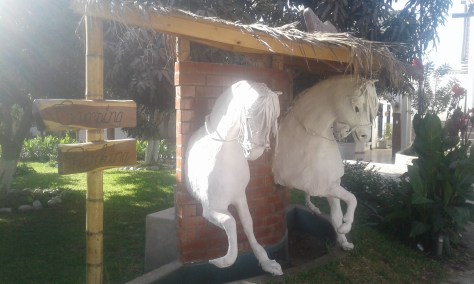
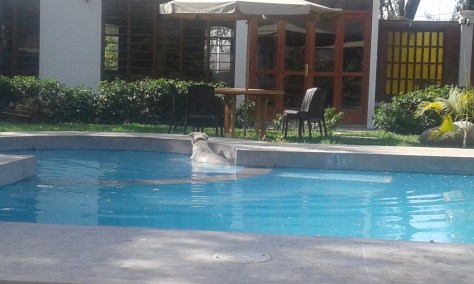
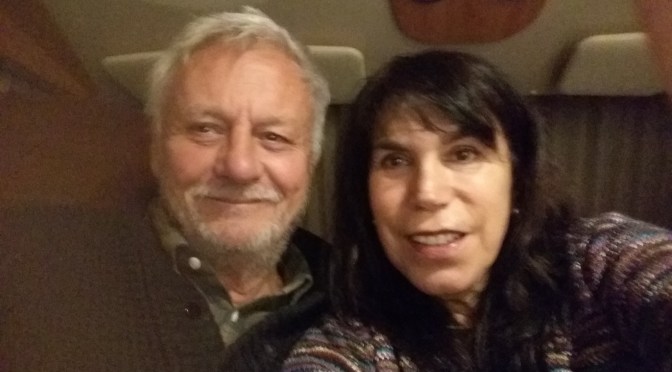
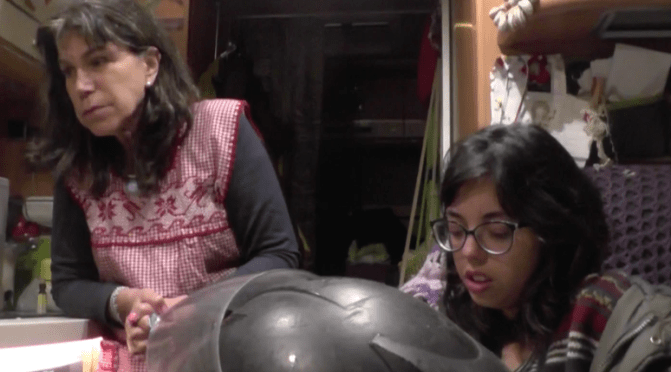
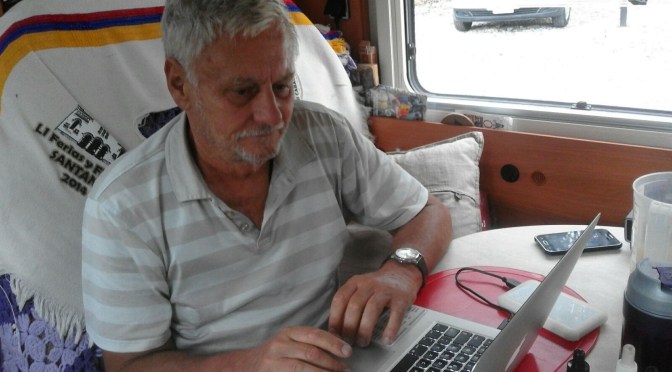



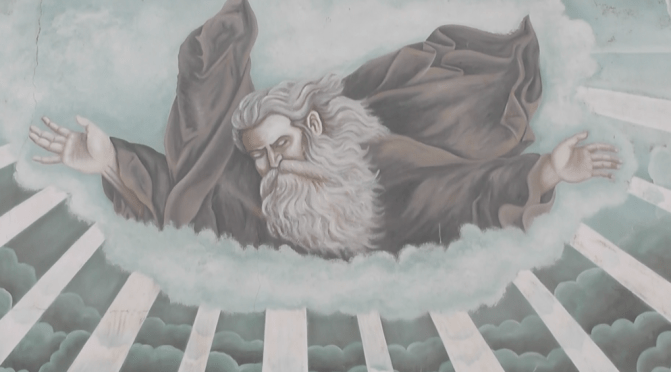
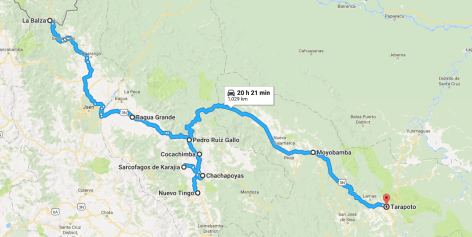


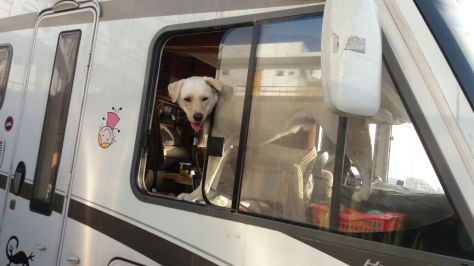
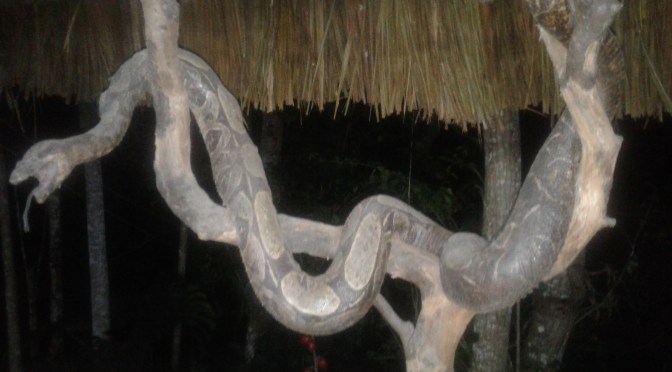
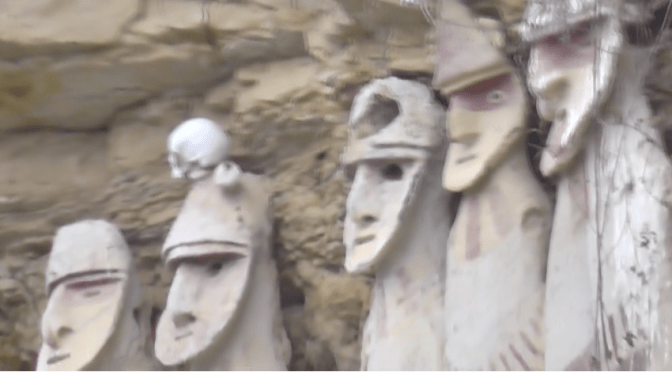
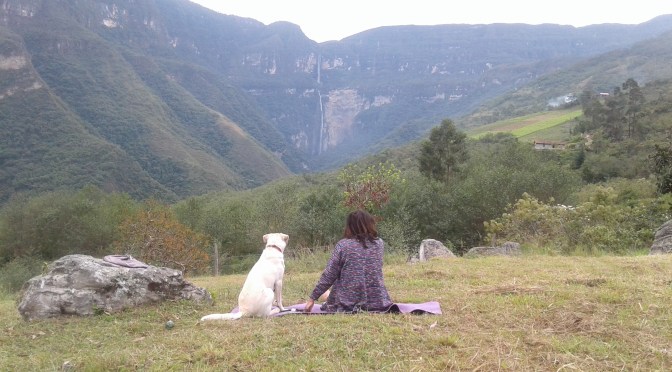
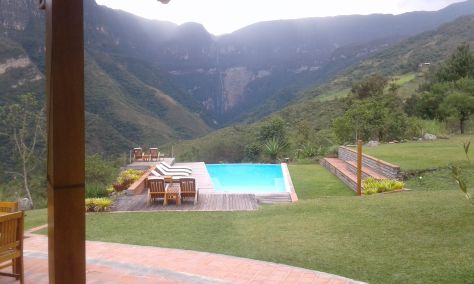
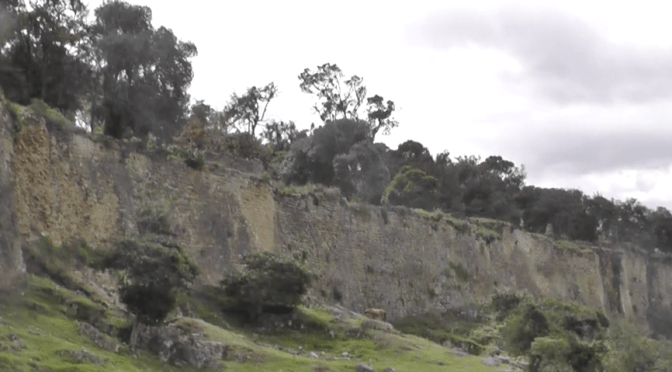
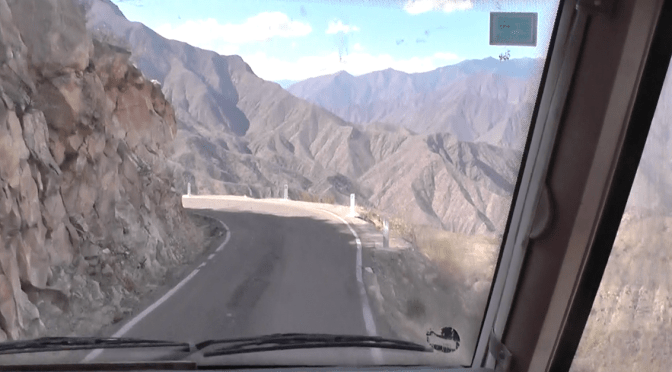
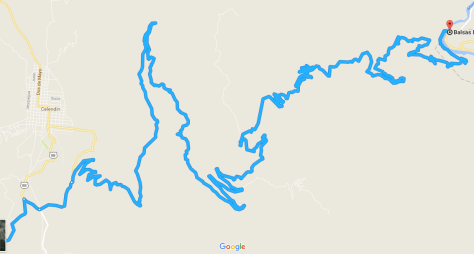
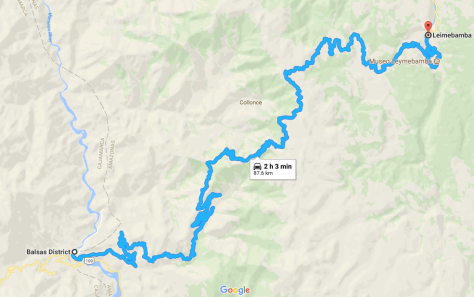
 Unterwegs in Europa, Amerika und Asien