Morgens um 6 Uhr ist Clemen meistens schon in der Albergue bei den Mädchen. Während sie im Heim hilft, bereite ich das Frühstück in der Esperanza vor:
Manchmal gehe ich auch mit Oso spazieren. Oso ist der Hund der Nachbarin. Er ist noch jung und braucht Auslauf. Stattdessen ist er Tag und Nacht an eine kurze Leine gebunden und findet kaum Schutz unter einem kümmerlichen Busch:
Die Kette der Gewalt beginnt in unserer Gesellschaft bei den Tieren und den Kindern … bei denen, die sich am wenigsten wehren können.
Schon gleich nach unserer Ankunft haben wir uns mit Oso angefreundet und ich binde ihn mit Hilfe einiger Mädchen, die die Misshandlung von Oso auch nicht ertragen können, immer wieder los, auch wenn die Nachbarin schimpft und gehe mit ihm jeden Tag mehrfach spazieren. Oso ist glücklich, wenn er aus seiner Gefangenschaft ausbrechen kann:
Nach dem Frühstück bin auch ich in der Albergue und befasse mich überwiegend mit den baulichen Maßnahmen (link). Oft fahre ich auch alleine oder mit Clemencia nach Huancayo, um dort einzukaufen: für uns selbst und/oder für die Arbeiten in der Albergue. Die Real Plaza (link), ein modernes Einkaufszentrum und das traditionelle Restaurant im Hotel Olimpico, wo wir ein gutes Essen genießen und durchatmen können, sind unsere Zufluchtsorte in dieser chaotischen Andenstadt, die sich selbst „Die Unvergleichliche“ nennt.
Die Esperanza steht direkt vor dem Tor der Herberge. Im Hof ist zu wenig Platz für unseren Wagen. Mit einem langen Kable sind wir wenigstens mit dem elektrischen Netz im Heim verbunden und haben eine warme Dusche im Auto:
Die Mädchen kommen oft bei uns vorbei, aber nur die kleinsten dürfen ausnahmsweise auch einmal mit Clemencia in der Esperanza übernachten. Alle möchten aber „Häuschen“ in unserer Esperanza spielen. Nachts regnet es manchmal und dann wird unser Standplatz ziemlich ungemütlich. Mit einem Brett vor dem Einstieg können wir trotzdem meistens trockenen Fußes einsteigen:
Ohne unsere Esperanza hätten wir die zwei Monate wahrscheinlich nicht durchgestanden. Sie ist unsere Wohnung, in die wir uns einigermaßen ungestört zurückziehen können, auch wenn abends immer wieder einzelne Mädchen klopfen und mit Clemen sprechen wollen. Wie können wir da trotz unserer Müdigkeit „nein“ sagen? Unmöglich! Unsere Tage in San Pedro de Saño sind sehr lang.
Dass wir sozusagen mitten auf der Dorfstraße stehen, stört mich nur am Anfang etwas. Zum Glück gibt es hier kaum Autos, die vorbeikommen und deswegen sind auch die Nächte sehr ruhig. Morgens kommen fast jeden Tag Kühe, Lamas und Schafe vorbei, die auf die Weide getrieben werden. Das ist der Alltag in San Pedro de Saño:
Der ganze Ort ist sehr, sehr ländlich und abgeschieden. Bald kennt uns jeder, wenn wir einen Spaziergang durch Saño machen:
Ein einmaliger Höhepunkt im Alltag von San Pedro ist diese Blaskapelle, die plötzlich und unerwartet an der Albergue vorbeizieht:
Für persönliche Dinge haben wir nur sehr wenig Zeit, da wir bis 10 Uhr nachts mit allen möglichen Arbeiten in der Albergue befasst sind, inklusive der Wochenenden. Das kostet Kraft.
Nach etwa zwei Wochen beginnen bei mir Probleme mit der Höhe (knapp 3.500m). Schlafstörungen stellen sich ein: Ich werde nachts schlagartig wach und habe Panikattacken, weil ich das Gefühl habe, ich bekomme nicht genug Luft. Meine Nasenschleimhäute sind ausgetrocknet. Das wir von Nacht zu Nacht schlimmer. Auch Nasentropfen, die mir ein Arzt verschreibt, helfen kaum. Schließlich besorgt mir Don Isidoro eine Sauerstoffflasche, um mir nachts mehr Luft zu verschaffen:
Leider hilft mir auch das nicht. Warum auch immer. Es bleibt mir nichts anderes übrig als den größten Teil der Nacht halb aufrecht auf den Vordersitzen unserer Esperanza zu verbringen oder zwischen 2 und 4 Uhr morgens mit Oso spazieren zu gehen. Auf die Art lerne ich das „Nachtleben“ von Saño kennen: viel Stille und frische Luft, – sonst nichts!
JW/Clea
Español
Nuestra vida en Saño
Desde las 6 de la mañana temprano ya está Clemen con las niñas en el albergue. Mientras ella empieza con yoga temprano preparo el desayuno
y salgo a pasear con Oso. Oso es el perro de la vecina. Es aún un cachorro y necesita salir. Lamentablemente está amarrado día y noche a una cuerda corta con apenas protección bajo un árbol incipiente.
La cadena de violencia empieza en nuestra vida social con los animales y los niños … los más indefensos (link).
Apenas llegado unos días me hago amigo de Oso – y con ayuda de algunas niñas que tampoco pueden resistir ese maltrato lo desamarramos. La vecina se enoja un poco, pero igual acepta que lo saque a pasear. Oso está feliz, cuando puede escaparse conmigo.
Después del desayuno en el albergue y las niñas encaminadas al colegio me dedico a apoyar las medidas correctivas de construcción. Muchas veces viajo solo o con Clemencia a Huancayo. La ciudad provinciana de Huancayo tiene un Real Plaza muy moderno y el antiguo y tradicional restaurante Olímpico, donde podemos respirar con una buena comida. El Olímpico se vuelve en nuestro refugio en esta bulliciosa y caótica ciudad del Ande Central en el Perú.
Nuestra Esperanza está directamente delante del portón del albergue. En el patio dentro no hay suficiente espacio para nuestro auto. Con un cable largo estamos conectado con la electricidad del albergue y además tenemos una ducha caliente en el auto.
Las niñas vienen con frecuencia y sólo las dos más pequeñitas han dormido ahí con Clemencia. Todas quieren jugar a la casita en la Esperanza.
En las noches llueve a veces y en la caravana hay una embarrada con el lodo. Colocamos una madera a la entrada de la misma que nos permite – en la mayoría de los casos – entrar con los pies secos:
Seguramente sin nuestra Esperanza no habríamos podido trabajar tanto y continuamente. Es nuestra casa y nos permite retirarnos por unas horas al menos para el descanso… sin embargo casi todas las noches una de ellas o dos en grupo tocan la puerta para contarnos de ellas. Cómo decir que no a pesar del cansancio? Imposible. Nuestros días son largos en San Pedro de Saño.
El hecho de estar en medio de una calle de San Pedro molestó a Juergen un poco al comienzo. Pero en realidad no fue problema, casi no hay autos que pasen, menos en la noche de tal manera que la tranquilidad durante la noche estaba asegurada. En las mañanas pasan vacas, llamas, cabras y ovejas camino al campo. Este es el punto más alto en la cotidianeidad de la vida en San Pedro de Saño…
Todo el pueblo es campestre y lejano de la ciudad. Pronto nos conocen todos y nos saludan.
Algo especial en la cotidianidad del albergue es ésta banda, que pasa de repente y sin aviso:
Para cosa personales nos queda muy poco tiempo, porque estámos ocupados con toda clase de trabajo en el albergue hasta las 10 de la noche, sin parar, inclusive durante los fines de la semana. Esto cuesta fuerza.
Después de alrededor de dos semanas Jürgen desarolla problemas con la altura (apenas 3.500 m.s.m.) Se siente muy mal porque no duerme, le falta el aire y por tanto no puede dormir. La mucosa nasal se seca. Gotas nasales no ayudan. Finalmente aparece Don Isidoro con una botella de oxígeno para el alivio de Jürgen en las noches:
Lamentablemente tampoco el oxígeno lo ayuda. No le queda más que pasar las noches sentado en los asientos delanteros del auto o salir a pasear con Oso, el perro de los vecinos entre 2 y 4 de la mañana. De esta forma Jürgen conoce la vida nocturna de Saño: mucho silencio y aire fresco … más nada.
JW/Clea
English
Our daily life in Saño
At six o’clock in the morning Clemen is usually already in the albergue with the girls. While she is helping in the shelter, I prepare breakfast in our Esperanza
and take Oso for a walk. Oso is our neighbor’s dog. He is still very young and needs a lot of exercise. Instead he is attached to a short rope and hardly finds any protection under a wretched bush.
The chain of violence begins in this society with animals and children, with those who have no means to defend themselves (link).
Shortly after our arrival we make friends with Oso and I often untie him with the help of some girls, who feel miserable about the abuse of the dog and cannot stand it any longer. In spite of the neighbor scolding me each time I untie her dog, I take long walks with him almost every day. Oso is happy, if he is released from his incarceration.
After breakfast I am also in the albergue and mainly take care of the repair and replacement measures (link), we have initiated. Often I drive alone or with Clemencia to Huancayo for shopping, for us or for the works in the albergue. The Real Plaza, which is a modern mall and the traditional restaurant in the hotel Olímpico, where we can enjoy excellent food and relax for a while, are our places for personal resort in this chaotic Andean city, which names itself „the incomparable“.
Esperanza is usually stationed right in front oft he entrance door to the albergue. There is not enough space for her in the patio. With a long cable we are at least connected to he electricity inside the shelter and we do have a warm shower in our car.
The girls often show up in our home, but only the very little ones are allowed to sleep in the car a few times. All of them love to play „at home“ in our Esperanza. At night it sometimes rains and then our place gets really wet and uncomfortable. Using a long board in front oft he entrance steps we manage to get inside at least with dry feet most oft he times.
Without Esperanza we would probably not have been able to endure these two months. She is our home, to which we can take resort without being disturbed too much, even though in the evenings some oft he girls knock at our door and want to speak with Clemencia. How can we say „no“ in such a situation, even though we are very tired. Impossible. Our days in San Pedro de Saño are really very long.
It does not bother me very much that we are parked in the middle of the street or maybe only at the beginning of our stay. Fortunately there is almost no traffic on this street, and so there is no noise during the night.
Every morning a small herd of cows, lamas and sheep is wrangled past our car to their pasture. This is the daily highlight of San Pedro de Sano.
The whole place is very, very rural and isolated. Soon everybody here knows us, when we take a walk through Saño:
A kind of highlight in the daily life of the albegue is this brass band, which suddenly passes by:
For personal things we have little time, since we are involved in all kinds of work in the albergue until about 10 PM, non-stop and even on the weekends. That is tedious.
After about a fortnight I get problems with the height (approximately 11,000 feet). I cannot sleep well at night. During the night I suddenly wake up and have a kind of panic attack, because I have the feeling I am not getting enough air. My nose is completely dry. It is getting worse every night. Even nasal drops, which a doctor prescribes, do hardly help. Finally Don Isidoro provides me with an oxygen bottle for the nights.
Unfortunately even this does not help. I do not know why. There is no other solution than spending the half night sitting across both front seats or taking a long walk with Oso between 2 and 4 o’clock A.M. Thus I get to know the night-life of Saño at least: a lot of silence and fresh air, – nothing else.
Wir wollen Euch nicht mit Details langweilen. Aber die folgenden Dias und Videos zeigen, was wir in den fast acht Wochen, die wir in San Pedro de Saño verbracht haben, alles in die Wege geleitet haben und (zum großen Teil auch abschließend) realisieren konnten.
Der Kanal im Altbau wird gereinigt:
Neue Kanäle werden im alten Teil der Albergue gebaut:
Neue Rohre werden im neuen Teil der Albergue verlegt:
Ein neuer Waschplatz entsteht:
Ein neuer Kühlschrank und Backofen werden geliefert und aufgebaut:
Die Dachrinnen werden erneuert:
Der neue Computerraum (wird eingeweiht):
Und vieles mehr.
Das alles wäre nicht ohne die tatkräftige Unterstützung durch die Mitglieder der „Junta“ und ihrer Familienangehörigen sowie anderer fleißiger Helfer möglich gewesen.
So kam auch unser Freund Horst auf einen Besuch vorbei und half bei einigen Reparaturen:
Nach ein paar Tagen in der Albergue fällt ihm (und seinem Unimog) der Abschied sichtlich schwer:
Cindy und Roy aus den USA unterstützten mit einer großzügigen Spende (einem Laptop und einem neuen Herd) sowie einer Woche harter Arbeit mit Reparaturen, Saubermachen und Aussortieren, dem Ausbau einer neuen Abstellkammer und vor allem auch mit ihrer positiven und menschenfreundlichen Lebenseinstellung zur Albergue. Herzlichen Dank an die beiden:
Roy baut das Lager aus:
Cindy räumt auf und sortiert alte Kleider aus:
Das alles kostet natürlich auch Geld, – keine Frage. Und ohne die großzügige Spende von € 15.000, die wir (über Andreas Jasper) aus der „Petra-Zimmermann-Stiftung“ erhalten haben (link), wäre das alles nicht möglich gewesen. Wir bedanken uns ausdrücklich bei Andreas Jasper als Verwalter der Petra-Zimmermann-Stiftung für sein Vertrauen in unsere Arbeit.
Wir danken noch einmal allen Mitgliedern der Junta der NRO, Ayudame Peru für ihre beständige und tatkräftige Unterstützung. Wir haben bis jetzt etwa die Hälfte der eingegangenen Spenden (link) für die beschriebenen Maßnahmen verwendet, Wir sind sicher, dass auch zweite Hälfte der Spende gut eingesetzt und angelegt und dazu beitragen wird, die Lebensqualität der Mädchen in der Albergue weiter zu verbessern.
JW/Clea
Español
Primeras y siguientes medidas
No queremos cansarlos con incontables detalles. Pero los siguientes diapositivas y vídeos muestran lo que logramos hacer en las casi 8 semanas de permanencia en San Pedro de Saño.
Se limpia el canal de la casa antigua:
Se construye el nuevo canal en su lugar:
La nueva tubería está instalada en la parte nueva del albergue:
El nuevo lavadero está contruido:
La nueva nevera y una cocina llegan y están instaldos:
Las nuevas canaletas están listas:
La nueva sala de computación (está inaugurada):
Y mucho más cosas.
Todo esto no hubiera sido posible sin la efectiva cooperación de los integrantes de la Junta, sus familiares así como un grupo de voluntarios y amigos del albergue. Así llegó nuestro amigo Horst también e inmediatamente entró al equipo de trabajo con algunas reparaciones:
Después de unos días en el albergue obviamente le cuesta a el y a su Unimog la despedida:
Cindy y Roy de los Estados Unidos apoyaron con una donación generosa (una laptop, una cocina) así con una semana de trabajo intenso en reparaciones, limpieza y la finalización del tan anhelado almacén para una mejor organización de nuestros recursos y donaciones. Todas estas ayudas se realizaron en un ambiente de amistad y de inmensa generosidad entregando lo más valioso: su tiempo. Gracias a todos ellos:
Roy está trabajando en el nuevo almacén:
Cindy está ordenando y seperando ropa vieja:
Todo esto naturalmente pudo ser en gran parte posible gracias a una generosa donación que recibimos de la Institución Petra Zimmermann, de Alemania . Agradecemos a Andreas Jasper, administrador de la misa, quien depositó su confianza en este proyecto y nuestro trabajo.
Agradecemos igualmente en este momento a la Junta actual de la ONG Ayudame Peru, que nos ayudaron a hacer efectivas estas mejoras. Hemos utilizado aprox. la mitad del dinero de la donación y no dudamos que el resto se utilizará en mejorar la calidad de vida de las muchachas que pasan por el albergue.
JW/Clea
English
First measures (and more)
We don’t want to bore you with details, but the following photos and videos show, what we have initiated and could finish (for the most part) during the almost eight weeks, which we spent in San Pedro de Saño:
The drainage in the old part of the building is cleaned:
The new drainage canal is built:
New tubes are installed in the new part of the albergue:
The new clothes washing area is under construction:
A new big fridge and a big oven are delivered and put in place:
The new gutters have been installed:
The new computer room (is inaugurated):
And lots of other things.
All that would not have been possible without the energetic support of the members of the Junta and their family and friends and other committed supporters like i.e. Horst, who visited us for a couple of days and helped us a lot with different repairs.
After a couple of days it is difficult for him and his huge Unimog to say farewell:
Cindy and Roy from the US have supported the albergue with the generous donation of a laptop and a big new oven. They also worked hard for more than a week in the albergue, fixing some of the appliances, cleaning up the whole place, rebuilding and equipping the storage room. They are a lovely couple who supported us with their never ending positive and humane attitude towards the girls and everybody else. Thank you a lot Cindy and Roy, you are great people:
Roy is fxing the storage room:
Cindy is tidying up and sorting out old clothes:
All that costs a lot of money, – no doubt, and without the generous donation of € 15,000, which we received (through Andreas Jasper) from the „Petra-Zimmermann- Foundation“, it would not have been possible. We want to express our sincere thanks to Andreas Jasper as the administrator of this foundation for his confidence in our work.
And we also want to say thank you one more time to all the members oft he Junta of the NGO Ayudame Peru for their continuous and active daily support. We have spent about half of the donations, which we received, and we do not doubt that the other half will also be used very well in order to improve the living conditions oft he girls in the albergue.
In den beiden ersten Wochen beobachten wir, dass in der Albergue die Notwendigkeit besteht, miteinander zu “sprechen”: über die tägliche Arbeit, über die Beziehung zwischen den Mitarbeitern, zwischen den Mädchen und dem Personal, zwischen den Mädchen untereinander und über die Vision von dieser Albergue. “Miteinander sprechen” heißt in einer freien Form ohne Ängste oder Einflussnahme von anderen so wie wir es hier jeden Tag erfahren. Das ist etwas, was man übern und verbessern kann. Das wollen wir versuchen.
Nach acht Jahren, die diese Institution inzwischen besteht, wollen wir allen (und uns) einen ersten Workshop „schenken“, der in spielerischer Form den Alltag in der Albergue zum Thema macht und ihn wie in einem frischen Regen erneuern soll. Das haben wir dem Personal versprochen. Natürlich gibt es trotzdem Befürchtungen und besondere Erwartungen. Gleich zu Beginn können die Teilnehmer diese zum Ausdruck bringen.
In Zusammenarbeit mit Claudia, die derzeit als Psychologin in der Albergue arbeitet, planen wir den Workshop nach der Prinzipien der VIPP-Methode. Sie zeichnet sich dadurch aus, dass sie mit dem traditionellen Schema bricht, bei dem eine Person seine Konzepte vorträgt und die Teilnehmer eifrig Notizen machen, während sie gegen ihre Müdigkeit ankämpfen, die so ein Vortrag meistens verursacht. Bei der VIPP-Methode werden alle dazu angehalten aktiv mitzumachen und können gleichberechtigt an allen Diskussionen teilnehmen. Der Leiter des Workshops gibt nur die Impulse und organisiert die Gruppenarbeit der Teilnehmer, Notizblöcke werden meist durch Plakate ersetzt, die von allen bearbeitet und an der Wand befestigt werden:
Natürlich dokumentieren wir alle Schritte in Fotos und Videos. Die Inhalte des Workshops sind nur für die Teilnehmer von Interesse und – natürlich – vertraulich. Die kurzen Ausschnitte, die wir hier zeigen, geben einige Momente der Arbeit wider. Sie zeigen ein wenig, wie die Ausgangssituation war und wie sehr der Workshop alle bewegt und zu produktiven Ergebnissen führt.
Im Verlauf des Workshops initiiert Victor, der Sekretär der NGO eine Übung, die auf der Vorstellung beruht, dass wir “jedes Problem und sei es noch so schwierig, gemeinsam lösen können”. Daher der Name: “Juntos lo vamos a lograr“, also: „Gemeinsam werden wir es schaffen”. In dem Video sehen wir neben Victor und Zeneida, die ebenfalls Mitglied des Vorstands ist, die Präsidentin der NGO, señora Gladys und ihren Ehemann Isidoro (ebenfalls im Vorstand), die Verwaltungsleiterin Carmen, die Psychologin Claudia, die freiwillige Helferin Elena, eine Lehrerin aus Spanien, die Spezialistin für die Erziehung von kleinen Kindern ist, die Betreuerinnen Eusebia und Elsa, Rocío, die Köchin und mich, Clemencia; alle mit offenem Lachen bei der Arbeit an einem wichtigen Thema
Natürlich haben auch die Mädchen in der Albergue etwas zu sagen. In einer der Aktivitäten, die von der Psychologin vor dem Workshop mit den Mädchen durchgeführt wurde, konnten diese ihre Erfahrungen, Sehnsüchte, Traurigkeiten und Frustrationen in der Albergue artikulieren und zu Papier bringen. Ihre Äußerungen werden im Workshop von den Teilnehmern in anonymisierter Form vorgelesen. Gemeinsam stellen wir fest, dass einige der Äußerungen im Workshop ausführlicher besprochen werden müssen. Es reicht nicht, einfach nur “zu helfen”; die Hilfe erfordert auch eine sinnvolle Vorbereitung, intensives Nachdenken und die Fähigkeit zur Selbstkritik.
Nach so viel intellektueller und emotionaler Anstrengung, benötigt die Gruppe wieder eine Aktivität, die zwar der Entspannung dient, aber auch unserem Ansatz des solidarischen und gemeinsamen Handelns verpflichtet ist:
Damit sich die Albergue dem Gedankenaustausch und all diesen Aktivitäten widmen kann, muss sich jemand im Hause um das Essen und die jüngeren Mädchen kümmern. Dazu haben wir ein mini Mini-Unternehmen für das Catering gegründet. Die älteren Mädchen bereiten – mit Unterstützung der nationalen freiwilligen Helfer – das Essen vor, betreuen die jüngeren Mädchen und bekommen für diese Arbeit auch einen “Lohn”:
Da wir im Alltag und im Beruf ständig unterschiedliche Rollen annehmen, erscheint es sinnvoll und angebracht, einmal bewusst andere Rollen zu übernehmen, um uns für die verschiedenen Funktionen zu sensibilisieren, die in der Albergue normalerweise von anderen wahrgenommen werden und sich von unseren eigenen unterscheiden.
Die Betreuerinnen übernehmen die Rolle der Mädchen im Heim, die Präsidentin wird zur Verwaltungsleiterin, ich selbst übernehme die Rolle einer freiwilligen Helferin, die Verwaltungsleiterin wird zu einem Mädchen aus dem Heim. In dem Spiel sehen wir, wie schwierig es ist, die fremden Rollen zu übernehmen und vollständig zu erfüllen. Als Beobachter werden Victor und Zeneida eingesetzt, die auf Grund ihres Status als Juntamitglieder mit dem Alltagsgeschehen nicht so vertraut sind wie die anderen Teilnehmer. Und wieder einmal ist das Lachen und bester Helfer:
Nach zwei arbeitsreichen Tagen und einem intensiven Austausch von Ideen, wird jede Gruppe dazu angehalten, die “Albergue ihrer Träume” zu entwickeln und anschließend den anderen Teilnehmern vorzustellen:
Clea
Español
Buscando comunicación
En las primeras semanas en el albergue observamos que en el albergue hay la necesidad de ¨hablar¨ sobre el trabajo cotidiano, de la relación entre el personal, el personal y las niñas, las niñas entre sí y revisar y reflexionar sobre la visión de nuestro albergue. ¨Hablar¨ en una forma libre sin temores propios o condicionados por fuera como lo esperitamos acá cada día. Es algo que se puede mejorar y ejercitar. Eso buscamos
Después de 8 años de funcionamiento de esta institución nos dispusimos a ¨regalarles¨ a todos (y a nosotros) un primer taller que aborde en una forma lúdica la cotidianidad de esta institución y la refresque como una lluvia renovadora. Eso hemos prometido al personal. Sin embargo hay temores y expectativas. Desde el primer momento damos espacio para articular estas sensaciones.
En cooperación con Claudia, que está trabajando en el Albergue temporalmente como psicóloga, planificamos el taller según los principios del método VIPP. Este método se caracteriza porque rompe con el esquema tradicional vertical, donde una persona expone conceptos y el resto anota aplicadamente mientras tratan de vencer el cansancio que escuchar tanta exposición produce. Con el método ViPP están llamados todos a participar y pueden participar equitativamente en todas las discusiones. El responsable del taller da solamente impulsos y organiza el trabajo grupal de los integrantes. Los cuadernos son reemplazados por papelógrafos, que se pegan en la pared a la vista de todos y creados por los participantes.
Naturalmente documentamos todos los pasos con fotos y vídeos. Los temas tratados a nivel de contenido son confidenciales y solamente de interés de los participantes. Las tomas cortas que mostramos representan algunos momentos del trabajo. Los vídeos hablan un poco ya de la disposición existente y muestran, que el seminario fue muy removedor y productivo.
En el transcurso del taller el secretario de la ONG Victor impulsa un ejercicio que recrea la idea de que ¨todos podemos lograr las cosas en forma conjunta por difícil que sea¨. Por el ejercicio se llama „Juntos lo vamos a lograr“. En el vídeo vemos al lado de Victor y Zenaida, que son miembros de la junta, a la Presidenta de la ONG Gladys y su marido Isidoro, la administradora Carmen, la psicóloga Claudia y la voluntaria española Elena, maestra y especialista en educación infantil, las tutoras o mamitas Eusebia y Elsa, Rocio, la cocinera y a mi, Clemencia. Todos en abiertas risas tratando temas importantes:
Naturalmente tienen las niñas también algo que decir. En una dinámica aparte la psicóloga había recibido la voz de las niñas del albergue, de cómo se sentían, sus anhelos, dificultades, tristezas y algunas frustraciones. El grupo escucha atentamente estos comentarios – presentados en forma anónima – y coincidimos que hay algunos temas que resulta necesario repensar para que nuestra labor sea mejor. No basta ¨ayudar¨… la ayuda requiere preparación, reflexión y capacidad de auto-crítica.
Después de tanto trabajo intelectual y emocional necesita el grupo una actividad que relaje un poco el ambiente y también nos recuerda el principio de solidaridad y trabajo en equipo al que estamos convocados por el tipo de trabajo que realizamos.
Para que el albergue pueda dedicarse a intercambiar y pensar sobre su actividad alguien tiene que hacerse cargo de la comida y de las menores. Hemos organizado una mini mini empresa de catering. Las niñas mismas – con ayuda de las voluntarias nacionales – preparan la comida, apoyan a las menores y reciben un ¨salario¨ por su trabajo:
Como en nuestra vida cotidiana asumimos permanentemente diferentes roles, resulta muy ayudador y oportuno asumir los roles diferentes que hay en el Albergue para sensibilizarse con dicha funciones diferentes a las propias.
En una improvisación en forma de una pequeña obra de teatro vemos a las mamitas, como albergadas, a la presidenta como administradora, a la administrador como una niña, a la promotora como una voluntaria. En este juego vemos lo difícil y complicado que resulta cada rol y cumplirlo a cabalidad. Promueve mucho la reflexión. De observadores tenemos a dos integrantes de la Junta que no están por su función tan vinculados con la cotidianidad del albergue. Una vez más la risa es nuestro mejor aliado.
Después de dos días con mucho trabajo y un intercambia de ideas muy intensa cada grupo es incentivado a imaginarse cómo quisiéramos el albergue en su mejor versión, la de nuestros sueños y luego presentarla a los otros grupos:
Clea
English
On the search for communication
During the first two weeks we observe, that there is urgent need for communication in the albergue: communication about the daily grind, the relationship between the members of the personnel, between the girls and the personnel, between the girls themselves and communication about a common vision of the albergue.
„Communication“ means talking with each other in a free kind of speech, without fear or interference from others, as we observe it in the shelter every day. This is something you can train and improve. We want to try it at least.
After eight years of existence oft he institution, we want to „give“ to all the people, who work and live here, a workshop, in which we focus on the daily work in a playful way, which will hopefully improve the situation like a refreshing shower. This is what we have promised to the personnel. In spite of this there are some apprehensions and special expectations, both of which can be addressed by the participants at the very beginning of the workshop.
In cooperation with Clauda, who is currently working as psychologist in the shelter, we plan a workshop, which will follow the principles of the VIPP-method. This means that the traditional pattern of a person, who presents his or her concept and solutions and the participants jot down notes on it, while they are fighting against their fatigue, which is normally the consequence of such an approach is replaced by a an interactive approach, which allows everybody to take part actively and on eye-level with everybody in every kind of discussion. The presenter is mainly engaged in giving impulses and organizing the group work; notepads are mostly replaced by blank posters put on the walls, on which everybody can describe his or her ideas using different kinds of symbols and text cards.
Of course we document every step taking photos and videos. The contents discussed in the workshop are only of interest for the participants and – of course – they are confidential. The short clips, which we show here, depict a couple of moments of our labor. They give an impression of the situation at the beginning and how the work has moved us all and how it has lead to productive results.
During the workshop Victor, the secretary of the NGO, initiates an activity, which is based on the idea, that “every problem, even the most complicated one, can be solved if we work together”, thus the Spanish name: “Juntos lo vamos a lograr“. In the video we also see Zeneida, another member of the board, Gladys, the president of the NGO with her husband Isidoro, who belongs to the board too, the administrative manager Carmen, the psychologist Cluadia, as well as Elena a volunteer from Spain and a teacher specialised in the education of small children, the two „mamitas“ Eusebia und Elsa, Rocío, the cook and me, Clemencia; all of us working on a difficult subject with an open laugh on our lips:
Of course the girls of the shelter have something to say too. In an activity, which the psychologist had organized before our workshop, the girls were encouraged to describe their positive and negative experiences, their grievances, their sadnesses and frustrations in the albergue and to write them down. During the workshop their anonymized statements are read out by different participants. Together we observe, that some of the statements should be more thoroughly dealt with. It is not enough just to “help”; any kind of help requires a meaningful preparation, intensive planning and the ability to self-criticism.
After all that intellectual and emotional effort the group needs another activity, which helps to relax on the one hand, but is at the same time bound to our idea of solidarity and common grounds.
So that the participants can devote themselves to the exchange of thoughts and the other activities, someone has to take care of the food and the younger girls. Therefore we have founded a mini mini-company for catering. The older girls – being helped by some adult volunteers – prepare the food, take care of the younger girls and get a small wage for this.
Since we constantly take roles in everyday life, it seems to make sense and be useful, to take over other roles consciously, in order to make us sensitize us for the different functions , which we have to assume in the shelter and how we are normally perceived by others who work and live with us.
The “mamitas” take the role of the girls in the shelter, the president becomes the administrative manager, I take the role of a volunteer from Europe, the administrative manager is one of the girls. This role-play shows, how difficult it is to take over other roles and to really fill them with life. Victor and Zeneida have to observe the role –play and take notes. As members of the board they are not so familiar with everyday situations in the shelter and have a more distant view of what is going on. And once again it turns out that laughing out is the best help.
After two laborious days and an intensive exchange of ideas, each group is asked to develop their ideas of the “albergue of their dreams” and to present these ideas to the other participants.
Wir sind jetzt gut zwei Wochen in der Albergue. Unsere Eindrücke sind schwer zu beschreiben. Wir wissen, dass Sabine Herrmann jeden Monat viel Geld in dieses Heim steckt und die Mädchen großzügig und selbstlos aus vollem Herzen unterstützt. Aber wir sind betroffen von den Zuständen, die wir antreffen. Hier nur ein paar Beispiele:
Die Wasserpumpe
Die zentrale Wasserpumpe funktioniert nicht. Wie eine erste Untersuchung ergibt, ist sie verdreckt, Sand und Schlamm haben den Propeller im Inneren beschädigt und blockiert. Die elektrische Verkabelung ist verrottet, die Schwimmer im Tank sind verdreckt und unbrauchbar:
Die sanitären Anlagen
Da das Stadtwasser jeden Tag um 15.00 Uhr nachmittags abgestellt wird und die Tanks der Albergue wegen der defekten Pumpe leer sind, gibt es ab dem frühen Nachmittag kein Wasser mehr, weder für die Toiletten, noch zum Waschen oder Duschen, noch in der Küche. Der Zustand der Toiletten am frühen Abend ist unbeschreiblich. Erst morgens um 6 Uhr beginnt das Stadtwasser wieder zu fließen.
Von vier Duschen hat immer nur eine warmes Wasser und in knapp 3500 m Höhe ist das kalte Wasser wirklich kalt.
Der Müll
Wegen des täglichen Wassermangels werden die Plastik-Mülltonnen, die Sabine vor etwa einem Jahr angeschafft hat, als Wasserspeicher verwendet. Die stehen neben der Waschmaschine, die hörbar defekt ist und nicht wirklich funktioniert:
Der Müll wird in mehr oder weniger offenen Plastiksäcken vor den Fenstern des Speiseraums gesammelt. Die Fliegen im Speisesaal sind zahlreich:
Der verstopfte Abfluss
Im Innenhof des alten Gebäudes ist der einzige Abfluss für Regenwasser erkennbar verstopft. Wie uns gesagt wird, seit Monaten. Schwarzes Wasser hat sich davor und im Abflussrohr angestaut.
Ein erster Versuch, den Abfluss „auf die Schnelle“ freizumachen und zu säubern, bringt das ganze Ausmaß der Verdreckung ans Tageslicht. In dem Abfluss hat sich eine kohlrabenschwarze, teerige und stinkende Masse angesammelt, die – nach unserer Einschätzung – gesundheitsgefährdend ist und dringend beseitigt werden muss.
Das Dach
Beim ersten schweren Regenguss stehen die Innenhöfe im alten und im neuen Trakt innerhalb von ein paar Minuten unter Wasser. Mit Besen, Eimern, Lappen versuchen alle das Wasser irgendwie zu bändigen, bevor es in die Zimmer oder Gemeinschaftsräume eindringt.
Das gelingt nicht immer. Angesichts der Löcher in den Dächern des Altbaus ist das nicht verwunderlich:
Die Kanalisation
Es liegt aber nicht nur an den Löchern in den Dächern – die sollen später einmal im Rahmen einer Sanierung des gesamten Altbaus beseitigt werden – sondern auch an den verstopften Abflüssen und Regenrinnen.
Der Abstellraum
Der Abstellraum ist eine Rumpelkammer, in der auch drei fast neue Fahrräder aufbewahrt werden, die niemand benutzen kann, weil sie seit einiger Zeit defekt sind und nicht repariert wurden, – niemand kann erklären, warum das nicht geschehen ist.
Was uns sehr befremdet ist auch, dass der Computerraum per Schloss verriegelt ist. Ebenso der Spiele-Saal. Es ist ein dunkler, ungeheizter Raum mit vollgestopften Schränken, Kisten und anderen Sachen wie in einem Lager und alles andere als ein Raum der Freude und des Spielens.
Unsere erste Freude über die Begegnung mit den Mädchen lässt angesichts der realen Lebensbedingungen und Zustände, die wir antreffen, allmählich nach. Wir fragen natürlich nach und erfahren, dass diese Zustände schon fast ein Jahr herrschen und können nicht nachvollziehen, warum nichts geschehen ist, schließlich wird die Albergue jeden Monat mit tausenden von Euros aus Spendengeldern und dem persönlichen Beitrag von Sabine Herrmann aus Deutschland unterstützt.
Wir bekommen unterschiedliche Antworten und Erklärungen. Aber eines steht fest: Seit knapp einem Jahr wurde hier nichts, aber auch gar nichts unternommen, um die teilweise untragbaren Zustände, zu beheben.
Cesar Vallejo, der peruanische Dichter sagt, „Hay hermanos muchísimo que hacer!¨. Für uns heißt das: Es gibt viel zu tun, – packen wir es an.
JW/Clea
Español
Difícil de describir
Estamos ya dos semanas en el albergue y nuestras impresiones son difíciles de transmitir. Sabemos que Sabine Herrmann aporta económicamente mucho dinero para el mantenimiento del albergue con la finalidad generosa y desinteresada de apoyar a estas niñas. Pero estamos un poco inquietos por algunas situaciones que observamos. Aquí algunos ejemplos:
La bomba
La bomba central de abastecimiento de agua no funciona. Como muestra una primera investigación está totalmente sucia con arena y barro, tiene la hélice por dentro totalmente dañada y bloqueada. La conexión eléctrica está humedecida, los flotadores en el tanque están sucios y por tanto inservibles:
Las instalaciones sanitarias
Dado que no hay más suministro de agua en San Pedro de Saño a partir de las 15.00 en la tarde y que los tanques del albergue por estos desperfectos se encuentran vacíos no hay agua ni para los sanitarios, la higiene personal o en la cocina. La situación de los baños en las mañanas es indescriptible. Recién en la mañana temprano a las 6 de la mañana empieza a funcionar el abastecimiento de agua en el pueblo.
De las cuatro duchas siempre solamente una tiene agua caliente. Nadie sabe exactamente porque. Y en una altura de casi 3500 metros el agua fría es fría de verdad.
La basura
Por la escasez de agua los contenedores de basura comprados hace un año por Sabine Herrmann para organizar la basura, se utilizan ahora para almacenar agua. Ellos se encuentran ahora al lado de la lavadora que de sólo escucharla sabemos que no marcha bien y no funciona satisfactoriamente.
Las muchachas y el personal recojen el agua tanto para el manejo adecuado de los baños así como para el lavado en general hasta que el agua alcance.
La basura se almacena en bolsas medio cerradas o abiertas delante de las ventanas del comedor. Esto ocasiona moscas adicionales.
El desague tapado
En el patio interno de la casa antigua el único desaguadero para la lluvia está atorado . A pesar de intentos por limpiarlo y liberarlo se acumula inevitablemente agua negra delante de este canal bloqueado.
Un intento ¨rápido¨ de limpiar este canal nos muestra la dimensión del problema. En el canal se ha acumulado una masa de tierra de olor desgradable. Con escobas, baldes, trapos tratamos de impiar y controlar esta agua negra para evitar que entre a los espacioes comunes y los dormitorios:
El techo
Con el primer chubasco en la época de lluvia se inundan tanto dormitorios como espacioes en común en minutos:
Considerando el estado de techo en la parte antigua de la casa es comprensible que este problema se suscite.
La tubería
No se trata solamente de los huecos en los techos – que serán saneados dentro del marco de reconstrucción de la casa – sino en los canales bloqueados que deben aliviar la casa de lluvias.
En todo el albergue los canales de desague – como observaremos más tarde con los primeros trabajos de reparación – están bloqueados por restos de comida, juguetes pequeños, lodo, hojas, etc. no habiendo sido mantenidos menos limpiados desde hace mucho tiempo.
El almacen
El lugar destinado para almacenamiento hay 3 bicicletas casi nuevas, que nadie utiliza, porque necesitan ser reparadas desde hace un tiempo regular. Nadie nos puede explicar porque no se ha procedido a esta simple reparación.
Lo que más nos extraña es que el cuarto de computadoras esta cerrado con llave, así como el cuarto de juegos. El cuarto de juegos es un lugar oscuro, cerrado, que alberga armarios con materiales, cajas y demás enseres haciéndolo un almacén,- lo contrario de una sala de juegos, de alegría y creatividad.
Nuestra alegría a la llegada al saludar a las niñas se va desvaneciendo conforme observamos las reales condiciones de vida existentes. Al indagar por esta situación nos informan que estas condiciones existen desde hace casi un año y no nos podemos explicar cómo es que estas dificultades de infraestructura no se han subsanado, a pesar de que el albergue es subvencionado mensualmente con donaciones de Alemania y el aporte personal de Sabine Herrmann.
Recibimos diferentes respuestas y explicaciones. Pero una cosa es clara: desde hace un año no se ha realizado nada por aliviar estas condiciones lamentables.
Para nosotros significó como escribiera Vallejo, poeta peruano ¨Hay hermanos muchísimo que hacer!¨ y nos dijimos: „manos a la obra!“
JW/Clea
English
Difficult to describe
We have been in the Albergue for almost two weeks now. Our impressions are difficult to describe. We know that Sabine Herrman has been supporting the albergue for years and every month with a lot of money from donations and her own resources in order to help the children in an unselfish way from the bottom of her heart. But we are stunned by the conditions, which we observe. Here are a couple of examples
The water pump
The central water pump doe not work. A first check shows that it is totally clogged with dirt. Sand and mud have blocked the propeller inside. The electric wiring is damaged, the floaters in the tanks covered with dirt and useless.
Since the public water supply is cut off every day at 3 PM and the tanks of the Albergue are empty, because the pump, which should fill the tanks during the day, does not work, there is absolutely no water as of early afternoon, not for the bathrooms, not for washing anything, not for the showers, nor in the kitchen. The conditions of the bathrooms after 4 o 5 in the evening are indescribable. Fresh water from the municipality is not available before 6 AM in the next morning.
Only one of the four showers delivers hot water, if they are all on. The others stay cold. And in an altitude of about 11,000 feet cold water is really cold.
The garbage
Because of the shortness of water the plastic containers, which were bought about a year ago as garbage containers, are used as provisional water containers. They stand next o the washing machine, which is obviously not working properly any more and for quite some time.
The garbage is stored in plastic bags – some of them closed others not – right in front of the window of the dining room. The flies in the eating area are abundant.
The clogged drain
In the patio of the old part oft he building the only drainage opening is obviously clogged totally. We are told, that this has been the case for months now. Black water has been stalled in front oft he drainage opening.
A first attempt to clean the clogged drain shows the whole extent of this smut. A black tarry, evil-smelling bulk of stuff has accumulated in front of the drain. It even seems to be a health risk for the girls and the personnel, which has to be removed as quickly as possible.
The roof
They rainy season is close and with the first heavy rain falls the patios of the old and the new part of the building get inundated within a few minutes. With brooms, buckets and cloths everybody in the albergue tries to somehow tame the water, before it runs into the rooms of the girls or the community area.
The effort is not always successful. Considering the huge holes in the roof this is not very surprising.
The sewage drains
But this is not only due to he holes in the roof – which are planned to be fixed in the context of a complete remodelaion of the whole albergue – but also to the clogged drainage system and the rain gutters all over the place.
The storage room
The storage is a junk room, where three almost new mountain bikes are stored, but nobody can use them, because they have been damaged for quite a while and never been repaired, – nobody can explain, why not.
What strikes us a lot is the computer room, which is closed with a padlock like the playroom. The playroom is dark, without heating, crammed with cupboards and card boxes and other stuff like a forgotten storage and looks like anything but a room for playing, having fun and being happy.
Our first joy about the encounter with the girls has suffered a lot facing their real living conditions in the albergue. We ask questions – of course – and are told, that these conditions have been in place for about a year now, but we cannot understand, why nothing has been done about that situation, even though the albergue receives thousands of Euros every months from donations and the personal resources of Sabine Herrmann.
We get different answers and explanations. But one thing is clear o us: For about a year nothing has been done here to improve the partly intolerable conditions.
The Peruvian poet Vallejo dice: „Hay hermanos muchísimo que hacer!¨ For us this means: „There is much to do – Let´s pull up our sleeves.“
Hubiéramos querido hacer más paseos nocturnos. Fueron especialmente hermosos, silenciosos y conspirativos . No hay fotos … solo tuvimos linternas.
¡Gracias!
JW/Clea
English
Every day life in the albergue
During the first week we only collect impressions:
Sometimes we play together:
Sometimes Clemencia sings with the girls:
Or we draw and paint together with them:
Here the little ones are trying to improvise a short theater play under cautious guidance:
Sometimes we just participate in an extraordinary event like a pachamanga, which is a feast with lots of meat, potatoes and herbs slowly cooked together in an earth and stone oven.
And early in the mornings some of the girls take part in a yoga session:
We would have liked spending more time on lonely late evening walks. They were especially nice, quiet and conspirative. There are no photos, there were only flashlights.
Die Albergue ist kein Waisenhaus, wie ich früher geglaubt und geschrieben habe. Hier leben zwar auch einige Vollwaisen, aber die Mehrheit der Mädchen hat eine Familie oder zumindest noch das eine oder andere Familienmitglied. Sie wohnen dennoch in der Albergue, weil sie in ihren Familien traumatische Erlebnisse hatten: sexuelle Übergriffe bis hin zu Vergewaltigungen, Vernachlässigung, Verwahrlosung, körperliche Gewalt u.Ä. Die große Mehrheit dieser Mädchen lebt seit Jahren im Heim und alle hoffen, eines Tages in ihre Familien zurückkehren zu können oder adoptiert zu werden:
Nach ca. einer Woche im Heim meint ein (vierzehnjähriges) Mädchen: „Mamita Clemen, wenn du mich adoptieren könntest, würde aus mir bestimmt ein erfolgreicher Mensch werden.“ – So etwas kann einem das Herz zerreißen und man möchte noch zehn weitere Leben haben, um hier zu helfen.
Jedes einzelne Mädchen hat traumatische Erfahrungen hinter sich. Hier in der Albergue finden sie alle seit Jahren Schutz vor der Außenwelt, werden gut gekleidet und ernährt. Sie können die Schule besuchen und werden bei den Hausaufgaben betreut. Das ist alles ein Verdienst von Sabine Herrmann, die die „Kinderhilfe e.V.“ vor ca. zehn Jahren gegründet und seitdem aus eigenen Mitteln und Spendengeldern finanziert. Heute heißt das Projekt „Apoyame Peru“ und ist eine ONG.
Freiwillige aus Peru, Spanien, Deutschland und den USA kommen von Zeit zu Zeit hierher, um zu helfen. Vor allem aber gibt es zwei „mamitas sustitutas“, kurz „mamitas“ genannt, die ihnen Liebe und Aufmerksamkeit schenken. Daneben hat die Albergue eine Köchin und eine Verwaltungsleiterin. Alle wissen um die Schicksale der Mädchen und bemühen sich, ihre Leben lebenswert zu machen.
Auch die „mamitas“ sind erheblichen Belastungen ausgesetzt. Sie arbeiten abwechselnd und wochenweise in der Albergue. Sie wohnen die ganze Woche in der Albergue und teilen das einfache Zimmer mit den beiden Kleinsten, die jeweils vier Jahre alt sind. Sie sind Tag und Nacht verfügbar, müssen Streits schlichten, Hausaufgaben betreuen, für Sauberkeit sorgen, die Mädchen in den Kindergarten bringen oder in eine der 5 Schulen, die sie besuchen. Vor allem die Wochenenden, wenn alle 18 Mädchen – von Freitag Nachmittag bis Montag Morgen – ununterbrochen in der Albergue sind, sind eine enorme Belastung.
Schon nach der ersten Woche wissen wir, was das bedeutet und danken den „mamitas“ für ihre Arbeit. – Auch wenn nicht alles perfekt läuft, sie leisten hier sehr viel und sind der emotionale Anker für die Kinder.
JW/Clea
Español
Las niñas del albergue
El albergue no es un orfelinato como creí y así escribí. Aquí hay muchachas que son huérfanas, pero la mayoría tiene una familia o por lo menos uno o dos familiares. Viven en el albergue, porque han vivido maltrato de diferente tipo en sus familias originales (violencia sexual, abandono, maltrato físico, padres, que son incapaces cumplir con sus obligaciones). La mayoría vive desde hace años en el albergue y todas esperan, que algún día pueden regresar a sus familias o alguien va a adoptarlas.
Después de aproximadamente una semana en el albergue una niña de 14 años le dice a Clemen: “Mamita Clemen, si tu me adoptas, yo sería con seguridad una persona de éxito¨. Así se le puede romper el corazón rápidamente a uno y desear 10 vidas más para salvar situaciones.
Cada niña ha vivido situaciones traumáticas que no queremos detallar pero podemos imaginar. Encuentran en el albergue protección, vestido y alimento. Pueden asistir al colegio y son apoyadas en las tareas. Todo esto es el gran mérito de Sabine Herrmann, que fundó el proyecto hace ya casi 10 años y lo financia con recursos propios y donaciones. Hoy el proyecto se llama “ONG Apoyame Peru”.
Hay un personal de voluntarios de Perú, España Alemania y EEUU, que colaboran en tiempos. Hay dos ¨mamitas sustitutas¨ abreviado mamitas que les dan dedicación diaria y cariño. Todos conocen las historias de ellas. Aparte hay una mamita cocinera y una administradora. Todos colaboran en hacerles la vida más llevadera en el albergue hasta que se encuentre una solución para ellas.
No solamente las niñas tienen cargas, también las mamitas. Trabajan turnándose cada semana, viviendo toda la semana día y noche en el albergue con niñas de 4 a 18 años. Las mamitas comparten el cuarto sencillo con las dos más pequeñas que tienen 4 años. Están día y noche con ellas, tienen que manejar los pleitos entre ellas, ayudar con las tareas, el aseo personal y del albergue, llevar a las niñas a los 5 colegios diferentes. Sobre todo el fin de semana es la recarga grande, cuando todas las 18 niñas están en el albergue desde la tarde del viernes hasta la mañana del lunes.
Después de la primera semana, sabemos lo que significa ser ¨mamita¨ y agradecemos a las mamitas por su trabajo.– Ellas son el día a día de las niñas y su ancla emocional.
JW/Clea
English
The Girls of the Albergue
The „albergue“ is not an orphanage as I had thought and written before arriving there. Some of the girls are real orphans, but the majority still has a parent o at least a living family member. Nevertheless the girls live in the albergue, because they have had traumatic experiences in their families: sexual assaults (including rape), physical abuse, negligence, schizophrenic parents etc. The big majority of the girls have lived for years in the albergue and they all hope to return to their families as soon as possible or be adopted one day.
After about a week in the „albergue“ a girl of forteen years says: „Mamita Clemen, if you could adopt me, I would probably be a successful person.“– Something like that can break your heart and you would wish to live ten lives to help them all.
Here in the „albergue“ they all find protection, are glad and dressed well. They can go to school every day and receive help with their homework. This is all possible, because Sabine Herrmann established this project about ten years ago and has ever since financed it from their own resources and the donations from friends. Today the project is called: „ONG Apoyame Peru“.
Voluntaries from Peru, Spain, Germany and the US come here fromtime to time and help the girls. But the most important people in the Albergue are the so called „mamitas sustitutas“, or shortly the „mamitas“, the substitute mums, who give the girls their attention and love. There is also a cook and an administrator at the albergue. They all know about the sufferings of the girls and try hard to make their lives worth living.
The work oft he mamitas is not easy at all. They work alternately and one week each, if it is their turn. They share a simple room with the little ones, who are only 4 years old. They have tob e available day and night, have to mediate in cases of conflict, help with the girls´ homework and take the girls to one of the five schools, which they attend, in the morning or to the kindergarten. Especially during the weekends, when all the 18 girls are at the albergue from Friday afternoon until Monday morning they are under an enormous stress.
After the first week we already know, what that means and thank the „mamitas“ for their work. – Even if not everything is perfect, they do work hard and efficiently and they are the emotional anchor for the girls.
Heute sind wir endlich angekommen! Nach über 30.000 km und 10 Monaten in Nord-, Mittel- und Südamerika haben wir unser wichtigstes Etappenziel erreicht: San Pedro de Saño, einen Vorort von Huancayo. Hier liegt das Waisenhaus, in dem wir insgesamt sechs Monate mit Rat und Tat helfen wollen. Da man uns bei der Einreise nach Peru aber nur 90 Tage für die vorübergehende Einfuhr von Esperanza, unserem Haus auf Rädern, gegeben hat, müssen wir das Land spätestens am 23. Oktober wieder verlassen.
Hinter uns liegt die (vorläufig) letzte Reiseetappe, die Fahrt über den Ticlio-Pass. Der ist 4818 m – also acht Meter höher als der Mont Blanc – und ich hatte schon ein bisschen Bedenken, ob das die ESPERANZA ohne Probleme schafft.
Und sie schaffte es! Esperanza machte mit, ohne zu mucken. Und auch wir selbst hatten keine Probleme mit der extremen Höhe. Für mich war es eine Herausforderung, jedenfalls in meiner Erwartung, und Clemen hat diese Strecke – vor vierzig Jahren – an einem Tag hin und zurück in einem uralten VW-Käfer geschafft. Deswegen saß sie auch diesmal am Steuer.
Auf beiden Seiten des Passes liegen Minen, in denen verschiedene Metalle abgebaut werden. Besonders viele Minen und Minenstädte, in denen die Arbeiter leben, finden sich auf der östlichen Seite des Passes, dort wo es in das Tal des Mantaro hinabgeht.
Jahrzehntelange haben diese Minen die Umwelt zerstört und die Flüsse in den Anden verschmutzt. Der Mantaro-Fluss, an dem wir auf der östlichen Seite des Passes entlangfahren, ist bis heute hochgradig mit Schwermetallen belastet. Die Krebsquote (vor allem unter Kindern) ist entsprechend hoch. Bis vor kurzem galt La Oroya (Link einbauen) als die Stadt mit der höchsten Umweltbelastung in Peru.
Trotz dieser Fakten scheint es eine positive Entwicklung zu geben. Die Städte sind sauberer als wir erwartet hatten. Wir sehen kaum Müll auf den Straßen; ganz anders als im Norden von Peru. Überall gibt es Aufrufe, die Umwelt und insbesondere die Flüsse zu schonen. Wie weit entsprechende Maßnahmen konkret schon getroffen wurden, wissen wir nicht. Hier hat die neue Regierung unter Pedro Pablo Kuczynski noch einiges vor sich. Und es muss sich zeigen, wie weit ein ehemaliger Lobbyist und Freund der Minenindustrie deren Interessen als Präsident mit den Interessen der arbeitenden Bevölkerung und dem Schutz der Umwelt in Einklang bringen kann. – Nach der äußerst knapp gewonnenen Wahl gegen Keiko Fujimori erreicht Pablo Pedro Kucsincky bei Umfragen heute Zustimmungswerte von 70%. Hoffen wir, dass er diesem Vertrauen und den Erwartungen, die dahinter stehen, gerecht werden kann.
Bemerkenswert erscheint mir in diesem Zusammenhang auch die Position der Linken unter Veronica Mendoza. Nach der 1. Wahlrunde wendete sie sich an die peruanische Bevölkerung und empfahl den Peruanern, Kuscinky zu wählen, weil sie davon überzeugt war, dass es ein fataler Fehler wäre, Keiko Fujimori, die Tochter des ehemaligen Präsidenten, der heute im Gefängnis sitzt, zu wählen und damit den Fujimoristas eine Chance zu geben. Eine Linke bat um Unterstützung für die Rechten –nur so konnte PPK an die Macht kommen.
Nach ungefähr acht Stunden anstrengender Fahrt über den Ticlio erreichen wir Huancayo. Die Einfahrt in die Stadt ist mal wieder wenig einladend:
Nachdem wir das übliche Chaos einer peruanischen Provinzstadt passiert haben, wird es wieder ländlicher und ruhiger und schließlich erreichen wir San Pedro de Saño. Dort gibt es einen herzlichen Empfang:
JW
Español
Llegamos el 28 de Agosto!
Hemos llegado al final! Después de 30 000 Km, 10 meses en Norte, Central y Sur América hemos alcanzado una de nuestras metas importantes en el viaje: San Pedro de Saño, un pueblo en el Oeste de Huancayo. Aquí está el albergue en el cual trabajaremos día y noche por estas niñas y su espacio, que Clemen ha extrañado tanto. Nuestro plan fue quedarnos acá seis meses y tratar de mejorar la situación de las niñas activamente. Pero solamente nos dieron un permiso para 90 días para la importación temporal de Esperanza, nuestra casa rodante, y por eso tenemos que salir del país el día 23 de Octubre como máximo.
Detrás de nosotros tenemos nuestra última etapa (por el momento) del viaje, la pasada por Ticlio; con sus 4818 m es ocho metros más alto que el Mont Blanc en los Alpes. Y yo tenía mis aprehensiones si Esperanza lo iba a lograr, la subida sin problemas:
Y lo logró! Sin chistar pasó. Y nosotros también a pesar de la altura elevada, para mí sobre todo un logro. Clemen, hace casi 40 años subía y bajaba de Ticlio a Lima como si nada en und día. Por eso estaba detrás del timón esta vez también.
En los lados laterales del paso hay minas, donde se trabajan diferentes minerales. Minas y ciudades mineras donde viven los trabajadores están en la parte este del camino, ahí donde corre el Mantaro. Inmenso río
Durante muchos años estas minas han dañado el medio ambiente con sus ríos en los Andes. El mismo Mantaro que corre a nuestro lado está cargado con metales fuertes. La cuota cancerígena (sobre todo en los niños) es elevada. Hasta hace poco La Oroya era considerada una de las ciudades más contaminadas en Perú.
A pesar de estos hechos pareciera visualizarse un desarrollo positivo. Las ciudades están más limpias de lo que esperánbamos. Casi no se ve basura en las calles,muy diferente del norte peruano. Por todos lados se leen avisos llamando al cuidado del medio ambiente y sobre todo del río. Hasta donde se tomarán estas recomendaciones en serie es algo que no sabemos. Aquí tiene el nuevo gobierno de Pedro Pablo Kuczynski algo por delante. Y se verá entonces como un ex lobista y amigo de la minería peruana lograreá conciliar los intereses de la población trabajadora con los del medio ambiente. Luego del triunfo de PPK con las justas – hoy cuando escribo estas líneas – cuenta con un 70 %. Esperemos que pueda cumplir con las expectativas del pueblo peruano.
El hecho que la política económica y en especial el tema de las minas es en América del Sur un tema explosivo, demuestra la matanza del vice ministro del interior Rodolfo Illanes en Bolivia por los mineros en huelga hace poco días. Fue secuestrado y luego asesinado por los trabajadores ya que el gobierno no accedió a sus pedidos.
Me llama igualmente la atención la posición de la izquierda en Peru bajo Veronica Mend. Luego de la primera vuelta se dirigió a la población nacional y recomendó votar por Kuscinky porque estaba convencida que sería un error histórico votar por Keiko Fujimori, la hija del ex presidente, desde año en prisión. Una izquierdista requirió el apoyo a la derecha – Solo así llegó PPK al poder.
Después de 8 horas de un viaje largo pasando por Ticlio llegamos a Huancayo. La entrada a la ciudad, como a todas las ciudades provinciales en Perú, es poco invitadora:
Después de haber pasado por el caos propio de Huancayo llegamos a espacios más rústicos y andinos y San Pedro de Saño, donde tuvo Clemen una cálida acogida.
JW
English
Today we finally arrived!
After about 19,000 miles and ten months in North, – Central and South America we have arrived at one of our most important destinations: San Pedro de Saño, which is a village near Huancayo the capital of Junín in the central Andes. This is where the „albergue“ is located, where we want to spend about three months and actively help to improve the situation of the girls who live here. Originally we wanted to stay here a half year, but since we were only given a three month permit for our motorhome and since there is no possibility to extend the permit within Peru, we will have to leave the country by October 23.
On the way here, we have crossed the Ticlio pass. With 4,818 meters (almost 16,000 feet) it is eight meters higher than the Mont Blanc, the highest peak in Europe. Before we started the trip I was a little concerned about Esperanza and myself, but she made t without any problems; and me too.
For me it was a challenge, at least in my imagination. But in reality it was a breeze and did not affect neither the car nor me. Clemen had done the same route in one day both ways in an age-old VW-Käfer, – forty years ago. This is why she was in command of the car, when we drove up the pass on the way to Huancayo.
On both sides of the Ticlio pass, there are lots of mines, in which they dig for different kinds of minerals, mainly for copper. On the north-eastern side oft he pass, where it descends down to the Mantaro valley, there are more mines and settlements, which were built fort he miners:
For decades these mines destroyed the environment and the rivers in the Andes. The Montaro river, on whose benches we drive towards Huancayo is still very much polluted with heavy metals. The cancer rate (mainly among children) is extremely high. Until recently La Oroya was considered one oft he most polluted towns in Peru.
In spite of these facts, there seems to be a positive development. The twons along our route look cleaner than we have expected. We hardly see any garbage in and along the streets; much in contrast to the terribly dirty towns in the north of Peru. Everywhere we can see signboards with appeals to the population about protecting the environment and especially the rivers. It is difficult to say, how much of this has already been turned into an active change of behavior. But at least at first glance there seem to be positive effects. And more important than the attitude of the people living here is certainly, what the mine industry is doing. As far as this is concerned the new government of Pedro Pablo Kucszinky has still a lot to do. And it is far from clear, whether a former lobbyist and friend oft he mine industry will be able to reconcile the interest of the mine industry and the workers with the needs for environmental protection. After a head on head election and a very narrow victory, Kucsincky has approval rates of 70% right now, while I am writing these lines. Let’s hope he will meet the expectations of the Peruvians.
It is all about economics, and especially how the mines and the miners are dealt with is of incredible importance in a country, which depends to a large extent on its exports of minerals. The situation is comparable with Bolivia, where the vice-minister of the interior Rodolfo Illanes was recently killed by the mine workers after he had first been kidnapped and the government had refused to meet the demands oft he workers.
What is also remarkable in this context is the position oft he left wing politicians in Peru. After the first round of the national election Veronika Mendoza recommended to the Peruvians to vote for the right-wing candidate PPK, because she was convinced that it would be a crucial mistake to vote for Keiko Fujimori, the daughter of ex-president Fujimori, who is still serving a life-long sentence in a Peruvian prison, thus avoiding giving a chance to the Fujimoristas who are still a strong political movement in Peru, especially in the south of the country.
After about eight hours of an exhausting trip over the Ticlio pass (starting at sea level, going up to almost 16,000 feet and descending again to approximately 12,000 feet) we reach the outskirts of Huancayo. The entrance into the city is little inviting like with most Peruvian cities:
After we have passed the usual chaos of a provincial Peruvian city, the landscape becomes more rural and less noisy again and finally we arrive at the albergue in San Pedro de Saño, where we receive a heart-felt welcome.
ist ein Vorort von Lima, ca. 730 m hoch gelegen, im Tal des Río Rímac. Wer hier weiterfährt, kommt bald richtig in die Anden und zum Ticlio-Pass. Der ist knapp 5000 m hoch. Von dort geht es dann wieder ein Stück bergab bis nach Huancayo, unserem nächsten Ziel.
In Chaclacayo haben Jorge, einer der Brüder von Clemencia, und Iris, seine Frau, ein schönes Haus, das sie derzeit nur am Wochenende nutzen:
Wir konnten dort die erste Woche wohnen und das angenehme Sommerwetter knapp oberhalb des feucht kalten winterlichen Dauernebels von Lima (der sogenannten „neblina“) in vollen Zügen genießen.
Am ersten Freitag und Samstag waren auch Carla und Cesar dabei. Gemeinsam mit Jorge und Iris waren wir auch auf dem Markt in Chiclayo und haben dort eingekauft:
Der Aufenthalt in Chaclacayo hat uns gut getan. Wir merken, dass uns die Reise bis nach Lima doch ganz schön angestrengt hat und freuen uns mittlerweile, wenn wir etwas länger an einem schönen – und sicheren – Ort bleiben können.
JW/CLea
Español
Chaclacayo es un pueblo en las afueras de Lima, en una altitud de 730 metros en el valle del Rio Rímac. Si tu continuas en la carretera vas a llegar pronto a los valles de los Andes y después de algunas horas de serpentinas al paso de Ticlio, que tiene casi 5000 metros de altura. Desde allá tienes que bajar de nuevo un poquito hasta Huancayo, nuestro próximo destino.
En Chaclacayo Jorge, uno de los hermanos de Clemencia, e Iris, su esposa, tienen una casa muy linda, que solamente usan durante los fines de semana.
Nosotros pudimos quedarnos en esta casa durante nuestra primera semana cerca de Lima y disfrutar del clima agradable de primavera encima de la neblina fría y húmeda, que cubre la ciudad de Lima en esta época.
Durante el primer fin de semana Carla y Cesar nos visitaron en Chaclacayo. Juntos con Iris y Jorge fuimos de compras en el mercado munícipal.
La estadía en Chaclacayo fué un tiempo de recuperación para nosotros. Nos dimos cuenta, que el largo viaje hasta Lima nos a agotado. Hemos llegado a un momento en nuestro viaje, en lo que disfrutamos mucho tener la posibilidad de pasar más tiempo en lugares bonitos y seguros y en nuestra familia querida. .
JW/CLea
English
Chaclacayo is a suburb of Lima, about 2,300 feet high in he valley oft he river Rimac. Those who continue driving up the road will soon get into the valleys oft he Andes and further up reach the Ticlio pass. This pass is almost 16,000 feet high. From there you descend again to Huncayo, which is our next destination.
In Chaclacayo Jorge, one of Clemencia´s brothers and Iris, his wife, have a wonderful summer house, which they presently only use during weekends.
We could spend the first week in Lima in Jorge´s house and enjoy the perfect mild spring weather above the cold and moist layer of smog and rain /called neblina), which hovers over the city of Lima during that time oft he year.
On the first weekend Carla and Cesar visited us in Chaclacayo. Together with Jorge and Iris we went shopping in the municipal market:
We really need this peaceful week in Chaclacayo. The trip to Lima has been quite exhausting and meanwhile we are glad, if we have the possibility to stay for some time in a beautiful and safe place.
Bis San Agustin ging alles gut. Von dort wollten wir eigentlich nach Pasto. Irgendwann müssen wir ja die hohen Berge überqueren, die uns den Weg nach Westen versperren.
Aber in den letzten Tagen hat es heftig geregnet und jedermann rät uns von der Piste nach Pasto ab: sie geht steil und hoch hinauf, mit tiefen Abgründen, hat keine Leitplanken, dafür viele Schlaglöcher, Erdrutsche können jederzeit abgehen usw usf. Also nicht ungefährlich.
Zurück wollen wir aber auch nicht. Das wäre ein riesiger Umweg. Also entschließen wir uns für den Weg durch das Amazonasgebiet. Auf der ekuadorianischen Seite soll die Straße wunderbar sein. Und in Kolumbien, bis zur Grenze, na ja, nicht ganz so gut, aber größtenteils geteert. Sagt man uns und wir verlassen uns darauf.
Dass das Gebiet zum kolumbianischen Putumayo gehört, wissen wir. Und Putumayo ist ein Bundesstaat, den man bis vor kurzem besser nicht bereist hätte. Militär, Guerilla und Paramilitares haben sich hier die blutigsten Gefechte im lang anhaltenden Krieg zwischen den Narcos und der Guerilla sowie Polizei, Militär und Paramilitares auf der anderen Seite geliefert.
Derzeit hat sich die Situation aber beruhigt, heißt es. Der kürzlich unterzeichnete Friedensvertrag und die damit verbundenen Vereinbarungen seien stabil. Also keine Gefahr! Wir atmen tief durch und verlassen uns darauf.
Tatsächlich wirkt alles friedlich. Zunächst ist die Straße in Richtung Puerto Asis auch sehr gut. Aber nach der Abzweigung Richtung La Hormiga, dem Grenzort vor der Internationalen Brücke, wird es gemischt. Kurze geteerte Abschnitte wechseln sich ab mit langen Strecken, die sehr rau sind und die wir stellenweise mit unserem Vorderradantrieb kaum bewältigen können. Immer wieder drehen die Räder durch, wenn es nach tiefen Senken steil über Schotter und Felsbrocken wieder nach oben geht.
Aber irgendwie schaffen wir es doch. Obwohl es inzwischen stockdunkel ist und wir normalerweise nicht in der Dunkelheit fahren, kommen wir voran. Mit höchster Aufmerksamkeit, denn immer wieder tauchen auch Pferde, Esel oder Menschen auf , die wir in der Dunkelheit erst im letzten Moment wahrnehmen.
Und dann ist da natürlich überall das Militär. Schon auf der Straße nach Puerto Asis, reiht sich ein Militärposten an den anderen. Und dass es hier um ernste Konflikte geht, sehen wir an den mit Sandsäcken ausgebauten Schutzhütten und Türmen, die die Straßen säumen. Die Soldaten selbst stehen aber meist direkt am Straßenrand, heben oft dem Daumen, zum Zeichen, dass sie für das Volk und dessen Sicherheit eintreten und wir heben freundlich lächelnd auch die Daumen, wenn wir vorbeifahren. –Eine schöne Eigenschaft der Kolumbianer: Offenheit und Freundlichkeit.
Die jungen Männer, die hier am Straßenrand im Amazonasgebiet oder sonst wo in Kolumbien die Straßen sichern, haben bis vor kurzem tatsächlich ihr Leben aufs Spiel gesetzt. Auch wenn die Gefahr im Moment gebannt zu sein scheint, sind nicht alle Kolumbianer davon überzeugt, dass das so bleibt und dass der Friedensvertrag hält und wirklichen Frieden bringt. Viele Kolumbianer sind empört darüber, dass nun zehntausende von Guerilleros auf Kosten der Bevölkerung in kostspieligen Resozialisierungskampagnen in die Gesellschaft integriert werden sollen, anstatt für das Unheil, das sie in 50 Jahren Guerrillakrieg angerichtet haben, zur Rechenschaft gezogen zu werden. „Frieden ja, aber nicht so!” lesen wir an einem Stand in Bogotá, an dem Unterschriften gegen den Friedensvertrag gesammelt werden.
Auf unserer Fahrt durch Putumayo gehen uns auch diese Dinge durch den Kopf. Nach Einbruch der Dunkelheit sind wir beide voll auf die Straße konzentriert und Clemencia betet.
Viel später als geplant, erreichen wir unser Ziel. Genauer gesagt, ein paar Kilometer vor La Hormiga finden wir eine Tankstelle, die von einem jungen Paar mit drei wunderbaren Kindern geführt wird. Estefanía, José, DianaViel. Selbstverständlich können wir hier parken und übernachten. Clemen verbrüdert sich sofort mit den Kleinen, die sofort unser Auto inspizieren und dort schnell Gitarre und Violine entdecken. Ein Konzert – auf Verlangen des jugendlichen Publikums – können wir nicht abschlagen und fallen danach todmüde in die Betten.
Dass „Sicherheit“ ein relativer Begriff ist, bemerken wir noch kurz vor dem Schlafengehen, als wir in der Dunkelheit die Schatten von vier Soldaten, je zwei auf einer Seite der Landstraße, vorüberziehen sehen. Mit Gewehren im Anschlag patrouillieren sie auch an „unserer“ Tankstelle vorbei. Sollen wir uns jetzt sicherer fühlen?
Egal wie, wir schlafen gut und am nächsten Tag geht es zur Grenze nach Ekuador.
Hier geht alles relativ zügig und nach ca. anderthalb Stunden sind wir endlich auf der anderen Seite.
Eigentlich wollen wir nur bis Nueva Loja, aber da die Straße so gut ist, fahren wir weiter. Wir wollen Zeit und Raum gewinnen. Wir sind uns einig, dass es so schnell wie möglich nach Peru weitergehen soll. Und die Troncal Amazonica, also die Straße durch den Amazonas-Dschungel bis hinunter in den Süden von Ekuador, scheint dafür die beste Möglichkeit zu sein. Also los dann!
Und tatsächlich sind wir anfangs begeistert von der gut ausgebauten Straßen, dem wenigen Verkehr, den beeindruckenden Landschaften, dem Gefühl der Sicherheit, dass uns plötzlich in Ekuador begleitet: Kaum Polizei auf der Straße, weit und breit kein Militär. Beklemmend sind allerdings die schmuddeligen und dunklen Siedlungen, durch die wir in dieser Gegend fahren. Allem Anschein nach sind das die Auswirkungen des Guerillakrieges, der auch hier jahrzehntelang eine normale Entwicklung der Gesellschaft behindert hat. Ein Ex-Militär, dem wir am nächsten Tag ins Gespräch kommen, bestätigt diese Vermutung. Natürlich hat der Krieg im kolumbianischen Putumayo nicht an der Grenze halt gemacht. Er selbst habe bis zu seiner Pensionierung vor ein paar Jahren im Grenzgebiet gegen die Guerilla gekämpft. Clemen erinnert sich, dass auch peruanische Busse auf dem Weg nach Kolumbien oder Venezuela damals in dieser Gegend gestoppt und in Brand gesteckt wurden.
Wir brauchen, wir ihr seht, Frieden, nicht nur in Europa.
Nach etlichen Kilometern beginnt die Straße sich wieder in die Höhe zu winden. Wir fahren am Rande des Sumaco Galeras Nationalparks entlang. Die Straße wird bei zunehmender Höhe schlechter. Die Witterung und die geologischen Verwerfungen in dieser Gegend zerstören immer wieder die Fahrbahndecke. Clemen erinnert sich an ihre Geographiestunden in der Schule: “Die “Knoten” in Loja, Ecuador, und in Vilcanota bei Cuzco in Peru, sind schwierige Stellen, wo sich die Gebirgszüge ineinander verschlingen”. Oft blockieren Erdrutsche zumindest eine Fahrspur, aber trotz allem kommen wir voran.
Der Urwald ist dicht. Es beginnt zu regnen und relativ schnell wird es schon wieder dunkel. Wir haben uns mit der Zeit verschätzt und sind noch immer weit von unserem Ziel für heute entfernt. Die Frage ist, ob wir weiterfahren oder uns mitten im Urwald am Rande der Straße einen Platz zum Übernachten suchen. Clemen tröstet sich damit, dass Bolívar das alles auf einem Pferd reitend überstanden hat. Und so entscheiden uns für das Weiterfahren, denn die Straße ist trotz Erdrutschen und Verwerfungen nach wie vor gut zu befahren, es gibt nur wenig Verkehr und wir hoffen, vielleicht noch vor unserem eigentlichen Ziel einen sicheren Platz zu finden.
Der Regen wird stärker, im Lichtkegel unserer Scheinwerfer sehen wir nur noch die Straße und die Schemen der Urwaldbäume und Büsche am Straßenrand. Alles trieft und strotzt. Eigentlich ein beeindruckendes Bild, aber auch beklemmend und die Straße zieht sich hin, endlose Kurven, immer wieder bergauf, dann wieder ein Stück runter und in Serpentinen wieder bergauf.
Wir hatten mit so vielen Kurven und Steigungen nicht gerechnet und werden allmählich unruhig. Wo bleibt der „comedor de Susanita“, den wir in iOverlander (Link zu eigenem Artikel) gefunden haben? Jetzt sind es doch nur noch ein paar Kilometer und wir sind mitten im Urwald, weit und breit kein Licht, keine Siedlung, keine Behausung, nur Bäume und Regen. Wo soll hier ein Restaurant sein? Das braucht doch auch Gäste? Wo sollen die herkommen? fragen wir uns. – Jetzt noch ein Kilometer und dann noch ein paar hundert Meter. Immer noch stockfinsterer Urwald, nur erleuchtet von unseren Scheinwerfern. Das muss ein Fehler in der App sein, hier gibt es keinen Rastplatz für uns, wir müssen bestimmt noch weiter in die Nacht hineinfahren. Wir sind beunruhigt.
Und plötzlich, nach einer spitzen Kurve, rechts von uns, im schweren Regen und der Finsternis kaum zu erkennen, ein paar schwache Lichter. Fast wäre ich vorbeigefahren, so schemenhaft sind die Hütten im Wald versteckt. – „Stopp“ schreit Clemen, „hier, das muss es sein!“ Wir biegen in den Parkplatz ein und allmählich gewöhnen sich unserer Augen an das Bild: Tatsächlich, dort ist eine Art Holzhaus und neben uns eine überdachte Terrasse und ein Schild, das „Restaurant“ verkündet. Dahinter weitere einfache Behausungen. Wir sind erleichtert. Der „Comedor de Susanita“: Wir haben ihn gefunden und damit auch einen wunderbaren Stellplatz mitten im Urwald.
Am nächsten Morgen erfahren wir, dass es hier gleich hinter der Anlage einen Wasserfall gibt und dass man dort auch Kolibris beobachten kann. Clemen zittert vor Begeisterung, – fast wie ein Kolibri.
Wir sind begeistert von dem schönen Platz, den freundlichen Menschen, die uns hier aufnehmen und dafür nicht einmal Geld haben wollen. Mit Susana und ihrem Mann, die hier seit … Jahren leben und ihr kleines Reich auf- und ausgebaut haben, macht Clemen ein kurzes Interview; auch wenn der Ton nur schwer zu verstehen ist, lohnt es sich, die beiden beim Sprechen zu beobachten:
Und zum Abschied singen Clemen und Susana ein sehnsuchtsvolles ecuadorianisches Lied mit dem Titel „Schatten“ von Julio Jaramillo. Mir ist ein Rätsel, wie Clemen all diese Lieder und ihre Texte auswendig singen kann.
Obwohl es uns hier sehr gut gefällt und Clemen wieder einmal verliebt ist, diesmal in die Kolibris, und Susanita uns bittet, doch noch ein bisschen zu bleiben, verlassen wir den gastlichen Platz am nächsten Morgen.
Español
Un camino de locura . Parte 1
Hasta San Agustín iba todo muy bien. De ahí queríamos ir a Pasto. Alguna vez teníamos que cruzar La Cordillera que era lo que nos impedía pasar hacia el Oeste.
Pero en los últimos días ha llovido fuerte y alguien nos recomendó no usar la carretera por Pasto. Es muy empinada, con abismos extremos, encima muchos huecos, derrumbes. Quiere decir, peligrosa.
No queríamos regresar. Sería un camino largo. Entonces nos decidimos por el camino del Amazonas. En la parte ecuatoriana la carretera se anunciaba como muy buena. Y en Colombia, bueno no maravillosa, pero en gran parte asfaltada. Nos dijeron y apostamos a esa versión.
Que esta zona es parte del Putumayo colombiano sabíamos. Y Putumayo es una zona de guerrilla hasta hace poco, que no es muy recomendable pasar. Militares, Guerrilla y paramilitares más narcos han tenido encuentros brutales en esta zona.
Hoy en día la situación se ha calmado, nos dicen. El contrato de paz recién firmado entre las FARC y el gobierno colombiano y sus acuerdos auguran momentos estables, No hay peligro. Respiramos profundo y confiamos.
Y en realidad todo se ve muy pacífico. La carretera hasta Puerto Asis está igualmente muy buena. Pero el desvío hacia La Hormiga, que es el lugar fronterizo antes del puente internacional, la cosa es mezclada. Trocha y con lugares muy difíciles que con nuestra tracción delantera casi dificultoso, las llantas patinan cuando pasamos entre tierra y pedazos grandes de piedra.
Pero de alguna manera lo logramos aunque nos agarró la noche. Normalmente no manejamos nunca de noche. Con mucho cuidado pues los huecos siguen mezclados con caballos, burros y personas o ciclistas que apenas divisamos en esa carretera oscura.
Además hay retenes militares muy seguidos. Desde la carretera de Puerto Asis se alinea un retén militar detrás del otro. Y que en esta zona han habido conflictos graves lo indican las defensas con sacos de arena al borde de la arretera. Los soldados están custodiando la carretera y levantan la mano con el dedo pulgar en alto, simbolizando que están con el pueblo y para la seguridad nacional. Es una característica colombiana: su amabilidad y apertura.
Los jóvenes soldados encontrados en las carreteras de la zona amazónica o en cualquier lugar de Colombia han arriesgado su vida en esta zona. A pesar que el peligro está apaciguado en esta zona muchos colombianos no confían mucho en este contrato de paz. Muchos colombianos están irritados que los miles de guerrilleros serán integrados en campañas de resocialización a costa del estado, en vez de ser juzgados por haber mantenido a Colombia 50 años en guerra. Paz si, pero no así! Leímos en una recolección de firmas en Bogotá.
En nuestra pasada por Putumayo nos dan vueltas todos estos temas en la cabeza, sobre todo cuando llega la oscuridad de la noche. Clemen reza y está atenta, yo super concentrado.
Más tarde de lo planeado llegamos casi a nuestra meta. Exactamente un par de kilómetros antes de La Hormiga. Ahí encontramos una estación de gasolina que es administrada por una pareja con tres muchachos maravillosos: Estefanía, José, DianaViel. Naturalmente podemos parquear aquí y pasar la noche. Clemen se hermana rápidamente con los niños que inmediatamente inspeccionan nuestra casa rodante quienes descubren rápidamente violín y guitarra. Un concierto se imponía – a pedido del público joven – … caímos rendidos luego en la cama, después del mismo.
El hecho que ¨seguridad¨ es un término muy relativo confirmamos, cuando vemos pasar las sombras de cuatro soldados armados hasta los dientes pasar por delante de nuestra Esperanza.
Igual, dormimos bien y al siguiente día continuamos hacia Ecuador. Aquí transcurre todo relativamente rápido. Después de hora y media estamos en el otro país.
En realidad queremos ir hasta Nueva Loja, pero como la carretera está tan buena, continuamos. Queremos ganar tiempo y espacio. Queremos llegar cuanto antes al Perú, en eso estamos ambos claros. Y la Troncal Amazónica, esto es la carretera de la Amazonía ecuatoriana hasta el sur del Ecuador, nos parece lo mejor. Entonces, pues pa delante,
Y realmente estamos al comienzo felices con el estado de la carretera, el relativo poco tráfico los paisajes impresionantes, la sensación de seguridad sin retenes militares. Nada de policía en las calles. Un poco angustiantes son algunas poblaciones oscuras y no tan cuidadas por las que pasamos. La guerrilla tuvo acá también sus estragos al parecer. Un Ex militar que entra en conversación con nosotros nos comenta justamente esto, es decir el hecho que la guerrilla no terminaba su acción en el Putumayo colombiano. El había trabajado en la frontera por años. Clemen se acuerda de los autobuses peruanos en camino Colombia y Venezuela, que fueron parados en esta época y quemados.
Necesitamos como ven paz, no sólo en Europa.
Después de algunos kilómetros comienza a subir nuevamente la carretera. Viajamos al borde del Parque Nacional Galeras.
La carretera conforme vamos subiendo se pone en peor estado. El clima y las condiciones geofísicas no facilitan la cosa en esta zona. Clemen recuerda sus clases de geografía del colegio: Los nudos de Loja en Ecuador y el de Vilcanota en el Cuzco son puntos difíciles de encuentro de la Cordillera. Nos tocan derrumbes en la vía. Pero así y todo continuamos.
La selva es espesa. Empieza a llover y pronto es otra vez de noche. No hemos calculado bien el tiempo con todas las curvas. Estamos lejos de nuestro punto de llegada. La pregunta es si continuamos viaje o paramos en medio de la selva con nuestro auto. Clemen se consuela pensando en Bolívar quien hizo estos tramos … a caballo. Decidimos a continuar el viaje porque a pesar de derrumbes y oscuridad intensa se puede viajar.
La lluvia es cada vez más fuerte, nuestros faros distinguen solamente la carretera y los árboles que entran a ella con sus arbustos. Todo gotea. Es en realidad un espectáculo único, pero angustiante es que la carretera continúa sin iluminación en interminables curvas hacia arriba , para luego bajar en serpentina otra vez..
No habíamos contado con tanta subida ni curvas. Inquietos poco a poco. ¿dónde está el ¨comedor de Susanita¨, que está indicado en iOverlander?. Faltan sólo unos kilómetros y estamos en medio de la selva, sin ninguna luz o signo de vida, ninguna casa, solamente árboles y lluvia. ¿Dónde estará aquí un restaurante? El restaurante necesita también clientes. ¿dónde están? Debe ser un error de nuestro App. Aquí es imposible imaginar un lugar de descanso. Estamos intranquilos.
Y de pronto luego de una curva, a la derecha de nosotros en tremenda lluvia y oscuridad un par de luces débiles. Casi hubiéramos seguido por lo escondidas que estaban las cabañas en la oscuridad. ¨Para! Aquí debe ser¨. Entramos al lugar y poco a poco se acostumbran nuestros ojos a la luz? Efectivamente hay una casa de madera con una terraza cubierta y un letrero: ¨Restaurante¨, el comedor de Susanita¨ … lo habíamos encontrado y con él un lugar muy bueno para pasar la noche.
Al día siguiente escuchamos que en este lugar hay una cascada y que se pueden observar colibrís. Clemen vibra de emoción.
Estamos dichosos con el nuevo sitio con gente supremamente amigable y acogedora que no quieren ni cobrarnos nada por estacionar en su espacio. Aquí una pequeña entrevista con Susana quien luego de 40 años ha hecho su pequeño reino. Aunque es difícil entender el sonido, vale la pena observar como los dos hablan:
Y de despedida cantan Susana y Clemen un pasillo ecuatoriano: „sombras“ de Julio Jaramillo y para variar se la conoce. La Clementina – es un misterio – se sabe todas las canciones …
Y de despedida cantan Susana y Clemen un pasillo ecuatoriano: „sombras“ de Julio Jaramillo y para variar se la conoce. La Clementina – es un misterio – se sabe todas las canciones …
A pesar que nos gusta mucho y Clemen está enamorada una vez más, esta vez de los colibrís, y Susanita nos ofrece quedarnos, dejamos este heroso lugar al día siguiente.
English
On the wrong trail? Teil 1
Until San Agustín everything was fine. From there we wanted to go to Pasto. Somwhere we have to cross the high mountains, which block our path to the west.
But during the last days it has rained a lot and everybody tells us, not to take the road to Pasto: It goes up steeply and very high, with deep abysses, no guardrails, but with lots of potholes and dangerous landslides, which can come down any moment, – not really safe.
But we don’t want to go back. It would be a huge detour. Therefore we decide to take the road the Amazon region. On the Ecuadorian side the raod should be great. In Colombia, up to the border, well, not as good as in Ecuador, but mainly tarred. That’s what we are told and we rely on it.
We know, that this region is part oft he Colombian Putumayo. And Putumayo is one oft he states in Colombia, where until recently nobody was supposed to go and travel. The military, the guerilla and the para militaries have had their bloodiest battles here during the long lasting war between police, military and para-military on the one side and the narcos and the Guerilla on the other side.
Right now the situation has calmed down significantly, we are told. The peace contract between the FARC and the government, which was recently signed, and the agreements, which are part of the contract are seemingly holding. No danger at all! We take a deep breath and rely on that information.
And, yes, everything seems to be peaceful. The road to Puerto Asis is actually very good. But after he turn-off to La Hormiga, the Colombian border town shortly before “El Puente Internacional”, it gets mixed. Short tarred stretches change with long pieces of a very tough earth road, which we sometimes can hardly manage with our front wheel drive. Again and again our front wheels start spinning, when the road goes up steeply over rocks and stones after deep dips.
But somehow we get through all that, even though it has turned totally dark meanwhile and we usually don’t drive at night. We are both highly concentrated and stare at the road, because any moment horses, donkeys or people may appear at the last moment in the dark, before we can recognize them.
And then there is military everywhere. On the road to Puerto Asis, we have already seen one military post after the other. And it is obvious, that this is serious, because there are lots of sand- bagged shelters and towers along the road. The soldiers themselves stand along the road and often raise their thumbs and smile friendly, when we drive by, in order to show that they are with the people and are protecting us. And we usually raise our thumbs, too, and smile back friendly. – It is a nice trait of Colombians to be always friendly and open to other people.
The young men along the road in the Amazon region or elsewhere in Colombia have literally risked their lives until recently. Even though the immediate risk of losing more lives may be banned for the moment, not all the Colombians really believe that this treaty will last long and bring real peace to the country. They are upset about the fact, that tens of thousands of guerilleros have to be integrated into the society in expensive programs on the expense of taxpayers, instead of paying for the crimes, which they committed during the 50 years of guerilla war. “Peace yes, but not this one” we read on posters, which are held up by people in Bogotá, who collect sings for a petition against the peace treaty.
On our trip through Putumayo we think about these pictures, too. But after nightfall we are both fully concentrated on the raod and clemen starts praying.
Much later than planned, we reach our destination. Actually we get to a gas station a couple of miles before La Hormiga. It is run by a relatively young couple with three beautiful kids. Estefanía, José and DianaViel. And, of course, we are allowed to stay overnight for free. Clemen immediately makes friends with the kids and they start inspecting the interior of Esperanza. It does not last long until they have found Clemen’s guitar and my violin. On strong demand of the young people we have to give a concert, – no excuses are accepted – and after an hour or so, we fall into our beds tired to death.
It becomes clear to us, that „safety“ is something very relative, when we suddenly notice – shortly before we fall asleep -, that four soldiers, armed to their teeth, are patrolling the road, two on each side, with their hands on their machine guns. Should we feel safer now?
No matter how, we sleep very well and start our trip to the border early the next morning.
Aufnahmen vom Grenzübertritt
The crossing of the border is smooth and after about an hour and a half, we have reached the other side.
Originally we had planned to go to Nueva Loja only, but since the road is very good we decide to travel further. We want to win time and space. We both want to get to Peru as soon as possible. And the Troncal Amazonica, which is the road through the forest down to the south of Ecuador, seems to be the best choice. Let’s go then.
And we are really enthusiastic about the road, at least at the beginning. It is well constructed, wide enough and smooth, no potholes, little traffic and embedded in a beautiful landscape. We enjoy the feeling of being safe, that has suddenly seized us here in Ecuador: Hardly any police in the street, no military anywhere. Oppressing, though, are the grubby and dark settlements along the road, which we have to pass through. Obviously this is the impact of the guerilla war, which did not stop at the border and has prevented a normal development of these villages and towns. A retired officer, who we talk with the other day, confirms, that he himself had to fight in that war and confirms, what we had suspected. Clemen remembers the Peruvian busses, which were stopped in this area years ago and burnt on their way to Colombia or Venezuela.
We do need peace, not only in Europe,
After some miles the road starts to wind up again. We are driving along the edge of the Sumaco Galeras National Park.
The higher we get the worse gets the road. The climate and the geological faults have destroyed the road surface in many places. Clemen is reminded of her geography classe in highschool, when they were told: “The knots in Loja in Ecuador and in Vilcanota near Cuzco in Peru are very difficult to cross, because the mountain chains are twisted very much”. Land slides often block at least one of the two tracks, but in spite of all the adversities we make progress.
The forest is very dense. It starts raining and soon it gets dark again. We have totally miscalculated the time and we are still far away from our destination. The question is, whether we will continue our trip or look for a place to stay overnight in the middle of nowhere in the jungle.
Clemen tries to console herself by remembering, that Simón Bolivar had to go through all this on horseback. And so we decide on driving on. In spite of the landslides and the many faults the road is still relatively good, there is not much traffic and we hope, that we might find a safe place somewhere on the road, before we reach our real destination.
The rain is getting stronger, in the light of our headlights we only see the black band of the road and the shadows oft the huge trees and bushes along the road. Everything is dripping wet and abounding with life. Actually it is a very impressive picture like in the movies, but it is also dark and oppressive and the road seems to have no end, countless curves, again and again uphill and then down again and up in new serpentines.
We had not expected so many curves and slowly but gradually we become nervous. Where is the “comedor de Susanita”, which we had found in iOverlander? (Link zu eigenem Artikel): Our GPS tells us, that it only a couple of miles ahead of us. But we are in the middle oft he jungle, no light to be seen anywhere, no human being or any settlement, only trees and rain. Where could there be a restaurant? A restaurant needs guests to survive. Where should they come from? we ask ourselves. Now it is only about a quarter of a mile away according to the GPS. Still the jungle is pitch-dark, only lit by our headlights. That must be a malfunction of the navigational system. There is definitely no place nearby, where we will be able to spend the night. We will have to drive on into the night. We are alarmed.
But suddenly, after a sharp curve on our right, hardly to be recognized in the heavy rain and the darkness, there are some faint lights. I would almost have passed the place so blurred are the huts in the rain and hidden behind trees and bushes. “Stop” shouts Clemen, “that must be the place”. We turn into the parking lot and slowly our eyes adapt to the picture: There is really a kind of wooden house in the background and close to us a kind of covered terrace and a sign, which says “Restaurant”. We feel very much relieved. It is the “Comedor de Susanita”. We have found it and with it a wonderful place in the middle of the rain forest.
The next morning we are told, that there is a big waterfall close tot he restaurant and that we might be able to observe hummingbirds on the way there. Clemen loves hummingbirds and starts vibrating (with emotion), when she hears that, – almost like the birds, she loves so much.
</p>
We are enthusiastic about the wonderful place, the friendly people, who we meet there and who allow us to use all their facilities without charging anything. With Susana and her husband, who have been living here for over forty years and have built up this little paradise, Clemen makes a short interview. Even though it is difficult to understand the sound, it is worth watching how the two of them speak:
Before we leave Clemen and Susana sing an Ecuadorian song, full of longings. It is called “shadows” and was written by Julio Jaramillo. To me it is a always a mystery, how Clemen remembers all these melodies and texts.
Even tough we love this place and Clemen has fallen in love again, this time with the hummingbirds, and even though Susana asks us to stay a little longer, we have to leave the hospitable place in the next morning.
Natürlich fahren wir noch einmal in den Jardín de la Alegría. Unterwegs werden wir schon von einigen Jungen begrüßt, die uns gleich ihr sportliches Können vorführen:
Wie bei unserem ersten Besuch im Kindergarten, der eher ein Zentrum der Kommunikation und der Erziehung der Kinder und Mütter in diesem Viertel ist, beobachten wir wieder die verschiedenen Aktivitäten. Auch diesmal sind wir wieder begeistert von der friedlichen Atmosphäre, von dem einfühlsamen Umgang mit den Kindern und dem Versuch, eine gewaltfreie Zone in einem gewalttätigen Umfeld zu schaffen:
Noch wissen wir nicht, ob auch für den Jardín de Alegría eine höhere Spende aus der Petra-Zimmermann-Stiftung Wirklichkeit wird wie sie vor ein paar Wochen für unser Projekt in Huncayo zugesagt wurde. Wir hoffen das sehr, da wir davon überzeugt sind, dass die Gelder hier gut angelegt sind. Margarita Jaramillo ist eine ausgezeichnete Organisatorin, leitet den Jardín mit viel Liebe, aber auch Geschick im Umgang mit den freiwilligen Helfern, den bezahlten Lehrerinnen und vor allem mit den Kindern. Eines ihrer Lieblingsprojekte ist der „Friedensfußball“ bzw. „futbol de paz“.
Dieser „Friedenfußball“ wird nach eigenen Regeln gespielt. Regeln, die das Miteinander, das Prinzip der Fairness und die Gleichberechtigung von Jungen und Mädchen fordern und fördern. Die drei Grundregeln des „Fútbol para a Paz“ lauten.
Jede Mannschaft besteht aus sechs Spielern. Mindestens zwei Spieler in jeder Mannschaft müssen Mädchen sein.
Das erste Tor jeder Mannschaft muss von einem Mädchen erzielt werden.
Es wird ohne Schiedsrichter gespielt. Bei Regelverstößen müssen die Spieler im Dialog zu einer gemeinsamen Entscheidung kommen.
Ansonsten wird nach den üblichen Regeln des Fußballs gespielt.
Der Friedensfußball wird auch von Jürgen Klinsmann, dem ehemaligen Bundestrainer, unterstützt und wir nehmen uns vor, die Regeln später auch in Huancayo, in Peru, bekannt zu machen und dort vielleicht ein Turnier nach diesen Regeln zu veranstalten. Mal sehen, ob das klappt. Wer mehr über diese Form des Fußballspielens erfahren will, kann sich das komplette Dokument (auf spanisch) hier herunterladen:
Aber die schönsten Projekte reichen alle nicht aus, um so eine Institution auf Dauer zu unterhalten. Dafür braucht Margarita auch Geld. Sie selbst erwirtschaftet mit ihrem Hotel Anandamayi in der Candelaria in Bogotá so viel, dass sie die laufenden Kosten finanzieren kann. Geld fehlt aber vor allem für dringend notwendige bauliche Maßnahmen. Derzeit wird ein neues bescheidenes Gebäude errichtet, in dem auch die sanitären Anlagen untergebracht werden sollen:
Ob sich das alles endgültig finanzieren lässt, hängt davon ab, ob zugesagte und versprochen Gelder auch wirklich in den nächsten Wochen und Monaten eingehen. Wir versprechen, unser Möglichstes zu tun, dass auch der „Jardín de la Alegría“ eine höhere Spende aus der Petra-Zimmermann-Stiftung erhält. Für die Albergue in Huancayo hat Andreas Jasper, als Verwalter dieser Stiftung, bereits rund € 15.000,- zugesagt. Wir hoffen, dass auch für den „Jardin de la Alegría“ noch eine ähnliche hohe Spende möglich sein wird.
Bis dahin heißt es weitermachen wie jeden Tag und den Kindern ein Gefühl der Geborgenheit vermitteln und dazu gehört natürlich auch das gemeinsame Mittagessen:
Zum Abschied gibt es ein kleines Konzert. Die meisten Kinder haben noch nie eine Violine gehört und lauschen aufmerksam und gespannt. Vor allem Humberto ist ergriffen. Er will später einmal selbst lernen Geige zu spielen. Das verspricht er.
Es fällt uns schwer, diesen friedlichen Ort zu verlassen. Mit Margarita vereinbaren wir, dass wir im nächsten Jahr wiederkommen werden. Aber wir sind sicher, dass auch ohne unsere persönliche Hilfe und Unterstützung hier alles in besten Händen liegt.
Auf dem Rückweg zum Bus begleiten uns ein paar der Kinder. Einer lässt es sich nicht nehmen und trägt den Geigenkasten. Eine liebevolle Geste, die ich sehr zu schätzen weiß:
JW/Clea
Español
Jardín de la Alegría (Parte 2)
Naturalmente viajamos una vez más al Jardín de la Alegría. En el camino ya nos saludan algunos muchachos que nos muestran sus habilidades deportivas.
Como durante nuestra primera vista en El Jardín de la Alegría, que es más un centro de comunicación y educación de los niños y las madres del barrio, observamos las diferentes actividades. De nuevo estamos entusiasmados con el ambiente de paz que se respira, del trato especial con los niños y en general de toda la intención de crear un espacio libre de violencia.
Aún no sabemos si también vamos a recibir una donación generosa para el “Jardín de la Alegria” como la que ya recibimos de la Fundación Petra-Zimmermann por nuestro proyecto en Huancayo (link zu der blanke Wahnsinn)). Lo esperamos de verdad ya que estamos convencidos que el dinero está bien utilizado en este espacio. Margarita Jaramillo es una excelente organizadora, dirige el jardín con mucho amor y tiene la destreza en el manejo y tacto con el personal de apoyo sean voluntarios o pagados, pero sobre todo con los niños. Uno de sus proyectos preferidos es el de ¨Fútbol para la paz:
Este fútbol para la paz se juega con reglas especiales. Las reglas permiten el juego justo, equitativo, en conjunto y la igualdad entre niñas y niños. Las tres reglas básicas en el Fútbol para la Paz son:
Cada equipo consta de 6 jugadores. Por lo menos dos de los jugadores del equipo deben ser niñas.
El primer gol lo debe meter una niña por su equipo.
Se juega sin réferi. En dificultades con las reglas lo resuelven los jugadores en consenso a través del diálogo
Por lo demás se juega como el fútbol que conocemos.
Este fútbol para la paz fue apoyado desde su inicio por Jürgen Klinsmann, el ex entrenador de la liga de fútbol alemana. Queremos llevar estas reglas a Huancayo en Peru, difundirlas y ojalá hacer unas jornadas de fútbol. Veremos si lo logramos. Quien quiera leer y difundir sobre este Fútbol para la Paz, lo puede bajar aquí .
Pero ni los mejores proyectos no pueden sobrevivir en el tiempo si no hay los medios para apoyar una institución de este tipo. Para eso necesita Margarita dinero. Ella misma aporta ya tanto desde su Hotel Anandamayi en la Candelaria en Bogotá para poder financiar los gastos mensuales del proyecto. Pero se necesita dinero especialmente para las medidas de ampliación constructiva. En el momento se trabaja en un edificio humilde que tendrá pronto servicios higiénicos para niños y personal
Si todo esto se puede financiar en su totalidad depende mucho de las cantidades anunciadas por benefactores. Prometemos hacer lo imposible para que esto suceda. Deseamos que también “El Jardín de la Alegría” reciba un apoyo similar al logrado en Huancayo de la fundación Petra Zimmermann. Para el albergue en Huancayo han sido ya aprobado € 15.000.- (Link zu Wahnsinn), lo cuales han sido facilitados gracias al apoyo de Andreas Jaspe,r quien administra los bienes de la Fundación. Esperamos de corazón que el ¨Jardín de la Alegría¨ obtenga una suma igual a la de Huancayo– of course –
Hasta ese momento toca continuar transmitiendo a los niños afecto, sentido de pertenencia y un almuerzo semanal juntos.
De despedida hubo un pequeño concierto. La mayoría de los niños y escuchas no habían escuchado nunca antes un violín y escuchan atentos y devotamente. Sobre todo Humberto está visiblemente emocionado. El quisiera aprender violín más tarde, asegura.
Nos es difícil dejar este lugar de paz. Con Margarita acordamos que volveremos el próximo año. Pero estamos seguros que con o sin nuestra presencia este proyecto está en buenas manos y bien encaminado.
En el camino de regreso nos acompañan algunos niños. Uno muere por llevar el violín. Un gesto amoroso, que aprecio mucho
JW/Clea
English
Of course we go back to the Jardín de la Alegría a couple of days later. After arrival in Buenos Aires we are welcomed by a group of boys from the Kindergarten who show us their athletic skills.
Like on our first visit to the kinder garden, which is more like a center of communication and education for the mothers and kids of the neighborhood, we observe again the different activities. One more time we are impressed by the peaceful atmosphere, the loving way of treating the children and the effort to create a violence-free area in a violent surrounding.
Still we do not know, whether we will get a substantial donation for the Jardin de la Alegría like the one we got a couple of weeks ago for our project in Huancayo from the Petra-Zimmermann foundation (link der blanke Wahnsinn). We very much hope so, because we are convinced, that the money would be very well invested in this project in Bogotá. Margarita is an excellent organizer. She leads the “Jardín de la Alegría” with lots of love and great skills of leadership towards their paid teachers, the unpaid volunteers and – of course – the children and the mothers of the neighborhood. One of her favorite projects is the “Soccer for Peace”-project, which is in Spain el “futbol por la paz”.
The „Soccer for Peace“ is played by some special rules, which stress the idea of cooperation, fairness and equality between boys and girls. The basic rules are:
Both teams have six players only. At least two players in each team have to be girls.
The first goal for each team has to be scored by a girl.
There is no referee. If a foul occurs the players have to discuss it and decide themselves about the consequences.
Otherwise the match is played by the known rules of soccer.
„Soccer for Peace“ is supported by the former German national player and coach Jürgen Klinsmann and we are planning to introduce this kind of soccer in Huancayo later as well. Maybe we will even organize a tournament in San Pedro de Saño, where the “Albergue“ is located. Hopefully it will be possible. Those who are interested in the details oft he „Soccer for Peace“ egulations and ideas can download the whole document here:
But the most beautiful ideas are not sufficient to maintain an institution like the „Jardín de la Alegría“ without sufficient money. Margarita has built up and maintained the Kindergarten mainly with money, which she is making with her hostel „Anandamayi“ in the Candelaria in Bogotá and with donations from different people and institutions. But money is scarce, especially for construction measures. Right now they are constructing a modest structure with some bathrooms, which are urgently needed:
Whether it is possible to finance all that mainly depends on donations which have been promised but not been paid yet. It must happen in the weeks and months to come. Otherwise Margarita will be in real problems with her project. We promise to do what we can in order to receive a donation from the Petra-Zimmermann foundation.
Andreas Jasper, who is the legal administrator of this heritage foundation, has already promised a donation of about € 15,000 for our project in Huancayo. We do hope a similar amount will be possible for the „Jardín de la Alegría“.
Until this has been decided it is important that the kids and the mothers in the „Jardín de la Alegría“ can continue feeling secure and welcomed in this surrounding. Part of this is the daily common lunch:
At the end of our visit Jürgen gives a short violin presentation. Most of the kids have never heard a violin before and they listen with great attention. Mainly Humberto seems to be moved. He promises he will learn how to play the violin.
It is difficult for us to leave this peaceful place. With Margarita we agree, that we will be back next year. But we are sure that even without our personal help everything will be fine and in good condition in the “Jardín de la Alegria”.
On the way back to the local bus some kids accompany us. One oft hem carries my violin case. It is a loving gesture, which I appreciate very much.
Die Stadt kennen wir von früher. Von 1994 bis 1998 haben wir hier gelebt und uns am Colegio Alemán, dem Andino, wie es meistens genannt wird, kennen und lieben gelernt.
Die Stadt ist moderner geworden in den letzten gut zwanzig Jahren. Damals war der Verkehr chaotisch: ein ständiger Kampf um jeden Zentimeter. Seit dem Bau des Transmilenio hat sich das erheblich gebessert. Wir benutzen den Transmilenio auf unseren morgendlichen Fahrten zum „Jardín de Alegría“:
Wer in der Nähe des Transmilenio und seiner Stationen wohnt, kann die Stadt relativ bequem und rasch durchqueren. Mit dem Auto ist das auch heute noch eine anstrengende und langwierige Angelegenheit:
Im Zentrum, gleich neben der Candelaria, dort wo der Regierungspalast steht und in einigen angrenzenden Straßen, gibt es heute eine Fußgängerzone. Damals noch nicht. Auch das ist natürlich ein großer Schritt nach vorne und trägt dazu bei, dass das Leben in der Stadt entspannter wirkt als zu unserer Zeit. Und wie überall auf der Welt, begegnen wir im Fußgängerbereich Musikern und Selbstdarstellern, die mit ihrem Programm ein paar Pesos verdienen wollen:
Ganz in der Nähe des Zentrums liegen das Goldmuseum (link) und das Museo Botero. Das Goldmuseum kennen wir von früher. Das Museo Botero ist neu und wir wollen es kennenlernen:
Wir sind begeistert von diesem Museum und freuen uns darüber, dass es keinen Eintritt kostet. Botero hat die ausgestellten Werke dem kolumbianischen Staat vermacht mit der Auflage, dass seine Bilder und Skulpturen den Bürgern – kostenlos – in einem Museum zugänglich gemacht werden. – Wer nach Bogotá kommt, sollte diesen „Kunstschatz“ nicht versäumen.
Viel Zeit verbringen wir im Hotel Andamayani in der Candelaria, der Altstadt von Bogotá. Das Hotel Andamayani gehört Margarita Jaramillo, einer alten Freundin von Clemencia. Margarita war einer der ersten Hausbesitzer hier, die ihr Haus wunderbar restauriert haben. Clemencia lebte hier mit ihrem Sohn Cesar Manuel als wir uns kennenlernten.
Margarita ist auch die Gründerin des Jardín del la Alegría, den wir mit Spenden und aktiver Arbeit unterstützen. Hier ein kurzes Video zur ersten Information:
JW/Clea
Español
Bogotá
Conocemos la ciudad de antes. De 1994 a 1998 hemos vivido y en el Colegio Alemán, conocido como Andino nos conocimos e iniciamos nuestra relación.
La ciudad se ha modernizado en los últimos 20 años. En aquellos tiempos el tráfico era caótico: una pelea constante por cada centímetro. Desde la construcción del Transmilenio ha mejorado bastante. Nos vamos en Transmilenio en nuestro paseo matutino al Jardín de la Alegría.
Quien vive cerca del Transmilenio y sus estaciones puede atravesar la ciudad en forma cómoda y rápidamente. Con el auto sigue siendo una asunto un tanto estresante y aburrido.
En el centro cerca a La Candelaria, donde está el palacio de gobierno hay una zona peatonal. En aquellos tiempos no existía aún. Eso también es un paso grande y aporta para sentir la vida en la ciudad más relajada como en aquellos tiempos … Y como en todas partes del mundo encontramos en la zona peatonal músicos y artistas que se ganan un par de pesos con su programa.
Cerca en el centro está el Museo de Oro y el Museo de Fernando Botero. El Museo de Oro lo conocemos de tiempos atrás. El de Botero es nuevo y allá vamos.
Estamos encantados con este museo y nos alegra que la entrada es gratis. Botero ha entregado toda su colección al Estado Colombiano con el explícito pedido que sus cuadros y esculturas sean expuestos en forma gratuita. Quien llega a Bogota no debería de dejar pasar este tesorito del arte.
Mucho tiempo lo pasamos en el Hostal Andamayani en la Candelaria, la parte antigua de Bogotá. El Hostal Andamayi pertenece a Margarita Jaramillo, antigua amiga de Clemencia. Margarita fue una de las pioneras en restaurar brillantemente la casa. Clemencia vivió en ella con César Manuel en sus tiempos en Bogotá.
Margarita es también la fundadora del Jardín de la Alegría, proyecto que venimos apoyando con donaciones y trabajo activo. Aqui un video corto para la primera información.
JW/Clea
English
We know the city well from former times, when we lived here between 1994 and 1998, and met for the first time at the Colegio Andino, the “Andino“, how people usually call it.
The city has become more modern during the last twenty years. At that time the traffic was chaotic: it used to be a daily fight for every inch. Since the „Transmilenio“ was constructed a couple of years ago, the situation has improved a lot. We use the transmilenio for our trips to the Jardín de la Alegría:
Those who live close to one oft he stops of the Transmilenio can cross the city relatively fast and comfortably. For those who have to use other bus lines or their own cars it is still an exhausting effort to get through the city and can take several hours.
In the city center, close to the Candelaria, around the government palace and in neighboring streets, there is a new pedestrian mall. At our times it did not exist. The mall contributes to a more relaxed atmosphere in the city nowadays. And like everywhere else in the world there are a lot of musicians and artists of all kinds, who want to gain a couple of pesos with their performances.
Close to the city center near the famous Gold Museum there is the Museo Botero. We know the Gold museum from former times, but the Museo Botero is new and we want to visit it:
We like the museum very much and we are happy about the fact, that it is for free. Botero has bequeathed all his personal works to Colombia under the condition, that his works would be displayed for free in a museum. – Those who come to Bogotá should not miss this treasure of art.
We spend a lot of time in the Hotel Andamayani in the Candelaria, the old part of Bogotá. Margarita Jaramillo, an old friend of Clemencia, is the owner of the Andamayani and she is also the founder oft he „Jardín de la Alegría“. Here is a short video for your first information:
Unser erster Tag im Jardín de la Alegría beginnt sehr früh:
Die Anfahrt zum Kindergarten in Buenos Aires dauert knapp zwei Stunden: Erst geht es mit dem Taxi zum Transmilenio (link). Mit dem super schnellen metroähnlichen Bus fahren wir – gemeinsam mit Margarita und anderen Freiwilligen – bis zur Endstation. Von dort geht es weiter mit einem normalen Stadtbus bis Soacha. Hier treffen wir weitere Helferinnen und müssen noch einmal umsteigen. Die anderen Helferinnen kennt Clemen von ihrem letzten Aufenthalt in Bogotá und ihrer gemeinsamen Arbeit im Choco (link einbauen) vor ein paar Jahren. Es ist eine sehr herzliche Begrüßung. Mit einem kleineren Bus geht es dann über holprige und unbefestigte Straßen bis nach Buenos Aires:
Buenos Aires liegt ca. 2800m hoch; ein Armenviertel, das geprägt ist von Arbeitslosigkeit, (häuslicher) Gewalt und hoher Kriminalität. Hauptursache für diese Zustände sind die Machtkämpfe der Drogenkartelle und die dadurch ausgelösten Fluchtwellen im ganzen Lande.
Der Kindergarten liegt in einer steil abfallenden Seitenstraße. Wie alle Straßen in Buenos Aires ist auch diese unbefestigt. Wenn es regnet, rauschen hier schlammige Sturzbäche in die Tiefe. Erdrutsche können ganze Viertel wegschwemmen oder unter sich begraben.
Im Kindergarten herrscht eine friedliche und liebevolle Atmosphäre. Margarita ist Anhängerin von Sai Baba (link) und versucht dessen Prinzipien auch in diesem gewalttätigen Umfeld zu realisieren. Dazu gehören vor allem der Respekt vor und die Anerkennung und Integration von allen Religionen in das spirituelle Leben und die so genannte Friedenserziehung (Link zu ESSE???). – Werte und Prinzipien, die im Alltag der Kinder von Buenos Aires alles andere als selbstverständlich sind:
Wir sind sehr beeindruckt von der Art und Weise, wie die Kinder hier betreut und unterstützt werden. Wir finden es auch sehr sinnvoll, dass die Mütter der Kinder durch Nähkurse gefördert werden:
Viele der Mütter sind alleinerziehend; nicht alle, weil sie von ihren Männern verlassen wurden, viele auch, weil sie aus eigenen Stücken die Väter ihrer Kinder verlassen haben, – sei es, weil die Väter nicht genug Geld heimgebracht haben, sei es, weil sie die Kinder und/oder ihre Mütter geschlagen haben, sei es, weil sie auch mit anderen Frauen zusammen waren. Viele Männer hier haben Kinder mit verschiedenen Frauen und viele Frauen haben Kinder von verschiedenen Männern. Das ist nicht ungewöhnlich, aber schwierig für alle Beteiligten und vor allem für die Kinder, die keine „richtigen“ Familien haben und auch deswegen oft in der Schule versagen.
Margarita versucht mit ihren Lehrerinnen zu helfen, wo sie kann. Die Kinder werden zu kritischem und analytischem Denken angehalten. Diese gezielte Werteerziehung übernimmt meist Margarita selbst und arbeitet dabei gerne mit ganz konkreten Persönlichkeiten der Geschichte, die sich durch ihren Einsatz für Freiheit, gegen Gewalt und für soziale Gerechtigkeit ausgezeichnet haben:
Nachmittags gibt es meistens einen Film, z.B. einen Hollywood-Film wie „…“. Es bleibt aber nicht bei der Präsentation in einem technisch gut ausgestatteten Filmsaal, sondern im Anschluss an den Film werden die Werte besprochen, die in diesem Film vermittelt werden. – Und als ehemalige Lehrer werden wir aufgefordert, mitzudiskutieren, – was wir natürlich gerne tun:
Dass bei diesem Unterrichtsgespräch auch abweichende Meinungen der Kinder akzeptiert werden, ist selbstverständlich. – Im Alltag der Kinder ist das leider nicht der Fall. Häufig ist zu Hause das Gehorchen oberstes Erziehungsprinzip. Umso wichtiger, dass die Jungen und Mädchen im Jardín de la Alegría erfahren, dass sie mit ihren Meinungen ernst genommen werden.
Nach unserem ersten Besuch, müssen wir das Erlebte erst einmal verarbeiten. Ein paar Tage später geht es dann noch einmal in den Jardín de la Alegría (link).
JW/Clea
Español
Rn el Jardín de la Alegría (parte 1)
Nuestro primer día en el Jardín de la Alegría comienza muy temprano
El camino al “Kindergarten” en Buenos Aires dura dos horas: primero con el taxi hasta el Transmilenio (link). Con este medio moderno y eficiente viajamos con Margarita y otros voluntarios hasta la estación final. Desde allí seguimos con un vehículo normal hasta Soacha. Allí nos encontramos con otros colaboradores y tenemos que continuar en otro auto. Clemen conoce a algunas de las voluntarias de su trabajo años atrás en el Chocó (link). Se saludan efusivamente. Con un bus más pequeño continuamos en una carretera rústica y con huecos hasta Buenos Aires.
Buenos Aires está a 2800 m.s.n.m.; es un pueblo de escasos recursos marcado por el desempleo, violencia familiar y criminalidad. Una de las razones para esta situación son las luchas entre los carteles de la droga y la consecuente huida de la población en todo el país.
El Kindergarten está en una calle empinada. Como todas las calles en Buenos Aires sin asfalto. Cuando llueve hay lodo en cantidad que se desliza hacia abajo. Estos aluviones pueden en situaciones borrar poblaciones enteras.
En el Kindergarten existe y se siente una atmósfera pacífica y de amor. Margarita es devota de Sai Baba y trata de vivenciar los principios de paz en este ambiente. Esto requiere respeto y la aceptación e integración de todas las religiones en la vida espiritual en la ya conocida y reconocida educación para la paz. Valores y principios que son totalmente desconocidos en la cotidianidad de estos niños.
Estamos muy impresionados por la forma en que los niños son guiados y apoyados. Encontramos muy acertado involucrar a las madres de estos niños con talleres de confección y costura.
Muchas de las mamas son madres solas, no todas, pero gran parte abandonadas por sus maridos otras porque de iniciativa propia han escapado a situaciones de violencia familiar. Sea porque los padres no aportaban a la economía familiar o porque maltrataban a niños y esposa o porque se embromaban con otras mujeres. Muchos hombres tienen niños con diferentes mujeres y muchas mujeres igualmente niños con diferentes padres. Esto no es fuera de lo común, pero si difícil de llevar, más aún para los niños, que no tienen la familia ¨correcta¨ y de ahí surgen dificultades escolares igualmente.
Margarita ayudada por personal pedagógico de ayudar donde puede. Se les estimula a los niños a un pensamiento crítico y analítico. Margarita trabaja con acontecimientos históricos y personajes que han destacado por su pasión por la paz y el trato con valores.
En la tarde hay por lo general una película de Hollywood. Pero no se quedan en la presentación muda de la película en una sala técnicamente bien equipada sino al final de ella se tematiza lo visto y se reconocen que valores estuvieron presentes y cuáles faltaron. Como profesores visitantes nos piden nuestra opinión, cosa que hacemos con gusto.
Es claro que toda opinión de los niños es escuchada y respetada con naturalidad, lo que no sucede en la cotidianidad de los niños lamentablemente. En la mayoría de los casos es obediencia ciega el principio educativo primero. Con mayor razón es importante que las niñas y niños del jardín hagan la experiencia, que son tomados en serio con sus opiniones.
Después de nuestra primera visita tenemos que decantar la experiencia realizada. Luego de unos días volvemos al jardín de la Alegría.
JW/Clea
English
In the Jardín de la Alegría (part 1)
Our first day in the Jardín de la Alegría begins very early.
Going to the kindergarten by public transport takes about two hours: First we take a taxi to the nearest Transmilenio station (link). This super fast metro-like city bus takes us to the final stop. From there – together with Margarita and some volunteers – we drive to Soacha. Here we meet more volunteers, who Clemencia knows from her last time in Bogotá and their common work in the Chocó (link) a few years ago. It is a very affectionate re-encounter. With a smaller bus we go to Buenos Aires on a rather rough dirt road.
Buenos Aires is about 9,000 feet high; it is a poor neighborhood, which is dominated by a high unemployment rate, (domestic) violence and delinquency. The main reasons for these conditions are the fights between the drug cartels and the wave of refugees in the country, caused by this conflict.
The kindergarten is located in a steep downhill side street. Like all other streets in Buenos Aires it is a dirt road. If it rains, fast-flowing torrents rush through them. Landslides can wash away whole quarters and cover them with mud.
A peaceful and loving ambience is prevailing in the kindergarten. Margarita is a devotee of Sai Baba (Link) and she tries to implement his principles of humaneness in this violent environment. In the first place it is the respect towards and the recognition and integration of all religions in the spiritual life and the so called peace education (Link zu ESSE???), – values and principles, which are not self-evident in children’s every-day life in Buenos Aires.
We are deeply impressed how the children are taken care of and supported in this institution. An we think, it is very reasonable that the mothers of these children and other women are supported too and trained in special sewing courses.
Many mothers are single mothers; not all oft them, because their left them, many of them because they left their children’s fathers themselves, maybe because they did not bring home enough money, maybe because they beat them and their kids, maybe because they were with other women. Many men do have children with different women, and many women do have children from different men. This is not unusual here, but often difficult for all those who are involved and especially for the kids, who have no “real” families and therefore often skip school or even drop out.
Together with her teachers Margarita tries to help with everything and everywhere. The children are educated to think in a critical and analytical way. In most cases Margarita herself takes over the education of values and works with very concrete examples of historic people who have distinguished themselves through their commitment for peace, non-violence and social rights.
In the afternoon the children can usually see a movie, for example a Hollywood movie like Rio 2. The computer-animated musical adventure-comedy is not only presented in a well equipped kind of cinema room but after watching the movie the teacher starts a conversation about the values, which are dealt with in the movie. – And as former teachers we are asked to take part in the conversation, – which we do with pleasure.
As a matter of course different opinions are welcomed and accepted, – in the every day life of the children this not usually the case. Very often absolute obedience is the only educational principle, which they experience at home. It is all the more important for the girls and boys in the Jardín de la Alegría to become aware of the fact that others take their opinions serious.
After our first visit we have to digest our experiences for a while. A couple of days later we go to the Jardín de la Alegría one more time (Link).
Anandamayi war eine der bekanntesten hinduistischen Frauengestalten Indiens im 20. Jahrhunderts. Nach ihr ist das Hostal benannt, in dem wir hier in Bogotá wohnen. Vor gut zwanzig Jahren war dieses Hostal noch ein Privathaus und Clemencia hatte hier eine Wohnung, in der sie mit César Manuel lebte. Hier sind wir uns damals näher gekommen und haben ein Jahr später geheiratet. Heute fühlen wir uns wie ein Teil dieses Hauses … nach über 20 Jahren. Immerhin …
Die Fundamente des Anandamayi stammen aus dem Jahre 1610. Die heutige äußere Form erhielt das Gebäude im Jahre 1800. Vor einigen Jahren hat die heutige Eigentümerin, Margarita Jaramillo, unsere langjährige Freundin, aus dem alten Kolonialhaus ein wunderschönes Hotel – Hostel gemacht (mit einem sehr schnellen Internetzugang!!!):
Als ich Clemen hier in Bogotá kennenlernte, habe ich sie oft in ihrer Wohnung in der Candelaria besucht. Bis heute hat sich hier in der Altstadt von Bogotá nicht allzu viel geändert. Anders als früher gibt es heute allerdings viele kleine Hotels und Hostels und eine ganze Reihe von guten Restaurants und auch eine französische Pasteleria. Beeindruckend sind auch die vielen Graffiti von unbekannten Künstlern:
In der Candelaria liegt auch das Museo Botero, das für die Öffentlichkeit – auf Verlangen von Botero – völlig kostenlos ist. Neben Gabriel García Marquez ist Fernando Botero vermutlich der bekannteste kolumbianische Künstler weltweit. Während „Gabo“, wie die Kolumbianer ihren Nobelpreisträger für Literatur nennen, 2014 in Mexiko Stadt verstorben ist, lebt Fernando Botero heute mit 84 Jahren in den USA.
In unserem (geplanten!) Beitrag „Kunst auf dem Wege“ werden wir Fernando Botero, Gabriel García Marquez, Frida Kahlo und Diego Rivera genauer vorstellen.
JW/Clea
Español
Anandamayi fue una de las figuras femeninas más destacadas en la India del siglo 20. El Hostal en que vivimos se llama así por ella. Hace ya más de 20 años era ésta una casa privada y Clemencia tenía aquí un espacio que compartía con César Manuel. Aquí nos acercamos afectivamente para casarnos un año después. Hoy nos sentimos como parte de esta casa, luego de 20 años… algo es algo …
Los fundamentos sobre los cuales está erigido Anandamayi datan del año 1610. Hace años Margarita Jaramillo, nuestra amiga de tiempos y propietaria de la misma la restauró haciendo de la hermosa casa colonial un hermoso hotel-hostel ( con un super acceso a Internet)
Cuando visitaba a Clemen en Bogotá caminé mucho por La Candelaria. Hasta hoy el casco antiguo no ha cambiado mucho. Diferente es si! La presencia de muchos restaurantes buenos, pequeños hoteles, así como una pastelería francesa. También impresionan mucho los grafitis en la ciudad.
En la Candelaria se encuentra hoy también el Museo de Botero al cual tiene todo el público acceso g r a t i s, condición del artista. Junto con Gabriel García Marquez es Fernando Botero uno de los más conocidos artistas internacionalmente. Mientras que ¨Gabo¨como los colombianos llaman a su premio nobel de literatura 2014 murió en Mexico, Fernando Botero vive en Usa en sus 84 años.
En nuestro post (planificado!) ¨El Arte en el camino¨ hablaremos y mostraremos de Frida Kahlo, Diego Rivera, Fernando Botero y Gabriel García Márquez un poco más detenidamente.
JW/Clea
English
Anandamayi was one oft he most outstanding femal hindu parsonalities oft he 20th century. After her the hostal is named, where we are staying right now here in Bogotá. About 20 years ago this hostal was still a private house and Clemencia had rented an apartment init, where she lived with Cesar Manuel. Here we got closer to each other and married a year laer. Today we feel like a part of this house, – after over 20 years …
The fundament oft he Andamayi was laid in 1610. It was remodeled in 1800 and got its present outer shape. Some years ago, the owner, Margarita Jamarillo, our good friend for many years, turned her house in a beautiful modern hotel – hostel (with a very fast internet access).
When I met Clemen in Bogotá for the first time, meaning over twenty years ago, I often visited her in the Candelaria. Until today not much has changed the Candelaria, the old part of Bogotá. What is different today: There are lots of small hotels and hostales and also many good restaurants and even a French “pastelería”. Some of the many graffiti are very impressive:
In the Candelaria there is also the Museo Botero. Together with Gabriel García Marquez Fernando Botero is probably the most famous Colombian artist worldwide. While „Gabo“, which is how Colombians call their Nobel prize winner for literature, died in 2014 in Mexico City, Fernando Botero lives in the US at the age of 84 years.
In our (planned!!!) post „Art on our way“, we will present Fernando Botero, Gabriel García Marquez, Frida Kahlo and Diego Rivera a little more in detail.
Dass Engel und das Paradies irgendwie miteinander zu tun haben, ist keine ganz neue Beobachtung. Gut möglich also, dass die Besitzer unseres Campgrounds im Norden von Kolumbien ihr kleines Paradies deswegen „Los Angeles“ genannt haben.
Und wirklich, so habe ich mir immer das Paradies vorgestellt: Palmen, Kokosnüsse, eine milde Brise vom Meer, Frieden, freilaufende Hunde und Katzen, Sonne und innere Ruhe, – an Moskitos und „Affenhitze“ hatte ich dabei weniger gedacht.
Trotzdem, schon bei der Einfahrt zum Campground „Los Angeles“ hatten wir das Gefühl: Das ist der Platz, den wir gesucht haben:
Nachdem wir uns eingerichtet haben, schauen wir uns im Gelände und am Strand um. Das Meer ist ziemlich rau. Hier kommen vor allem Surfer auf ihre Kosten. Wir selbst versuchen es ein paarmal mit Schwimmen, werden aber jedes Mal von großen Wellen erwischt. Also bleiben wir lieber am Strand und genießen die anrollende Brandung.
Es ist wirklich ein paradiesischer Platz. Und was uns besonders gut gefällt: Musik aus der Konserve ist hier verboten, jeder kann sich auf die Geräusche der Natur konzentrieren; es gibt keine Drinks, keine Disco o.Ä., nur Natur. Der Abfall wird getrennt, die verschiedenen Hütten, die vermietet werden, sind individuell gestaltet und weitläufig unter den Palmen versteckt.
Jeder kann für sich sein. Einige wohnen hier schon seit Monaten. Darunter auch Edwin. Edwin kommt aus Venezuela und hat Kunst studiert. Seine kleinen Kunstwerke schmücken den ganzen Platz. Die wunderschönen Farben korrespondieren mit dem Blau des Meeres und den bunten Blüten und Blättern um uns herum:
In einem kurzen Interview stellt sich Edwin vor. Er ist nicht nur schaffender Künstler, sondern auch ein Lebenskünstler, von dem so mancher gestresster Wohlstandsbürger lernen könnte. Da er aus Venezuela stammt, kommen wir natürlich auch auf die Probleme in seinem Heimatland zu sprechen:
Auch im Paradies können einem Kokosnüsse auf den Kopf fallen, wenn man nicht aufpasst oder die Kokosnüsse vorher „erntet“. Ein gefährlicher Job:
Innerhalb des Geländes gibt es auch einen „Mirador“, also einen Aussichtspunkt, auf einem Hügel über dem Meer und dem Blätterdach des Urwalds. Da Regenzeit ist und meistens dicke Wolken über dem Land stehen, können wir die Gipfel der Sierra Nevada leider nicht sehen. Aber auch ohne die schneebedeckten Apus ist das eine überwältigende Aussicht, – vor allem bei Sonnenuntergang:
JW/Clea
Español
Así sería el paraíso?
Que ángeles y paraíso están relacionados no es una nueva observación. Es muy probable que los dueños de este espacio en el norte de Colombia hayan llamado su pequeños paraíso ¨Los Angeles¨.
Y verdaderamente así me imaginé siempre el paraíso: palmeras, cocos, una brisa clemente del mar, paz, perros y gatos libres, sol y paz interior. Nunca relacioné mosquitos ni un ¨calor de monos¨
Sin embargo ya desde la entrada a la finca ¨Los Angeles¨ tuvimos la sensación. Este es lugar que venimos buscando.
Después de instalarnos nos ubicamos en este espacio y la playa. El mar es bravo. Los que más disfrutan son los surfistas. Nos quedamos en la orillita y disfrutamos la resaca espumosa.
Es un lugar realmente paradisíaco. Y lo que más nos gusta: la música estridente está prohibida, no hay tragos ni disco… solamente naturaleza. La basura se recicla y las cabañas diversas que alquilan están diseñadas individualmente y escondidas entre las palmeras.
Cada uno puede estar para sí. Algunos están aquí ya meses. Entre ellos Edwin. Edwin es de Venezuela y ha estudiado arte. Sus obras de arte decoran todo el lugar. Los maravillosos colores se entrelazan con el azul del mar y las flores y hojas de vistosos colores en torno a nosotros.
En una pequeña entrevista Edwin se presenta. El no es solamente un artista plástico, el es un artista de la vida, del cual muchos ciudadanos del confort pudieran aprender. Ya que el viene de Venezuela hablamos irremediablemente de las dificultades en su país.
También en el paraíso te pueden caer cocotazos en la cabeza si no pones atención o si no los has cosechado antes. Un trabajo peligroso:
Dentro de la finca hay también un ¨Mirador¨esto es un punto de observación en una colina sobre el mar y el techo de hojas de la selva. Ya que es tiempo de lluvia y observamos muchas nubes no pudimos alcanzar a ver la Sierra Nevada. Pero aún sin las montañas de nieve gobernadas por los Apus es ésta una mirada impresionante, sobre todo cuando cae la tarde.
JW/Clea
English
Does the paradise look like that?
It is certainly nothing new, that angels and the paradise are somehow related to each other. This is probably the reason, why the owners of our campground in the north of Colombia have named their place “Los Angeles”.
And really, I have always imagined the paradise like that: palm trees, coconuts, a mild ocean breeze, inner and outer peace, free roaming cats and dogs around, a brilliant sun above, – much less I was thinking of mosquitoes and boiling heat. In spite oft this we immediately had the feeling, that this was the place we had been looking for, when we entered our campground.
After we have settled down, we have a look around the area and the beach. The sea is rather rough. It is mainly a beach for surfers. We try to swim a few times, but are always caught by very high waves. So we prefer staying on the beach and enjoy the huge surge.
We really feel like in paradise. And what we like most: music from any kind of electronic sources is forbidden, everybody can concentrate on the sounds of nature; drinks are not available, there is no disco around or anything like that, only nature, plain nature. Garbage is separated and recycled, the different huts, which can be rented, are individually designed and well hidden somewhere under the palm trees.
Everybody can be by himself or herself. Some of the guests have already been living here for months, among them Edwin. Edwin is Venezuelan. He has studied art and has been living here for about five months now. His little pieces of art decorate the whole place. The wonderful colors correspond with the blue of the sea and the colors of the flowers and the foliage around us.
In a short interview Edwin introduces himself. He is not only a creating artist, but also an artist of life. And many stressed western-style professionals might learn something from him. Since he comes from Venezuela, it does not take long, until we also speak about the current problems in his country.
Even in paradise coconuts might hit you, if you do not pay attention or cut them down, before they fall down. A dangerous job:
Within the campground area there is also a „mirador“, which is a look-out, on a hill above the sea and the canopy of the jungle. Since the rainy season has already started, lots of clouds hover over the land most of the time and unfortunately we cannot see the peaks of the Sierra Nevada. But even without the snow-covered “Apus” this is an overwhelming view, – mainly at sunset:


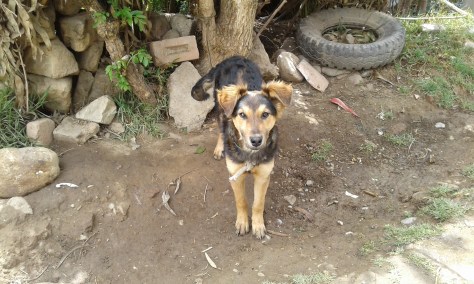
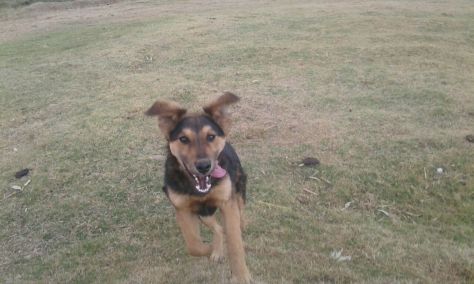

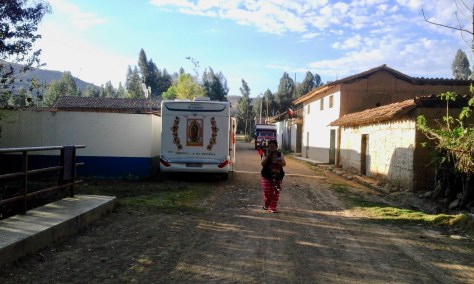
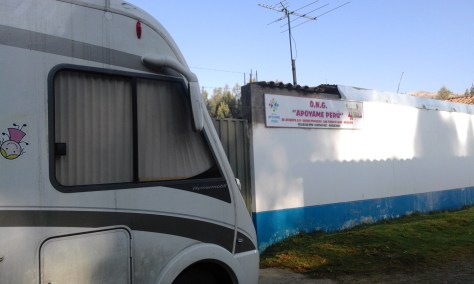
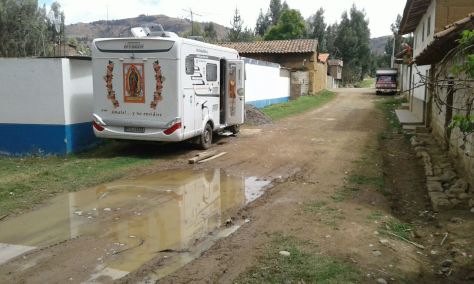
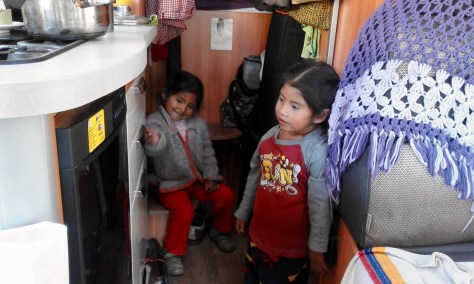
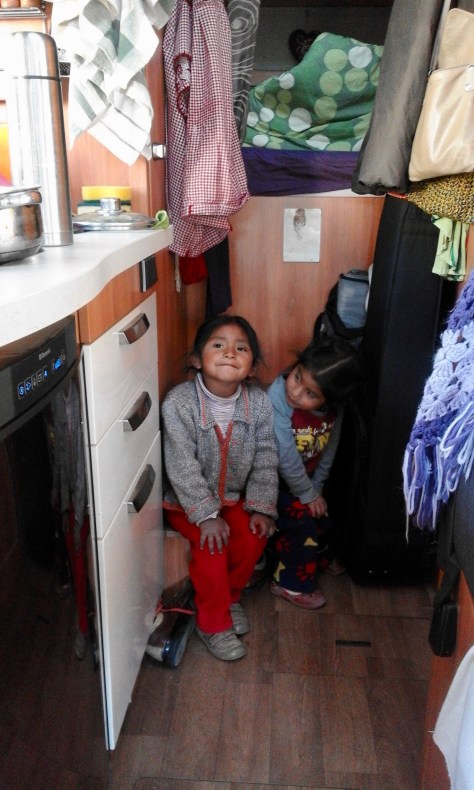
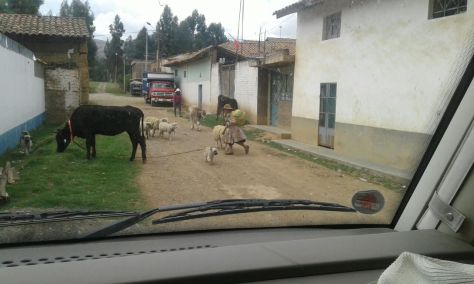
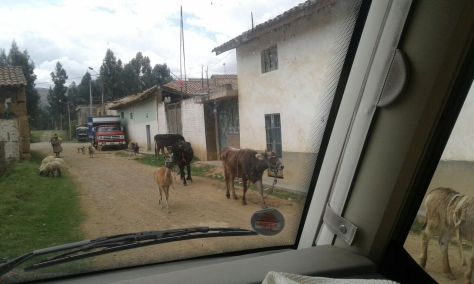
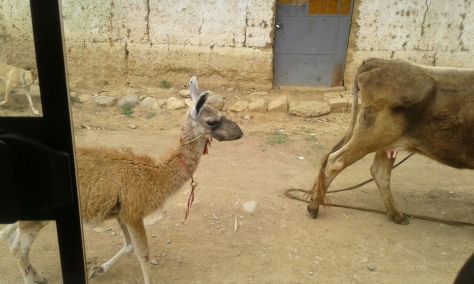
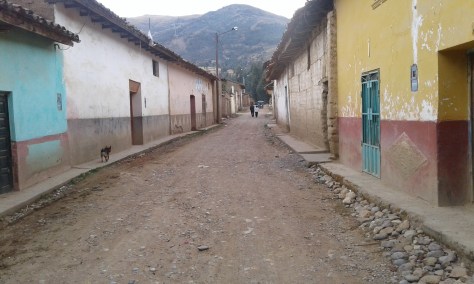
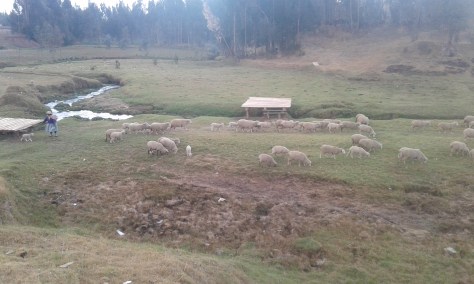
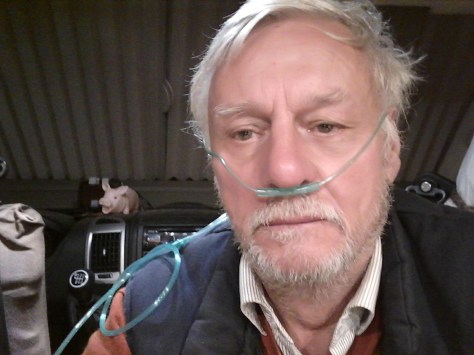
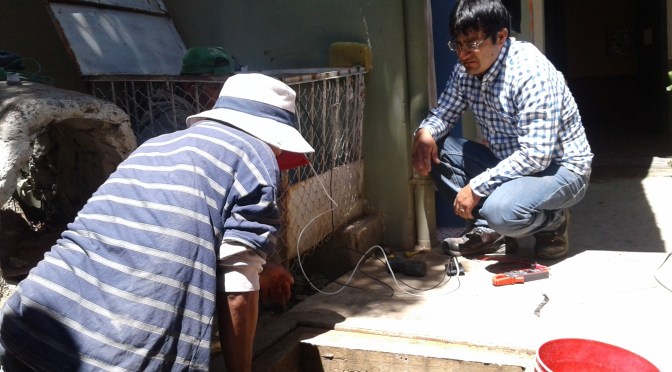
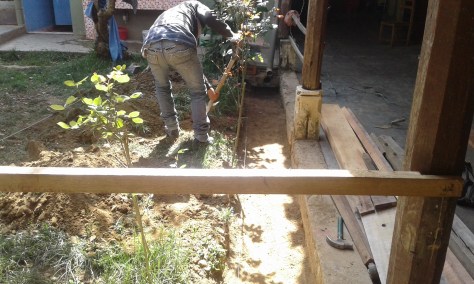
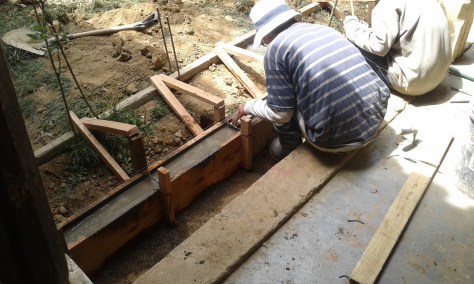
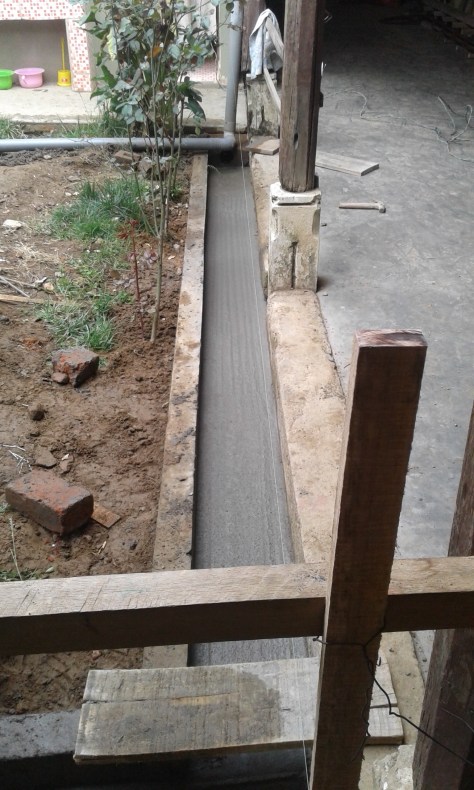
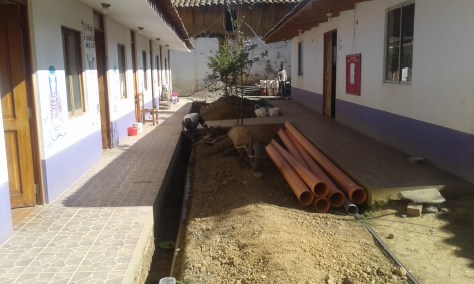
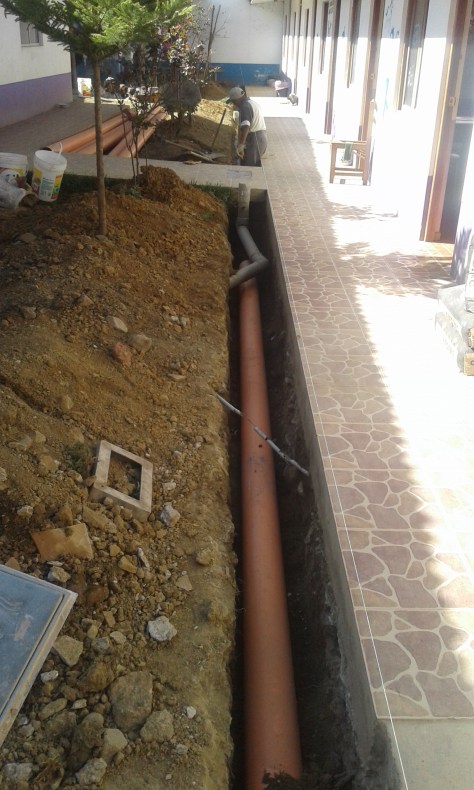
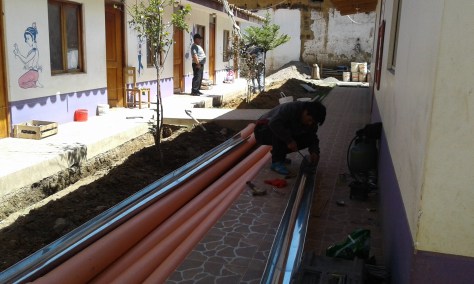
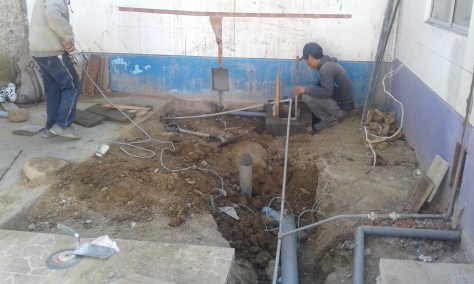
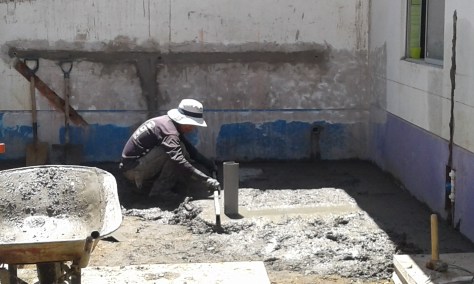
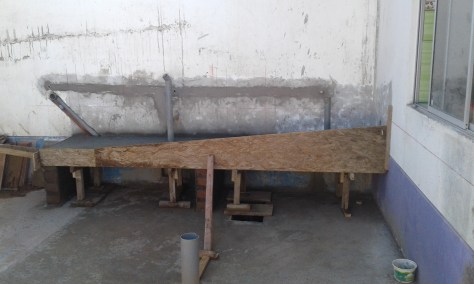

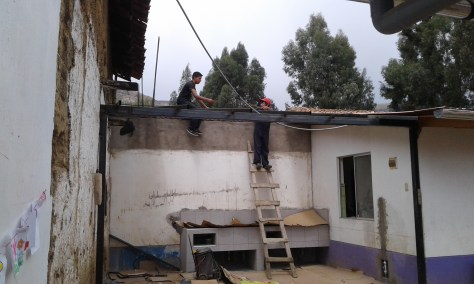
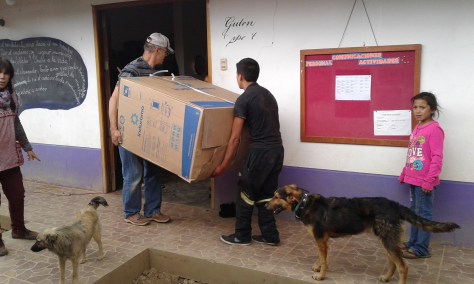
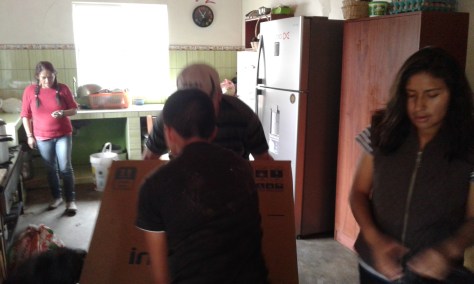
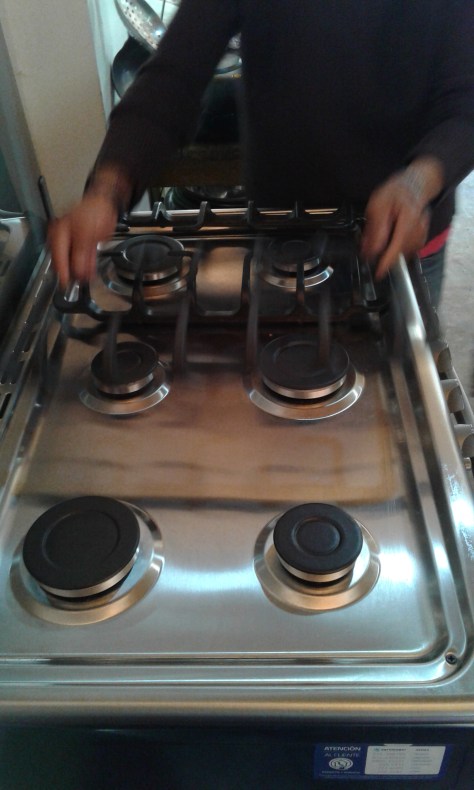
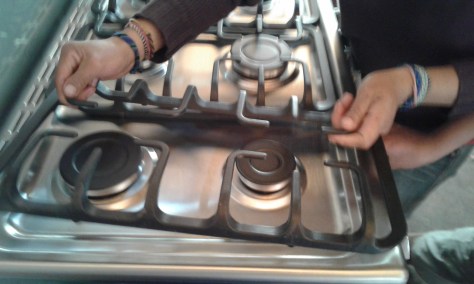
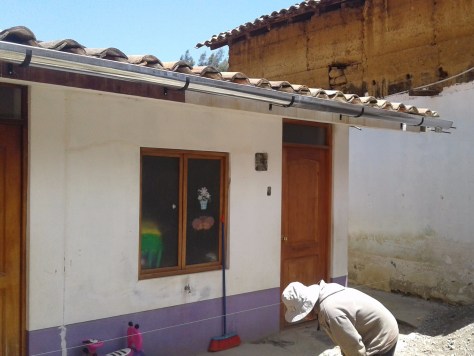
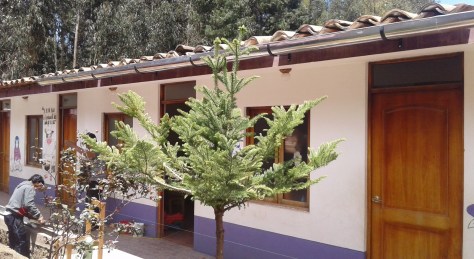
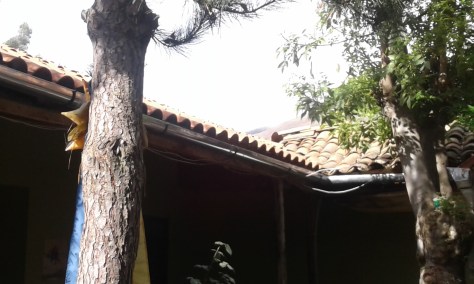
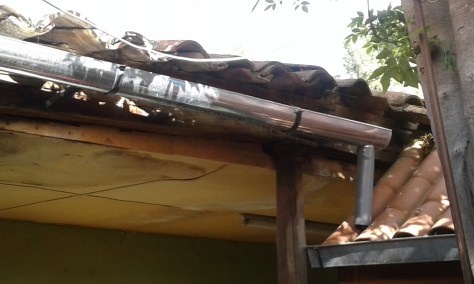


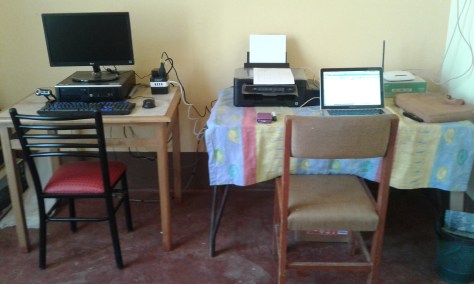
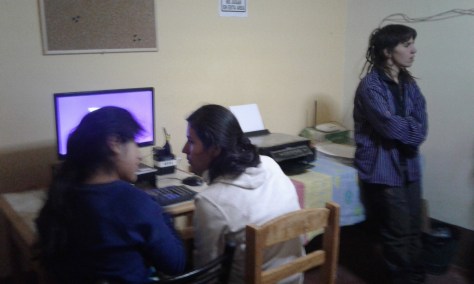


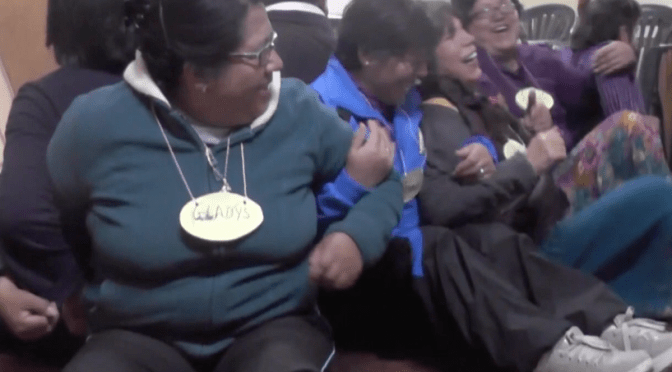

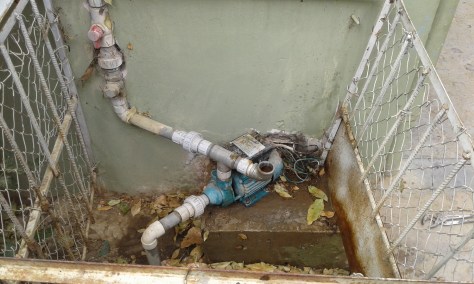
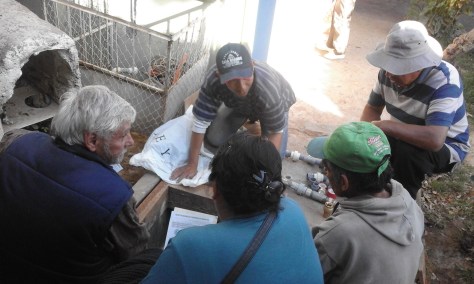

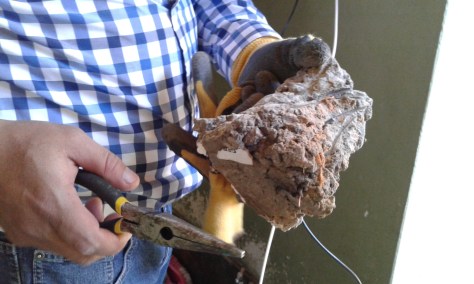
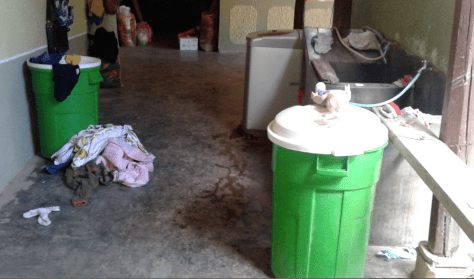
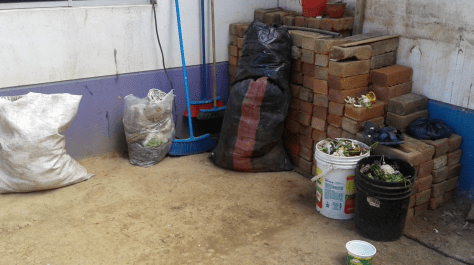

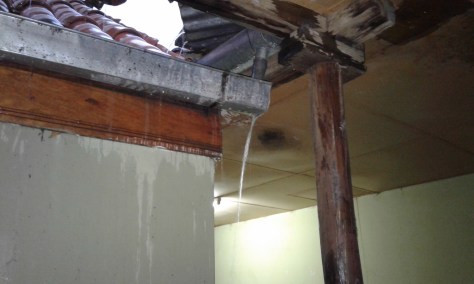

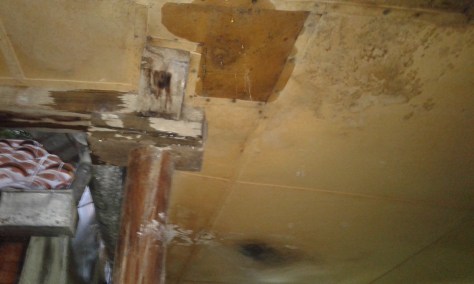
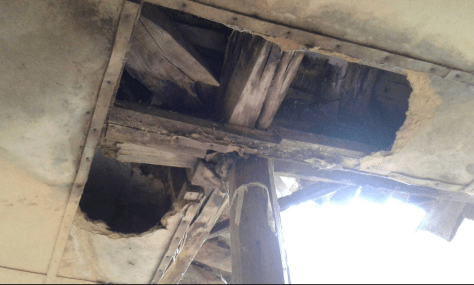
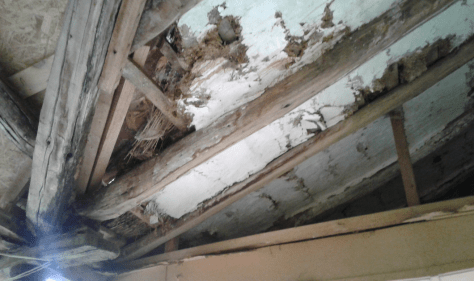
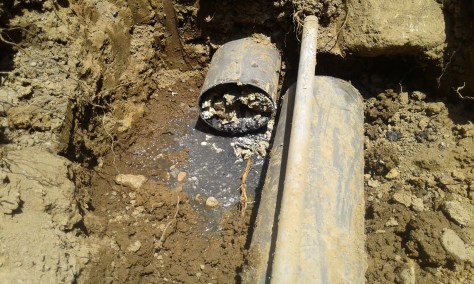
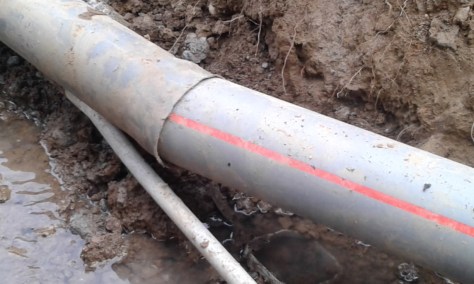
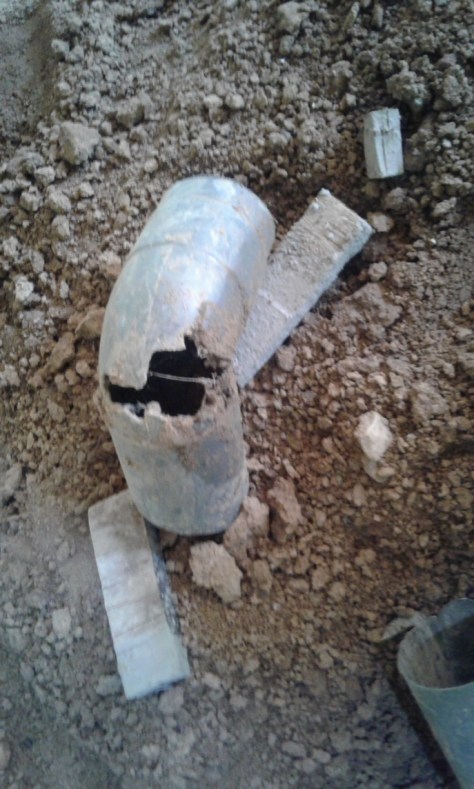


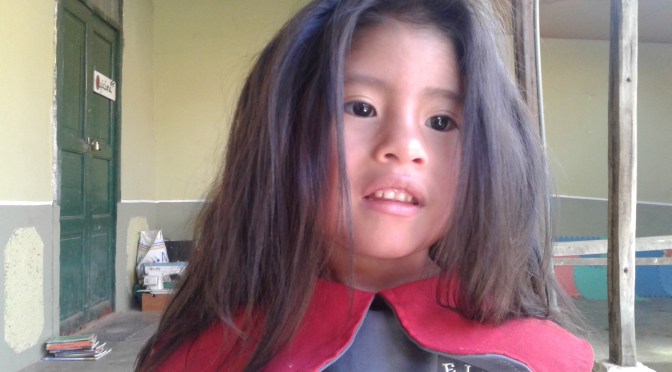


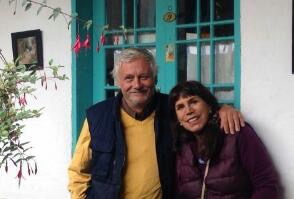
 Unterwegs in Europa, Amerika und Asien